

If you are anything like me, your newsfeed has switched from one of pretty ponies to wrinkly politicians. The riders and horse owners who had previously been so united by their love of equids are suddenly divided. And what once had been a discussion of whether to buy a pale pink or baby blue airvest has been over shadowed by whether you voted red or blue.
And if you are like me, you are trying to find any distraction from the name calling and horrendous images. So, for the rest of you who are exhausted after this week, I have decided to become the distraction.
I will replace one controversy with another.
And what topic might just be as divisive as the presidential election? Well, shoeing horses of course.
This morning I met my farrier as the sun was rising to pull my horses shoes. We had been discussing this possibility for quite some time, and had come to the agreement that it was both plausible, and a good time to do it.
Nixon had come off of the racetrack in May of 2015, and we had slowly and carefully transitioned his feet to those of a sport horse. It wasn’t easy at first – as we went through cycles of glue on’s, to transitioning him from side clips to front – but at the root of all of this, Gage Morgan and I agreed that he had exceptional feet. With good angles, a thick sole, and a strong wall – he was doing better than most.
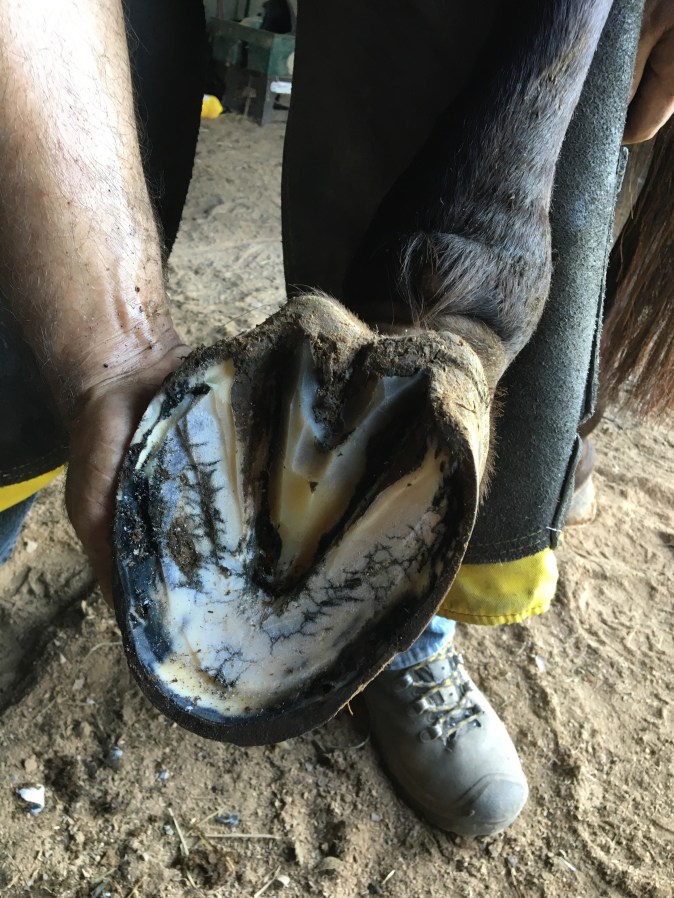
A healthy hoof. On a thoroughbred no less!
I decided to wait until after his last competition of the season, as I had kept him drilled and tapped in case we were ever cross country schooling and I felt he needed the addition of studs – although in retrospect, I never used them. Being quite the balanced horse, in addition to the level he is at in his training, combined with the footing with which we schooled in, we never needed the additional traction.
So with November rolling in, and the event season in Kentucky grinding to a halt – I called my farrier, and off they went.
Attempting to distract my fellow horsemen from the surge of negativity on social media, I posted this to my status and was met with shock, awe, horror, and a high five. And as I listened to some of the most intelligent horsewomen discuss this transition, and their own experiences with this topic, I felt as though a blog was needed. To give them a voice, and to educate the readers.
And more importantly – to allow everyone to realize that just like Cinderella, one shoe (strategy) does not fit all.
This morning, I was bombarded with the comments of both celebration as well as astonishment.
A thoroughbred going barefoot? The reactions were pretty scary, and they read something like this:
- “Oh my gosh, that is amazing! I shall immediately pull my rarely sound thoroughbred shoes tomorrow!”
- “Oh wow. No thoroughbred should ever be barefoot. He will immediately go lame – you just watch.”
- “How dare you have put nails into a horses hooves! Here, let me connect you with my barefoot trimmer – he will do a better job than your podiatrist”
- “Every horse should have their shoes pulled in the fall. When the weather reaches exactly 42 degrees and the frost has begun. They shall only be replaced when the moon is gradually passing the sun during the vernal equinox. My animal psychic told me so.”
And with the help of two fellow eventers – both fantastic horse women – I have a response. One of which is Dr. Kristen Brennan, and the other being Melissa DeCarlo Recknor. All three of us have two thoroughbreds – one barefoot, one shod. And we all agreed on the same thing.
Some horses can be barefoot, some horses need to be barefoot, and some horses need shoes.
Melissa’s first story was that of Shooter, aka Nixon’s little brother. They are so similar on so many levels, but where they verge apart is in their feet. While Nixon went barefoot because he could, Shooter went barefoot because he had to. Melissa had known this horse for years through her work as a trainer at the Maker’s Mark Secretariat Center, and knew that he had previously had perfectly fine feet. But a few years of separation, different management, and a transition in geography had brought Shooter back into her life, and with feet that crumbled.


Shooter’s feet May 26th, 2016.
Melissa had tried to keep shoes on in an attempt to progress his training from that of maverick freak (did I say he reminded me of Nixon) to that of well behaved show pony, but his feet were the main setback. So after relocating to North Carolina and fighting lost shoe after lost shoe, she, alongside her farrier, decided to pull them.
But she was lucky. Because her trainer advised her to reach out to Hawthorne not only for their products, but for their guidance and support.
So with the additional support of both a fantastic farrier and a team of professionals advising her, Melissa sacrificed her summer show season in order to better her horses hoof health. Painting his feet with S-Pak, packing his soles with their medicated sole-pack, and painting with the paste, she saw results within a month. And within just a few months, Shooter was walking soundly on hard surfaces and back to being rideable.
The thoroughbred with the “horrible feet” was officially barefoot – and Melissa was going to try to keep him that way for as long as possible.


Shooter September 26th, 2016
But Melissa was quick to add that her other eventer would most likely never be barefoot, in addition to the fact that she wouldn’t even go without hinds. Fly has severe arthritis in her hocks, and the hind shoes have helped support this – keeping her sound, happy, and able to be ridden. Coming up into her later teens, Melissa has had Fly as a partner for years, and knows her inside and out. Alongside her veterinarian and farrier, they have agreed that it is better to leave her shoes on.
One owner, two thoroughbreds, and two very different decisions regarding their shoeing practices.
Kristen was quick to agree with almost everything that Melissa had to state, and had surrounded herself with similar minds. But she had one addition – nutrition. As an equine researcher herself with a doctorate in animal science, she now leads the team at Alltech’s equine nutrition program, and had a ton of great advice for those intrigued by the idea of hoof health.
While her horse Frankie was what you would call an “easy keeper” by all means in regards to his weight, she strategized a feed plan that would enhance both hoof growth as well as strength and overall health. Kristen immediately made sure that he got a combination of a 10% protein textured feed, but with the addition of a ration balancer that includes an organic TM. As a true scientist, she was quick to point out that this addition of organic TM’s (trace minerals) provided the horse with a more bioavailable form of Zinc and Copper – both elements that are extremely important in keratin, which is the primary constituent of the equine hoof. She also added the supplement Farrier’s Formula to add additional biotin.
Kristen was quick to point out two things – that all horses need a balanced diet, but that you can add additional proteins and elements that may help your horse transition to that of barefoot. But with that in mind, just like Melissa and I, she was quick to point out that while this was working for Frankie (along with the guidance of Kim from Hawthorne Products that Melissa was also using), her other thoroughbred Marcus was different.
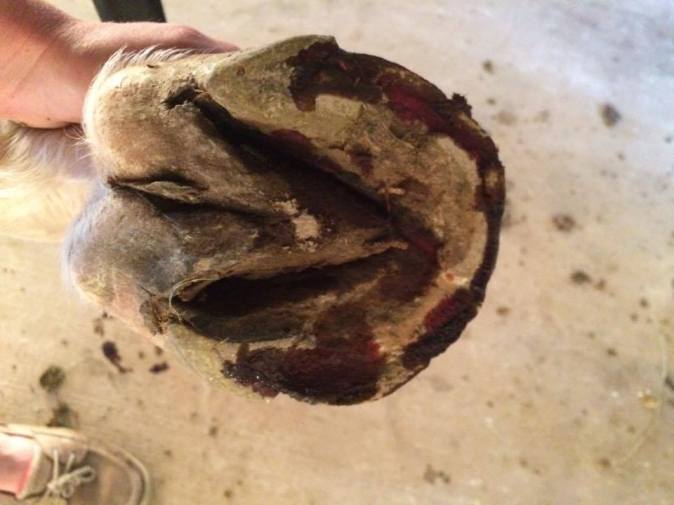
Frankie’s hoof with the Hawthorne Sole-Freeze Hoof Hardener
Marcus was on the same feeding program, received the same level of care, and yet he was fully shod. Just like my horse Mak, Marcus needed to stay on a strict shoeing schedule of a full set of steel shoes every 6 weeks. And just like Mak, Kristen had attempted every alteration to this cycle, without luck. What had worked for one horse did not, and would not, work for all. It came right back down to educating yourself with great professionals, but also listening to your horse.
So those are our stories. And these are our responses. Our opinions.
Should every horse go barefoot? Heck no. But can a thoroughbred go barefoot? Why, of course. But more importantly, should you have to make these decisions on your own? No.
Surround yourself with a great team of professionals – from your farrier, to your veterinarian, and then add a nutritionist. Talk to your trainer, and even your local tack or feed store.
Educate yourself on what this is involves, and the management practices that will potentially need to change. Examine yourself internally as a horse owner to conclude whether or not you have the time, money, and patience invested for either of the outcomes. And more importantly, listen to your horse. He will be your best advisor.
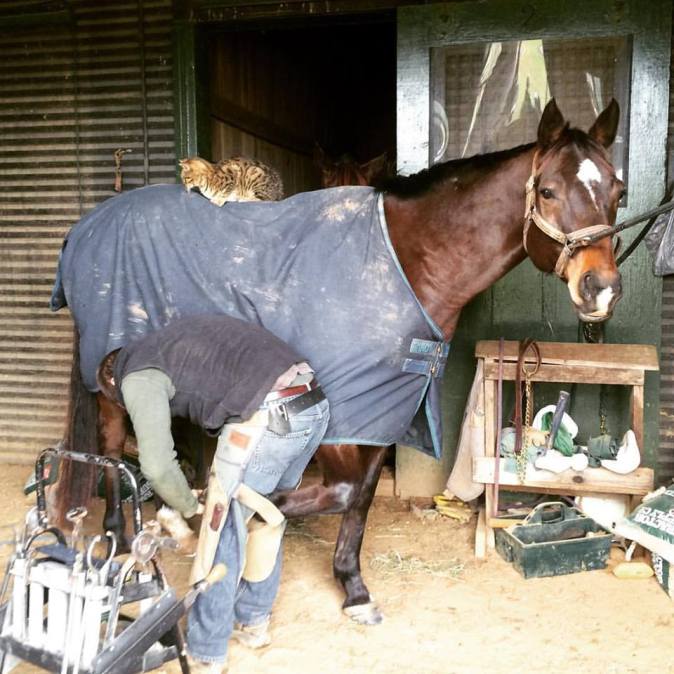
I am not a blueblood.
At least not to the racing industry.
My father was not a famous trainer, my mother did not own Secretariat. My brother never tacked up a horse, and my sister couldn’t tell you who Chris McCarron is.
But 9 years ago I moved to Lexington, Ky. And with 2 cents and a broken heart, I was hired as a groom on a thoroughbred breeding farm. Lost in the world after recently losing my father, a father who hated horses and his daughter riding them, I decided to forge my way into this industry.
To prove to myself that I could. To prove to the industry that a tiny blonde from Meadville, Pennsylvania could. And maybe in the back of my mind and my heart was to prove to my father that I could. That horses could lead me to financial stability. To greatness. Maybe most importantly to happiness.
So here I am, nine years later. Sitting in a hotel in Pasadena, California, preparing for a second day at the Breeder’s Cup–the World Championships of horse racing.
And I receive a text message from my mother–a woman who had no desire to attend the racetrack just a decade ago. She was asking when to tune in, and who to cheer for. And as I ramble off times, race names, and the horses I love–I started to realize that today is special.
Because today, these races, and the magnificent horses running in them is also full of stories of hope. Of try. And the ability to turn those things into greatness.
I met Dawn Mellen at the Clocker’s Corner the other morning. Her arms full of Breeders Cup hats, with a bright purple one proudly adorned on her own head. My friend Tara introduced her to me, proudly stating that this woman not only had a horse in the BC Turf, but that she was also passionate about aftercare. And I struck up a conversation with Dawn, fascinated by what brought her into this industry, and her own humble beginnings.
She spoke so proudly of her horse–Ashleyluvssugar. Of his own humble upbringing-being a California bred by Game Plan, an unraced stallion that is now deceased but who stood for only $2500. But Ashleyluvssugar was special. She had bred him herself and he was named by her young niece. And his journey had been special to her thus far – having come off of back to back graded stakes wins and earnings of almost $1 million dollars.
And while Ashleyluvssugar prepared himself for the toughest race of his life, Dawn was running around the backside collecting hats. Her charity, After the Finish Line, would be auctioning off these hats in order to gift funds to the aftercare organizations that helped find homes and second careers for horses like Ashley when he was done racing.
And although Dawn was very excited about this upcoming race, she became even more animated when speaking about After the Finish Line. Her hobby was horse racing, but her passion was so obviously in helping secure a safe landing for all racehorses. And although the field is stacked in that race (which airs on NBC at 6:22 eastern), but I will be cheering for the little guy in that one–and screaming myself hoarse for Ashley. And more importantly, for his owner who is so passionate about retirement and aftercare.
And then there’s The Mile. The race preceding The Classic. And in it are two girls that I love equally as passionately. Tepin and Miss Temple City are both taking on the boys in the battle of the sexes that has been occurring all year. In a sport where the fields are usually kept separate between the colts and the fillies, we have this monumental race where there is not just one amazing girl trying to take on the boys–but two.
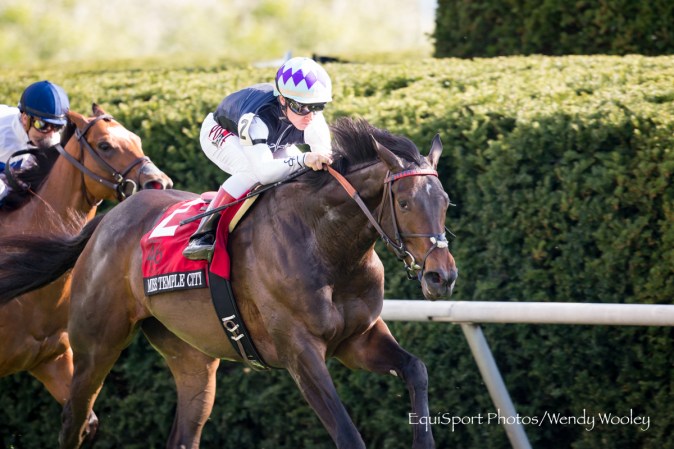
Miss Temple City at Keeneland. Photo by EquiSport Photos/Wendy Wooley
One of which was bred by one of the fiercest females in this industry, Carrie Brogden of Machmer Hall, and the other whom was named after the wife and mother of Bob, Sean, and Madeline Feld-a woman who is no longer with us, but whom I have been blessed with stories of her amazing character and brilliance.
And while these fillies may no longer be considered underdogs by any means, having earned their spots in the books as two of the greats–their beginnings and now their ability to prove once again sex has no impact on ability or earnings, they will still be in a race for the races. The girls against the boys. Or maybe, if dreams become realities, it will be the girl against the girl, with the smelly boys trailing the field.
And last, but certainly not least, there is Chrome. The horse who stole America’s heart in the 2014 Kentucky Derby. Who was bred by good old boys front California, but still found his way to the winners circle on that first Saturday in May. California Chrome is back, and in 2016 he has proven once again that where you come from means nothing. That setbacks and road blocks are just there to prove to the world yet again the ability and determination you contain.
He didn’t retire to stud immediately after his 3 year old season. And his 4 year old year was riddled with injuries, ownership changes, and being shuttled from place to place. But at the age of 5, he has galloped for the most epic comeback of racing history. 5 races, 5 wins, and $7 million in earnings, pushing his overall earnings to just below $13.5 million.
A horse who was bred for next to nothing. Owned by people who had just gotten into the business. And now the highest earner of any racehorse in history. He. Is. Unreal.
So no matter where you are in your life, today’s races are for the history books, and more importantly–for your heart. The undertones of these races mimic what we are seeing in this world. Women’s rights? Check. Humble beginnings with minimal opportunities? Check. Retirement plans and finding your next step? Check, check. And more importantly — watching the inexplicable beauty of 1200 pound animals running down the homestretch with their ears perked forward and their connections screaming, jumping, and crying? I can only hope.
So run on. Run on Ashleyluvssugar. Run on girls. And run on Chrome. Do it for the fans, do it for your connections, but more importantly–do it for yourselves.
I have big dreams. For each of my horses, I have big dreams.
For Nixon it is the upper levels. A win at a 1*, some top tens at the 2* and 3, and a completion at Rolex – ya know, the normal.
For Mak it is the hunters. Packing young adults or old ladies around the 3’3 A/O’s, or even some equitation rounds.
But for Kennedy, affectionately known as the Elephant, it has always been different. It will always be different. Because my goals with him were always get him home, keep him safe, and if he is sound enough to be ridden – the joy that will bring will be unconfined.
And that is why this weekend was one of the best of my life.
It wasn’t Rolex, or the Maclay’s, heck – he was doing an intro dressage test and jumping 2′ poles…but it was a milestone. A goal that was set almost a decade ago, and one that I never thought would happen.
I met Marilyn’s Guy as a naive 22 year old who had just faced the greatest heartache of her life. My father had left this earth, and with him went my ability to function. And I moved to Lexington Kentucky and drove around from farm to farm, begging the owners and managers to let me work. And I was finally hired – at Chesapeake Farm under the tutelage of owner Drew Nardiello, manager Kent Sweezey, and veterinarian Jorge Colon.

Babies.
Unhappy in my relationship, unhappy in my life – I turned to the farm as not only a means to a paycheck, but also a means to happiness. I jumped at every chance to be there early or stay there late. What these men considered the most enthusiastic worker was actually just running, or numbing. Consuming myself with menial tasks to keep my mind off of the truth. I was fatherless and lacking support. Lacking love.
But I finally found that support and that love, and it came in a 17.1hh 3 year old named Marilyn’s Guy. He came to the farm for a surgery and a lay-up, and I was quickly tasked with his recovery and rehabilitation. And each day, I knew that after hours of being abused and berated by the yearlings and the race-fit colts, I could sneak into his stall for a groom and a snuggle. I would wrap my arms around his massive neck and he would carefully lift me off the ground in an embrace.
It was a fact, I was 100% obsessed.
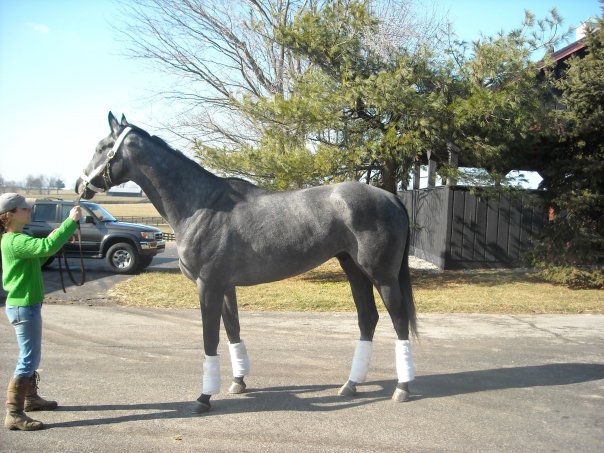
Marilyn’s Guy during a quick stop to the farm as a 4 yo. So stunning.
But Marilyn’s Guy’s story didn’t end there. It wasn’t the story that we love to read – where the girl falls in love, the horse wins $1 million dollars, and then the owners give him to the girl for happily ever after. No, Kennedy’s story didn’t end like that. Instead he ran. Again and again. And he was claimed. Again and again. And he aged. Year after year. And I felt my love of this industry and this world dissipate. Call after call.
Because we reached out to every owner, every trainer. And our plea’s for his safe and happy retirement fell on deaf ears. Until finally, at the age of 8, our demands were met with support instead of defense. Marilyn’s Guy was coming home – we finally had him.
And I drove to the farm the day he shipped home with envisions of long hacks, cross country schools, and horse shows swarming my head. I hopped from my truck, ran into the barn, and threw open the door – expecting him to immediately recognize my and lift my heart up again.

The day he came home…now nearly 9.
But he didn’t. The twinkle in his eye was gone. The gorgeous steel grey coat dull. And the beautiful top line that I meticulously perfected with long 45 minute walks and supplementation was missing. Marilyn’s Guy wasn’t there. And in his place was a large, bitter, no-nonsense creature.
So we turned him out. Drew was tasked with the day-to-day job of attempting to bring back the horse I had loved, and he succeeded. He spent 18 months getting his weight back on, his feet strong, and his coat to gleam.
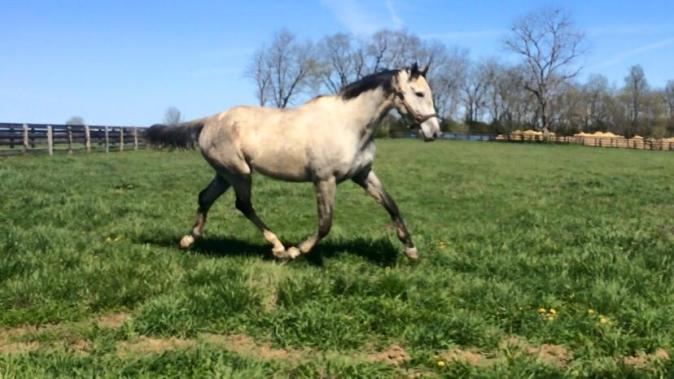
Kennedy during his 18 month break.
And then I got the call. Did I finally want him? I already owned 3 horses, and knew that on a graduate student budget, it would be impossible to take on a fourth.
So I scrambled.
I reached out to everyone I knew to see if they would want this task of taking on the large grey. And I found the perfect scenario. The man who owned the barn where I boarded said that he would take him. At 6’1, Jeff needed a large horse – and at now 17.3hh and 1500 lbs Marilyn’s Guy seemed perfect. I told him that I would assist in everything – training rides, blanketing, turn outs, and any treatments he may need. And he laughed me off, and told me to just treat the horse as my own.
We brought Marilyn’s Guy back to Kurnikris Farm in February of 2016, and were quickly tasked with the retraining of this giant.
And we did it. Yesterday I took Marilyn’s Guy, now known as Kennedy – or the Elephant – to the Kentucky Horse Park for his first horse show. He was bathed and braided, hacked around and warmed up, and then performed to the best of his abilities.
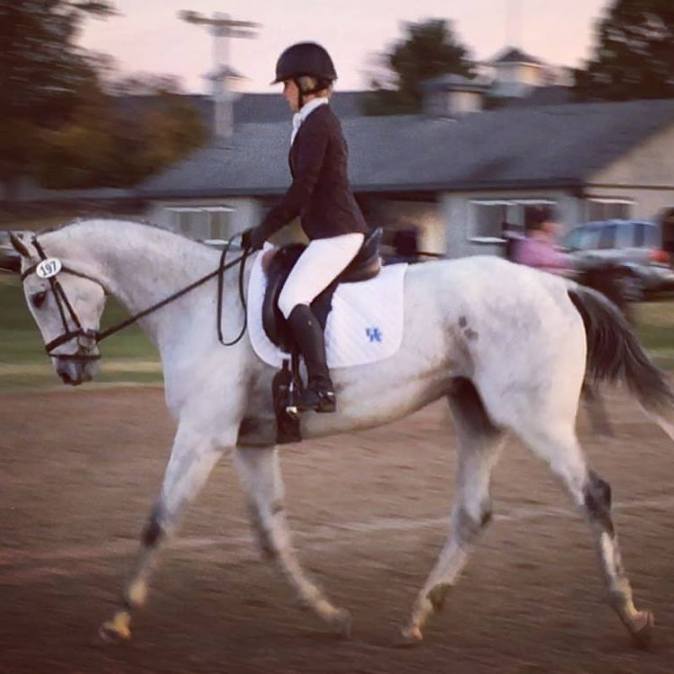
His dressage test was full of both moments of baby, but combined with moments of brilliance, and I giggled my way through the end as he popped his head up to 8 feet above ground – as only an Elephant can.
I warmed him up in a busy atmosphere for his stadium round, and was pleasantly surprised when he wasn’t perturbed by any of the distractions. This war horse and graded stakes winner was unphased by the horses galloping around him and the rails flying. His wizened brain and slow demeanor were evident in that moment – just like an Elephant should.
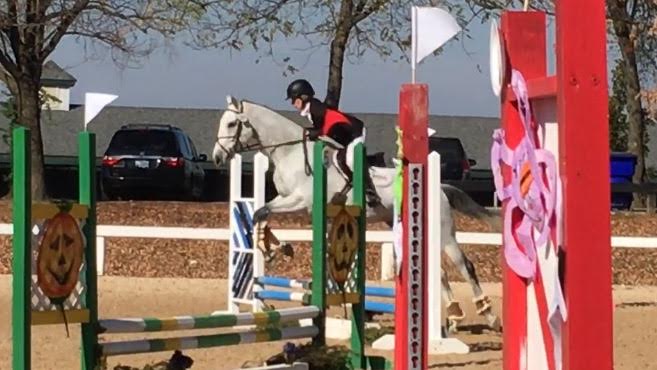
And then I took him into his stadium round and found myself smiling from ear to ear and he carried me around his course as if he had been doing this his entire life. There was no moment of hesitation, and no confusion over this new endeavor in his life. And he walked out of the ring with his head held high, his ears up and forward, and the twinkle was finally returned to his eye. He was so proud of himself – just like an Elephant would.
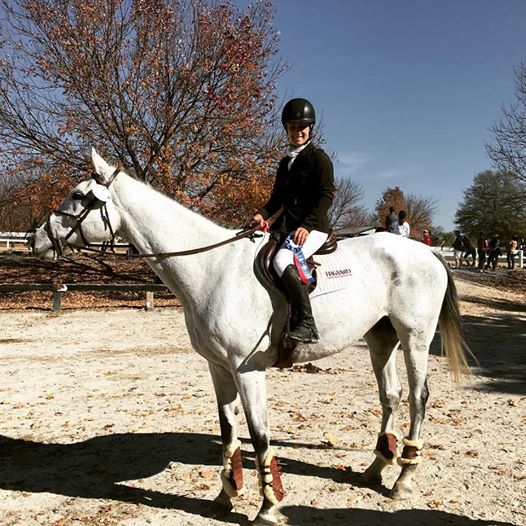
Proud of our completion ribbon
We didn’t win any fancy ribbon or pewter cup, as Kennedy finished 12th out of 14. But every day that I get to experience something with Kennedy, I am winning. It has been almost a decade in the making. From falling in love, to getting him secured in aftercare, to getting his body back to a rideable one, and finally the journey that we have gone on to teach him the basics of his new career as a show pony. It has been years in the making, and yesterday was just the icing on the cake.
Because I am truly just happy that we have him. That every day I can go to his field and see him. That I can watch him play with the other thoroughbreds in his herd, and that the twinkle in his eye is back. I am even more blessed by the fact that we finally have his body in a place where he was be utilized as a riding horse. That because of this, I can place training on him that will secure him a future if he ever needs a home outside of the barn where he currently resides.
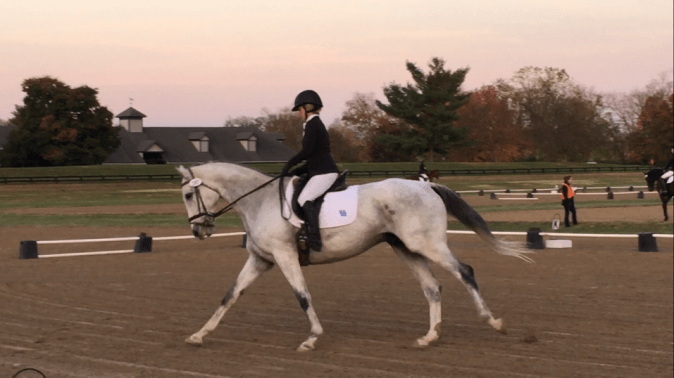
Kennedy is now 10 years old and just beginning his second career as a lower level show horse. His first show just shy of his 11th birthday – an older horse in many fields. But thats ok, because we are in no rush. I do not need Rolex in his future, nor the Maclay’s. I just need a horse that is sound, happy, and most importantly – with me.
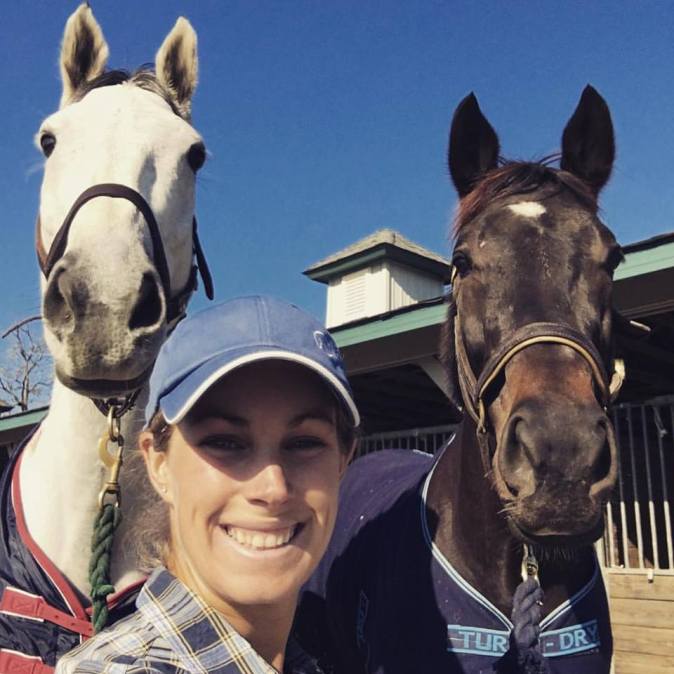
Kennedy with his best friend Nixon
My entire body is covered in plaques from psoriasis. There’s a massive hole in one of my teeth. I sweat through every single shirt I own. And my hair always exists somewhere between perfectly coiffed, or a complete and utter frizzy mess.
I’m not saying this for any form of sympathy, but because in today’s climate it seems more apparent than ever that we are judged by our looks. Our weight. Our wardrobe. And usually at the end of the day, our harshest critic is actually ourselves.
And I am no exception.
It has become a topic that is constantly debated in the news. It has extending as far as our presidential candidates and their style; or lack thereof. We are told that a winner of Miss Universe is fat when she wears a size smaller than us. That the pantsuit that resembles the very one we just bought for our upcoming conference is hideous. That it doesn’t matter if you want to rule the Free World, because if you wear kitten heels, you’re disgusting.
We watch the presidential candidates discussed for their looks instead of their policies. Their weight instead of their resumes. The tone and texture of their skin instead of their goals.
And then I turn off the TV and am bombarded by even the most beautiful woman complaining about the most minute things. The cellulite on her left ass cheek. The zit on his forehead. Chewed off nails, or a smidgeon of muffin top. And I just can’t handle it.
I posted on Facebook a few days ago that I weighed 140 pounds. And people immediately doubted it. How could I ever weigh that much? And maybe more importantly, who deemed that to be “a lot”?
And I responded that I was proud of every pound on my body.
Because I’ve never been one to obsess over the scale – at least in that way. Weight has rarely been “my issue”. And why? Because growing up, I was forced to watch so many women battle eating disorders that nearly claimed their lives. And I have watched the same women continue to fight over these mental diseases that will never leave them. But instead of battling one myself, I received the bystanders guilt.
And I would go home over Christmas break fearing the comments that my sister would make. Of how easy it was for me to stay skinny and how unfair it was that somebody like me who never stepped foot in the gym could squeeze into a size 4. I would be constantly aware of my size and its effect on the women in my family as they struggled with their own weight; their own demons.
I was actually embarrassed by the ease of which my high metabolism came. But while I might’ve had the smaller jeans size, and that was all that consumed our talks – I was actually in total awe of every other aspect of my sisters body. I was jealous of my sisters perfect skin and evenly spaced white teeth. I was always aware of her shiny curls and her amazing boobs. She had everything I wanted; and in some sick twisted way, I had all of her desires.
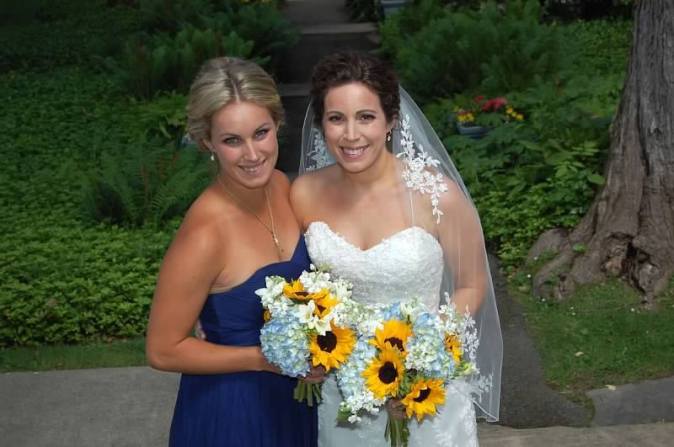
My sister and I. Our insecurities were so different, but felt the exact same.
It became so clear that we all fixate on different things. I could care less if there’s a muffin top sticking over my breeches, but I’m mortified to be seen in shorts with the red oozing skin sloughing off. I am proud of my larger biceps and capable calves, but don’t want anyone to look too closely to my crooked incisor or bucked front teeth.
What no one else would even realize as faults are my biggest insecurities. Someone people would assume has complete confidence in herself might actually be the most insecure.
And this became no more apparent to me than when I watched my dad begin his fight with leukemia.
When my dad began chemo, I ran to the local Halloween store and rounded up as many amazing wigs as I could find. Royal blue and crimson red; mullets to mohawks. I thought it would cheer him up, or make him giggle–but good lord was I wrong.
My father was an accomplished man. A surgeon, a great father; a community leader, and yet he was mortified over the thought of becoming bald. And as I handed him the wigs, he tossed them to the ground and growled at me over my insincerity. I took them away and backed out of the room, and then watched his fear grow as the hair fell out. And it made me realize that even the strongest of people have insecurities about their looks.
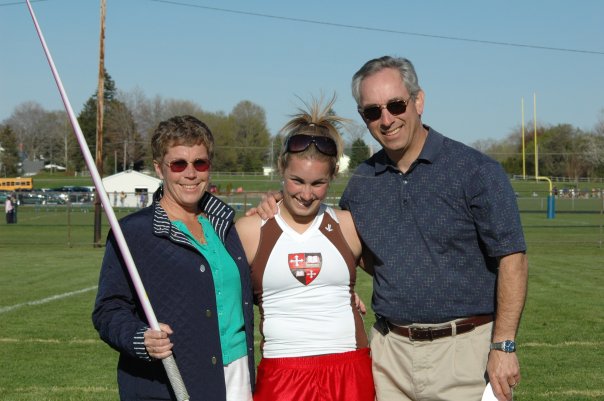
My dad wanted us all to remember him with a full head of hair.
My dads hair was his own insecurity, and as a man I never thought it would perturb him to be bald. I assumed (falsely) that only women cared about that side effect of the treatment. But it became so glaringly apparent that the very things that we wouldn’t see as faults in each other are the very things that keep us up at night. The gap in my teeth, the rash on my legs. My inner thighs rubbing, or the fact that my boobs seem happier living in my armpits. These things might not be the things that bother you, and heck, you probably have never noticed them in me, but they are my insecurities nonetheless.
Which is probably a large reason of why I ride.
I am most confident in breeches and tall boots with a ball cap or a helmet on. That is when I feel the most attractive, that is my disguise – my mask. My unruly hair hiding in a hair net, my psoriasis tucked away under jeans. My sweatwick shirts masking the fact that I sweat through every shirt, and no need for a close up of my crooked teeth. I am happiest in these moments, and while I am sure a large part of that is because I am with my horses, I have also become aware that another aspect is because it is when I finally feel pretty.
But perhaps most importantly, I think that it is crucial for each of us to realize that everyone around us has these. Insecurities. Disguises. Defense mechanisms. And I want every 13-year-old girl to realize that we’re all the same. She might be 20 pounds overweight, or covered in acne. She might be shamed in school for being too thin, or having ugly hands. But while its not ok to be bullied, it is certainly ok to feel insecure at times.
Because we are our own worst critiques, and a live in a society where people feel as though they are constantly judged, constantly attacked. We watch shows like The Biggest Loser, America’s Next Top Model, or Fashion Police, shows where panelists are paid to tear apart every contestant. And we assume that the people surrounding us are panelists of our own lives. That they are constantly judging, constantly observing us under a microscope.
I don’t know what the solution to the problem is. I am 30 years old and still hate to smile in pictures. Still hate to wear a bikini. Still hate to wear shorts.
But maybe the solution is simple. We should all be nicer. Friendlier. More supportive. Realize that the person who you assume is the most confident person out there might be putting on a facade, or the person who you idolize is facing the same demons. Insecurities are not always as obvious to the world as we assume, and don’t always present themselves as extra pounds or bumps on our skin. Maybe, just maybe, they are mostly internal.
And maybe we need to stop assuming that what we see on the television or the internet is, in fact, ok. Maybe we shouldn’t act as panelists on the reality show of our lives. Judges of all of our surroundings.
And maybe more importantly, we shouldn’t be the harshest critiques of ourselves. Maybe the most important person that we stop attacking is the one in the mirror. Learn to love our bodies. Learn to accept the cards we have been dealt, and notice the good instead of the bad. Because maybe, just maybe, the world would be a better place if we all would just learn to love ourselves.
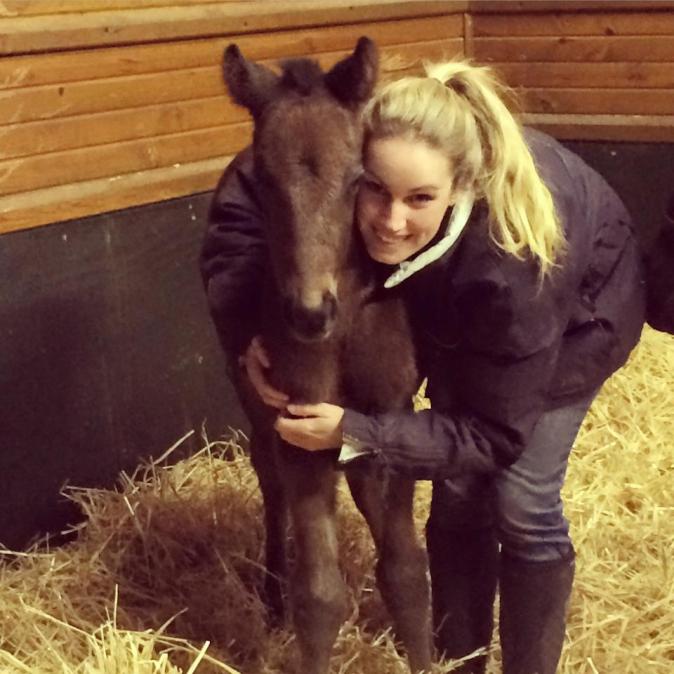
“About 17, 18, years ago, I found out about the nurse mare foals. They’re only born so that their mothers will come into milk. And that milk will nourish a thoroughbred baby so that its mother can go back and get rebred because her job is to have a racehorse baby every year. If it weren’t for the fact that we were here, all of these foals would be dead.”
– Victoria, President of Last Chance Corral
These are the opening lines for a new documentary entitled “Born to Die” produced by Sue Morrow Productions, LLC. It is being made to enlighten the masses on the nurse mare industry, and the work that Last Chance Corral does to secure these foals a safe and viable future.
It is a film to show how every thoroughbred mare is pulled off of her foal in order to be rebred, and how every thoroughbred foal is then placed on a nurse mare in order to get the milk that she is producing. It is a plea for the thoroughbred industry to allow the use of artificial insemination, as that would remove the need for these mares to supplement the foals while their mother is journeying to the breeding shed.
And it is complete and utter bull shit.
I have already written of the reasons for which the thoroughbred breeding industry does in fact use nurse mares. I have explained that in my experience, only roughly 0.05% of thoroughbred foals require the addition of a nurse mare. And these are for extenuating circumstances – a prolapsed uterus, colic, laminitis, and death. We as managers do not take this decision lightly, as the initiation of the maternal bond between nurse mare and foal can be devastating – physically, emotionally, and financially. It is not a decision we take lightly, nor do we gloss over it quickly.
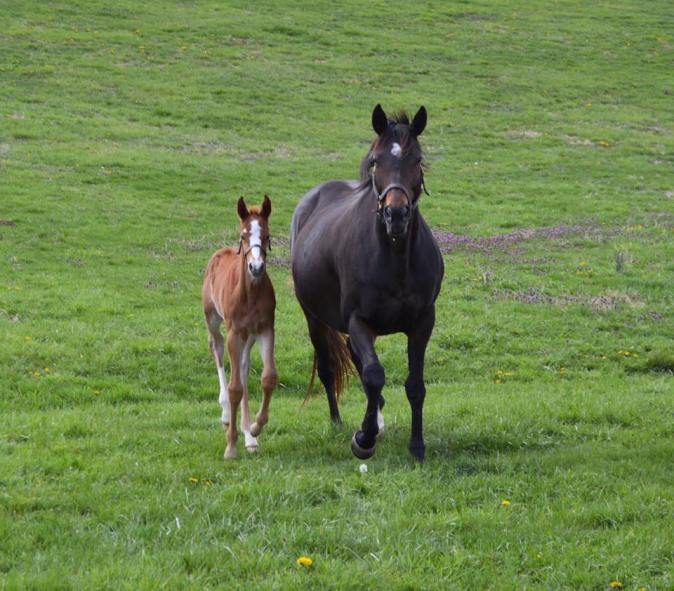
A thoroughbred with her foal by her side
And I have already urged many donors to this organization as well as others to truly investigate what they are donating to. The definition of fraud is “wrongful or criminal deception intended to result in financial and personal gain” and fraud is what this organization is committing. Their taxes speak volumes into where the money they are raising actually goes. The nursemare foals with which they are “rescuing” are actually bought from a provider that was neither killing the foals nor neglecting them.
And by purchasing the foals, they are perpetuating the problem.
So where are we at?
- Thoroughbred mares are not taken off of their foals to be rebred.
- Nurse mare foals are not murdered the minute that they are born.
- The breeding industry is not full of cold hearted crooks wielding clubs and mallets.
Still with me? Good.
Because now we’re moving into the science – just like my life. What once began as the story of a farm manager with a pitchfork and a tractor will conclude with a life surrounded with microscopes, mitosis, and DNA.
Because their solution to this problem is to allow artificial insemination. And I am here to tell you both why this won’t work as well as to add another option – one that Last Chance Corral will never support because it would drain their pockets and their salaries.
Artificial insemination, or AI, is legal in almost all breed organizations. It is the collection of semen from a selected stallion and then the deposition of that semen directly into the uterus of the mare through the administration by personnel using a pipette. Fresh, cooled, frozen – the options are limitless.
It was created for ease of use, in addition to the ability to breed a mare to a stallion that existed thousands of miles away. In addition, AI was created to allow the practitioner to manipulate the semen in a way that improves its fertility while also decreasing the risk of disease due to the addition of antibiotics and no actual contact between the stallions penis and the mare.
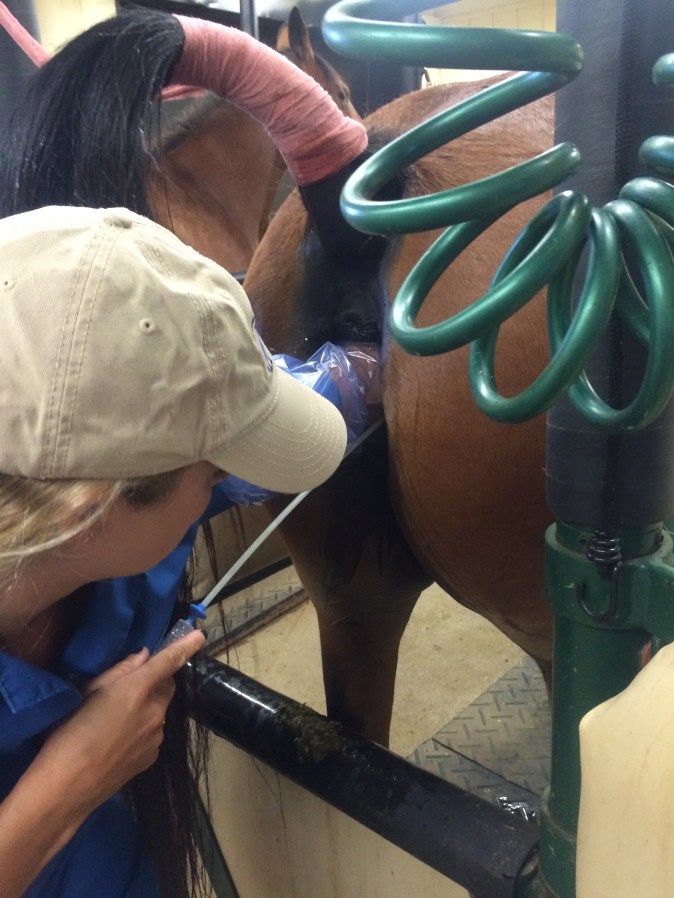
Performing AI on the research farm
The Jockey Club does not allow this to take place in the thoroughbred breeding industry. And instead of going into why, or how to change this decision, let me stay on topic and make one statement that Last Chance Corral doesn’t want to hear:
Artificial insemination will only increase the number of nursemare foals produced, because it will only increase the number of mares bred.
One of the only limiting factors into how large of a crop that the thoroughbred industry creates a year is simply money. It costs a lot of money to breed a mare – this is true for all breed organizations. But the thoroughbred industry adds one factor that the rest do not – natural cover. And the majority of thoroughbred stallions live within a one hour radius of Lexington, KY. Therefore the thoroughbred mares need to either be within driving distance to this location, or reside here on a “breeding vacation” for weeks if not months surrounding their breeding date.
This limits who can feasibly do this. It isn’t just the purchase of the mare for hundreds of thousands or the payment of the stud fee for another $50k. It is not the vet bills or the treatments needed to clear up an infection. It is, quite simply, the expense of keeping a mare at one of these chandelier-draped farms that align the winding roads of the bluegrass. Something that can run an owner into the thousands of dollars per month for a single horse.

It costs a lot to be born and raised here…
With the addition of artificial insemination, this becomes null and void. Semen will be able to be shipped across the world. The number of owners who will be able to afford to breed their cheaper mares, ones which most likely don’t deserve to pass on their genetics, will be bred. And the crop size will increase….dramatically. Just like it did in the quarter horse industry, one that produces 5x the number of foals that the thoroughbred industry does.
So no, the addition of AI won’t help lower the number of nursemare foals produced. Although it will help Last Chance Corral, and their thickly padded pockets.
So what will?
Science.
Because we as researchers have found ways to actually induce lactation in mares which are not actually producing a foal. We are able to simply add miscellaneous therapeutics like domperidone, estradiol, and regumate – and VOILA, a mare is producing milk within a few weeks.
So why aren’t we doing this, and why isn’t LCC proposing this instead?
It comes down, quite simply, to money.
We need to be able to have access to nursemares much more quickly than a few weeks after a mare dies. We need money in order to research the induction of lactation so that we can speed up the process. And LCC needs the money of donations from the bleeding hearts to keep pouring in. They know exactly what they are doing – and that AI will only exacerbate the issue, therefore providing them with more foals, and more income.
But we – both as scientists and industry – can actually solve this problem. While we can’t eliminate the need for nursemares, as the risk of a mare suffering a catastrophic injury or illness while pregnant or post-foaling will always be there, but we can stop the production of the nursemare foals.
And you can help. How?
Take the $5, $10, or $500 you would donate to this fraudulent activity and instead give it to an equine researcher.
Stop the need for nursemare foals to be produced here and now. Be a part of the solution, not the problem. And put your money where your newly knowledgable mouth is – in the right place, for the right people, and at the right time. And that right time is now.
The science, for your knowledge: (As per Equine Reproduction ed. Squires)
| Procedure for inducing lactation in the barren mare | |
| Select a cycling mare who has previously delivered a foal and lactated successfully | |
| Administer estradiol benzoate (50 mg/500 kg), intramuscularly once. | |
| Begin daily administration of altrenogest (22 mg/500 kg) orally once her pay and a dopamine antagonist of choice:
• Sulpiride (1 mg/kg, intramusculary, twice daily) • Domperidone (1.1 mg/kg, orally, twice daily, q 12 h) |
|
| Start milking six times daily on the 4th to 7th day of treatment, when mammary gland development it noted | |
| Utilize oxytocin administration (1-5 IU, IM or IV, 1-2 minutes prior to milking) to promote milk let down | |
| Introduce foal after 3-4 days of milking, when production has reached 3-5/day in a 500kg mare | |
| Discontinue altrenogest on day 7 of treatment and discontinue dopamine antagonist treatment several days after adoption |
I went through a horrible horse sale a few months ago. The buyers weren’t honest with both their ability as well as their expectations, and I didn’t investigate hard enough to realize either of these. I went with my gut instinct, and learned that it is not 100% foolproof.
And as I drove the 18 hours to go get my horse and bring him home, I stared off into the distance with tears in my eyes and thought “I can’t do this. Ever again.”
Because I am not a horse salesmen or a horse trader, but I do occasionally sell a horse. I love taking young horses – specifically ones off of the racetrack – and teaching them new skills that will increase their chances of a useful and safe future. And each time, I warn the potential buyers that I am not here to dupe them, but instead to possibly even scare them. I want 100% honesty, and 100% transparency. I want them to love my sales horses on their worst day, in addition to their best.
But this last sale scarred me. And while it unfolded, I kept reading again and again that all horse sellers were crooked, and how traumatizing of an experience it is to try to buy a horse. And I sat there, and read the comments, and had to bite my tongue from screaming.
And while I read those comments, I moped around the house, telling everyone who would listen that I was done. No more horse sales. No more retraining off the track thoroughbreds. It wasn’t worth the tears and heartache when it failed.
Because I had a different point of view. The opposite point of view. And for all of those unethical and horrendous horse traders and sellers that were being written about, there are plenty of decent people out there just like me. Who just want to give guidance to a young horse, find the perfect owner, and then sit back and watch them grow.
I said this out loud, and my boyfriend turned to me and laughed.
Because my boyfriend reminded me that it goes both ways. Sure, there might be that one horrible buyer who ruined your view on this passion of yours. But to counteract the actions of that one, I have gotten to form such beautiful relationships with others.
This became no more apparent than this weekend. As I lamented over my own financial inability to show, I scoured the online scores both near and far. I knew that plenty of my friends were showing at the Kentucky Horse Park, while a few others had hauled as far as Morven, and I sat at my lab bench doing my research, trying not to break down at my lack of showing
I focused primarily on the Training Rider division here at KHP, knowing that one of “mine” was attempting this level, with his young rider aboard. It was both of their first trainings, and as someone who spent her entire young life trying to conquer that level, I shared an appreciation for the nerves, tenseness, and fear that came with this move up.
But I had utter faith in this duo, and was excited for this day.
I got Preston (Prescient: Devil His Due x Dear Phil) almost exactly 2 years ago. A friend of mine from graduate school had messaged me to say that her father Scooter Hughes had this horse, and that it needed a new career. When I asked the cliche questions (age, height, soundness, brain), she answered each with answers I liked to hear (4, 17hh, 100%, sloth).
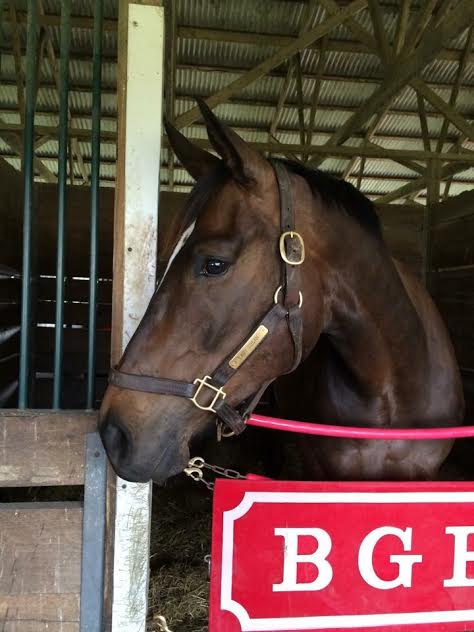
Preston at the track the day I met him
I went and saw him at the track, and knew immediately that he was coming home with me. He was massive and awkward, but was sound on bare feet and had just recently spent 6 months in a field to allow a growth spurt to work itself out.
Sydney and Scooter told me that this had been his primary problem – each time he had gotten going in his training, he would become 4″ butt high yet again, and they would send him home for some time off. But now — at the age of 4, without a single start, and with more of a lope than a gallop — her father thought it was time to let him go have fun with something else.
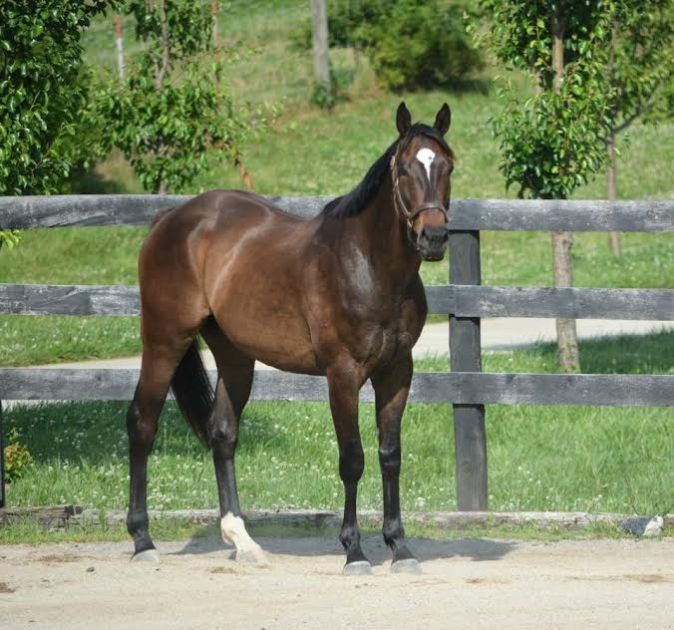
First day at home, butt high…again Photo by Susan Black
So home he came, for a future with me.
Preston took to his new sport horse life like a fish to water. Within 2 rides on the flat, he was happily bending and attempting lateral work. With the knowledge that he was both sound and already let down, I asked him to pop over some small fences, and he willingly offered nothing but calmness and willingness. Both on the farm, and off, he showed his true colors – and they were a brilliant rainbow of happiness, ability, and the most amazing brain I had ever experienced.


So off we went. One week after I hauled him home from the race track, Preston had his first XC school. Loping over logs, coops, and water, his ears perked the entire time.
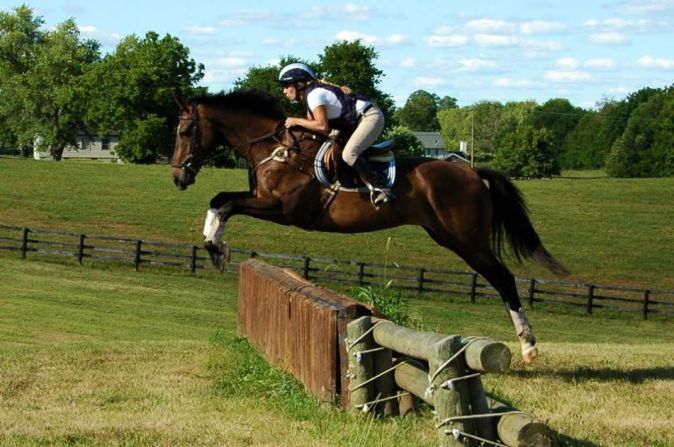
First XC School
Two weeks after he came home, he went to his first jumper show, and happily tucked his knees over the 2’6 fences, never blinking at the atmosphere or environment.
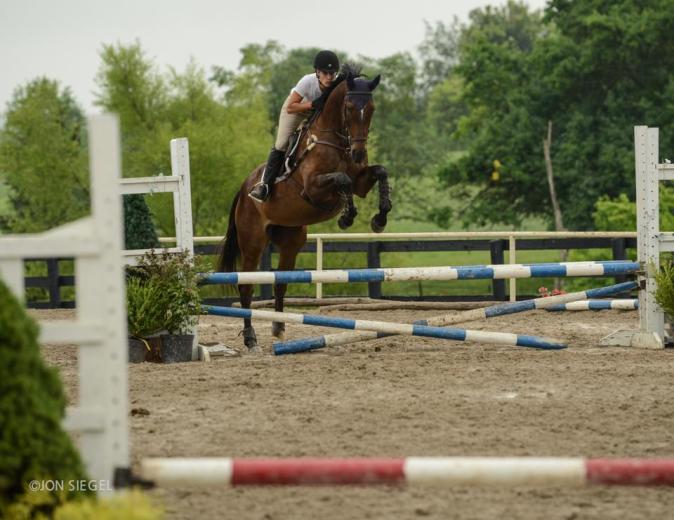
Preston at his first jumper show. Photo by Jon Siegel.
And three weeks after he stepped off of the trailer, Preston went to his first CT at beginner novice, and threw down a cadenced dressage test and a double clean stadium. I was IN LOVE.


And two days after the combined test, he was sold.
I had never even advertised Preston, due to both the small amount of time I had had him, as well as the amount of fun I was having bringing him along. But a message appeared in my email asking of his price, his temperament, and my availability to show him. And I laughed as I wrote back the answers, knowing that there was no way that the stars would align and he would sell this quickly.
But I was wrong, and sell he did.
The moment that I saw 13 year old Skylar hop up on Preston and work him through his juvenile paces while chatting with her mother about their expectations, I felt good about this partnership.
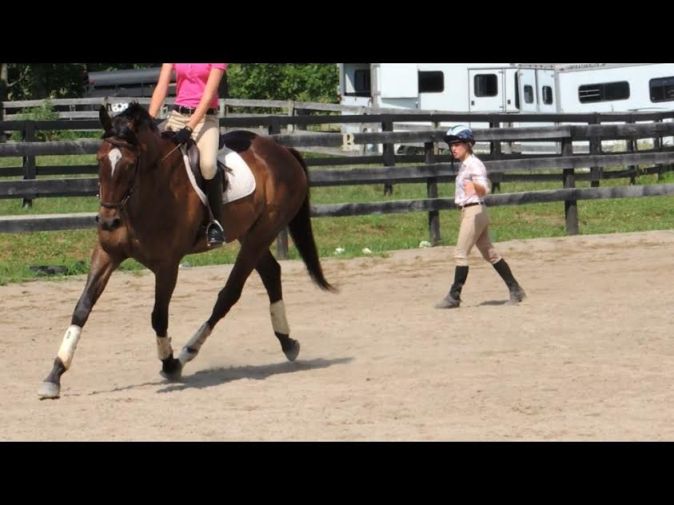
Skylar trying Preston before buying him.
Skylar had competed up through beginner novice on her small horse – but going through a growth spurt herself, they knew she needed a larger horse. She was young but capable, and more importantly, completely ready to take on the adventures in front of her that come with bringing up a young horse by yourself.
And bring him along she did.
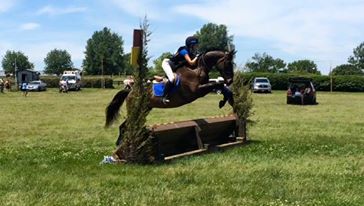
First Beginner Novice
I have gotten to follow their journey for the last two years. From their first beginner novice where I growled for her at the large table, to warming up at stadium rings when her trainer was 9 months pregnant. Via text, instagram, Facebook, and others, I have gotten to be a bystander, cheerleader, support system, and a “big sister” to this teenager that I have come to love so much.
And so nothing made me more nervous, and then more excited, than to watch them tackle their first training level this past weekend at the Kentucky Horse Park.
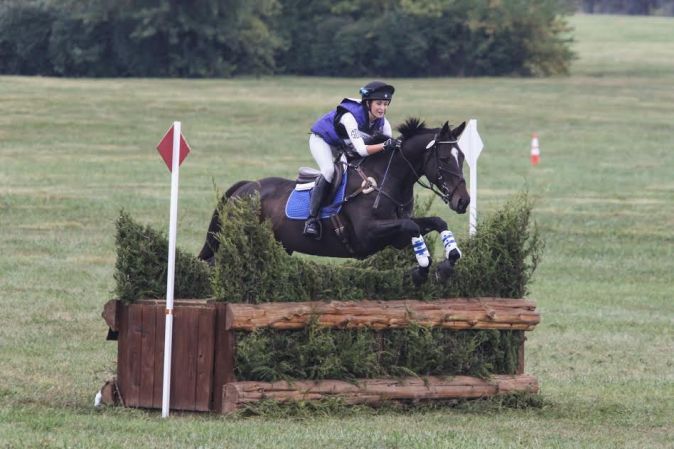
All grown up. Photo by XPress photo
As I ran to the finish flags, bursting into happy tears and fist pumping in the air, I realized that this is exactly why I do this. This feeling of joy as I get to watch a horse that I gave a start to continue on into a successful future. The feeling of happiness as I receive the text message and social media updates from his loved ones. And the feeling of retrospective awe as I watch these young women tackle goals that I once had myself…goals that “my” horses were now helping them accomplish.

A huge embrace at the end of the course. Photo by JJ Sillman.
So no, I don’t think I will give up. Someone has to be there to give these horses a solid start or a steady transition, and I know that I am capable of exactly that. And someone has to be there to make the introductions between these horses and their forever homes. To hold the teenagers hands as they struggle, to hand the moms a glass of wine as they panic, and to grab the trainers in an embrace as they celebrate.
And at the end of the day, it is to get to watch a life unfold. With ups, downs, successes, and failures, but also life-altering changes, both equestrian and not. Because not only has Skylar turned Preston into a successful sport horse, but Preston has turned Skylar into a competent and beautiful event rider. A young woman. One with qualities that will assist her through life. Respect. Dedication. Determination. And full of try.
And me? Well I get to watch it all unfold. And that makes me so happy.
A few weeks ago, I received a text message from the owner of Chesapeake Farm, Drew Nardiello. The many of you who have followed my stories and this blog have heard this name quite a few times – as he has been a pivotal person in my life and my involvement in this industry.
Drew gave me my first job in the thoroughbred industry. When so many other farms turned me away due to my lack of resume, small stature, and more importantly, lack of connections, Drew gave me a chance. I don’t know what he saw in me that others didn’t, but I know what I saw in myself. I was passionate, driven, obsessed, depressed, and slightly scared. I had faced so much hardship in the previous year of my life, and had felt so much rejection as I tried to scramble myself back onto my own two feet.
I showed up at Chesapeake dejected and angry. I didn’t understand why I hadn’t been welcomed into this industry with open arms, or why people weren’t begging me to work with their horses. I couldn’t tell you a shifney from a lip chain, a Storm Cat from an A.P. Indy, or what dictated being by or out of, but I loved horses and was a hard worker. And somehow, someway, Drew saw that. And he gave me a chance.
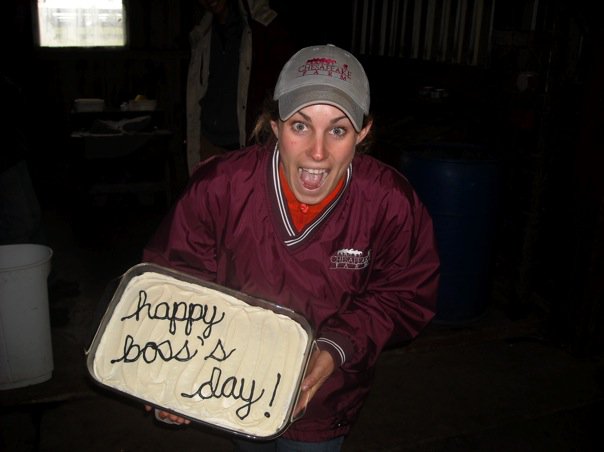
Drew gave me a chance probably because we baked him cakes
For years now, even after leaving my position on that farm, we have stayed connected. First it was through my relationship with Frank the Tank, and then through the fight we aligned on in retrieving Marilyn’s Guy. And finally, and most recently, it was in his support of me retrieving Z Camelot from the hellhole of the Borell Farm. I have learned in the past eight years that nothing is more paramount to Drew than the wellbeing of horses he is involved with.
So when I received a text and saw it was from him, I immediately knew that something was up. He briefly asked me about how Kennedy (Marilyn’s Guy) was doing, and raved about the pictures posted on Facebook, and then asked me if I or myself was looking for another war horse similar to Kennedy. His largest client, Robert Lothenbach, was retiring one of his most successful runners, Mister Marti Gras.
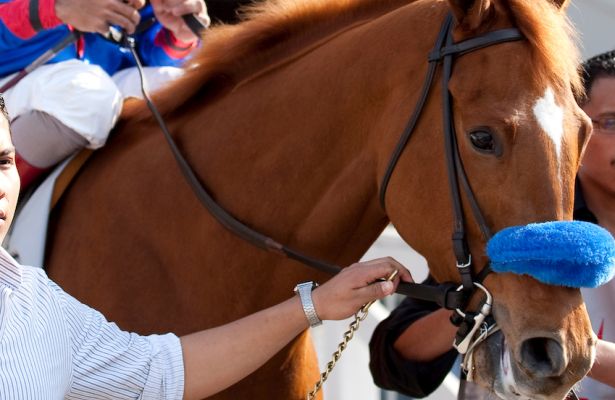
March 2010: Mister Marti Gras and Shaun Bridgmohan before the Louisiana Derby at the Fair Grounds in New Orleans, La.
The son of Belong to Me, Mister Marti Gras was quite famous around the track. He had ran 58 times, won almost $1.2 million dollars, and most notably – was the winner of races like the G3 Ack Ack Handicap and the G3 Washington Park Handicap. But perhaps more notable than his wins were his 15 grades stakes placings, including the G2 Hawthorne Cup Handicap (twice), the G2 American Derby, amongst others.
Mister Marti Gras ran well, he ran long, and he ran with heart. At the age of 8, he was still placing in graded stakes races. At the age of 9, he was still winning allowance races. But in his last few starts, the amazingly sound and sturdy horse told his trainer Chris Block that his heart was no longer in it.
So Chris did what any good trainer would, and he listened to his horse. He put his emotional and financial attachment aside, and kept his ears open. And he called Drew, the racing manager for Lothenbach Stables, and said it was time.
And thats where I got involved.
Because after Drew messaged me, I began to pound the pavement. I knew nothing about this horse besides the fact that he was sound, he was big, and he was older. And I knew that he was an athlete.
After owning two graded stakes winners myself, both Marilyn’s Guy and Called to Serve, I knew that this could translate one of two ways. Graded stakes winners were either powerful and opinionated enough that that could dominate the field, or they were sound of both body and mind enough to be exceptionally trainable – allowing their grooms, jockeys, and trainers to guide them towards the win. But I didn’t know which Mister Marti Gras was, so my field of options for his potential owner were limited to those that I knew could handle either.
We needed a soft but strong rider. A skilled trainer, and someone who we knew would transition a horse with both patience and knowledge.
And I found one.
I ran into Mandy Alexander at our Area 8 Championships at the Kentucky Horse Park. We were both volunteering, and struck up a conversation. She asked after my three OTTB’s, and told me of her current lack of a horse. She had retired one upper level horse, and had recently sold her other upper level mare, and was for the first time in her life without a horse. She thought that she was ready for this break, as the sport of eventing had changed so drastically from the sport that she loved. But deep down, I heard in her voice that she wasn’t really ready for that break.
And she said that the retiree was coming home, and she needed a babysitter. And maybe, just maybe, if she found the perfect one, she could be persuaded to ride and compete again. And I laughed at her, because all of her friends worldwide knew that this horselessness would never stick.
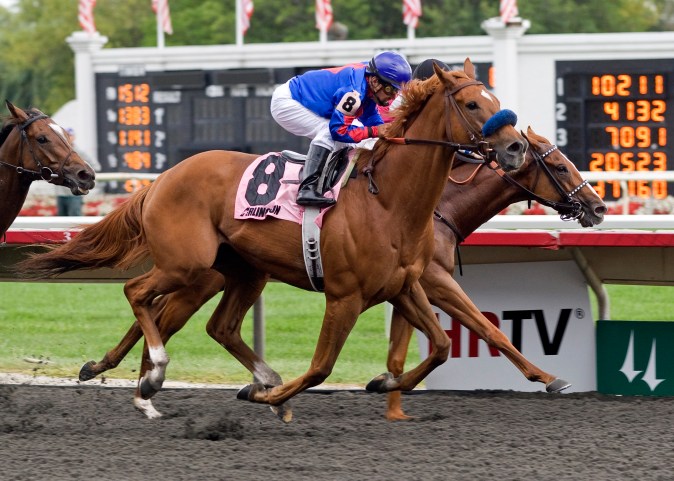
MISTER MARDI GRAS winning the Washington Park Handicap at Arlington Park on 9-3-11 Jockey Up Eddie Perez
So I told her about Mister Marti Gras. I showed her his race photos and his record, and I sent her Drew’s number, explaining the situation.
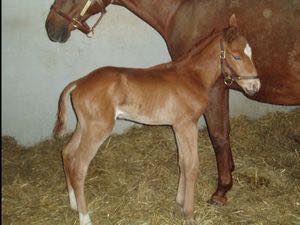
No one can resist foal photos
And two weeks later, Mister Marti Gras became hers.
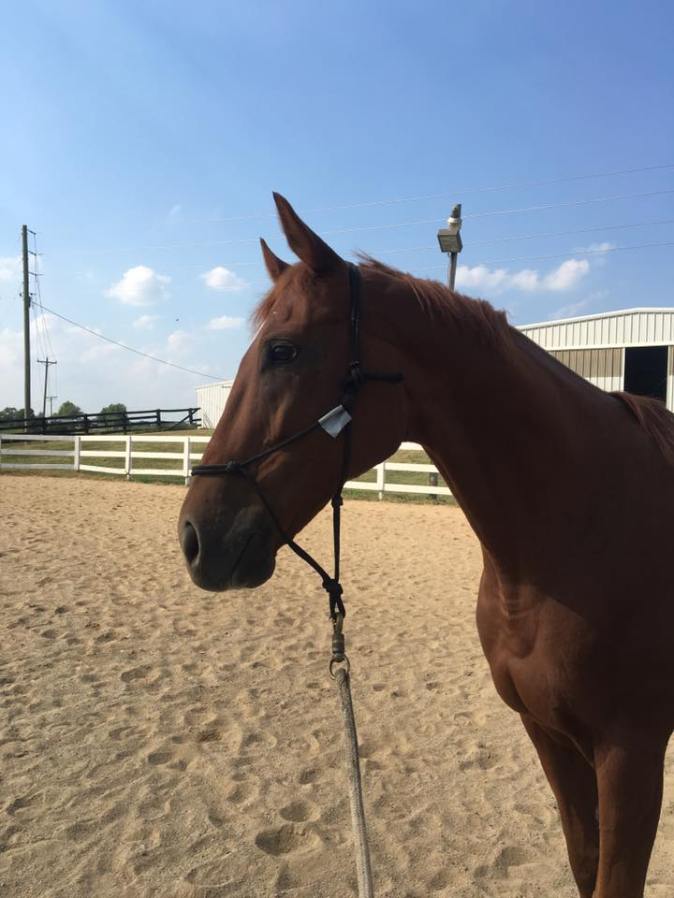
Mandy went out to Chesapeake to assess the situation, praying and hoping that she wouldn’t fall in love with this creature, only to be dismayed at how quickly she fell. At almost 17hh, the rich chestnut gelding stood before her with clean legs, a kind eye, and a strong topline. And quite quickly, and swiftly, her fan base of other horse crazed girls rejoiced as she posted on Facebook that she had bitten the bullet. The horse was coming home.
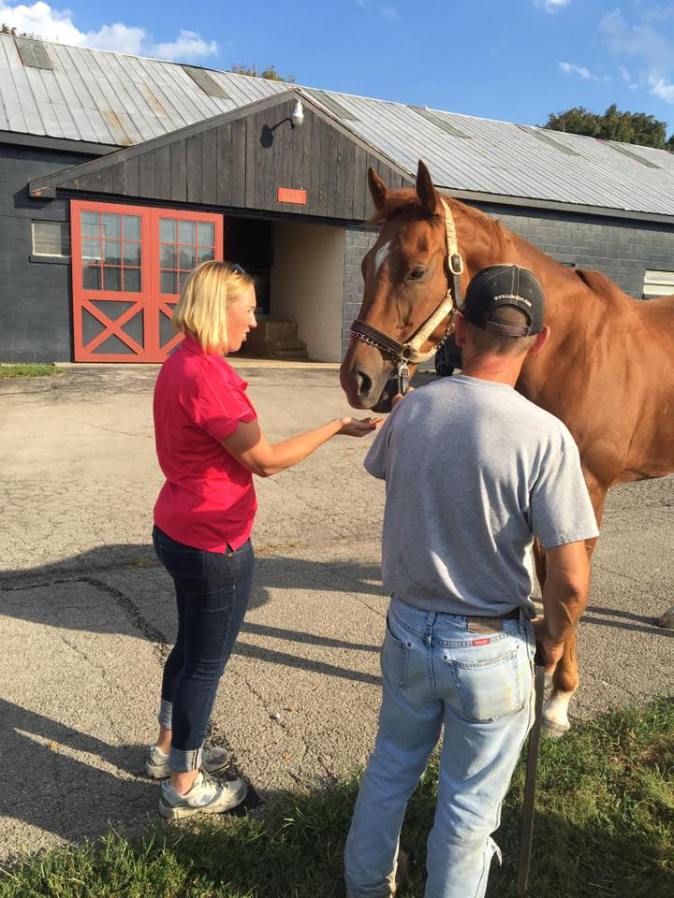
Mandy meeting Mister Marti Gras
I can’t wait to watch this journey begin. I know that he is in the most capable hands, and with the best person for him. Mister Marti Gras, or Krewe as he is now known, will be let down for a few months and then begin his transition from graded stakes winning millionaire to sport horse. Raised by the best, trained by the best, transitioned by the best, he may be just starting fresh at the age of 9, but in the most capable of hands, the sky is truly the limit for this son of Belong to Me.
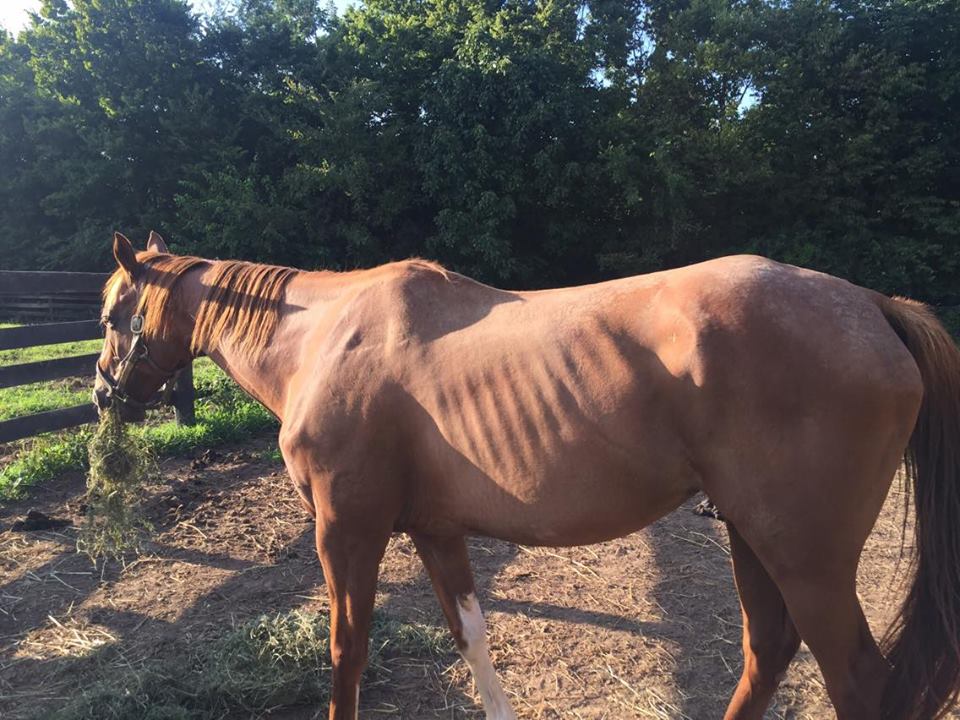
I received a text message a few months ago. It was my boyfriend asking me what I knew about a local off track thoroughbred sales barn, and if they had any credibility. I told him that I had heard of people donating horses to them, and had read of unhappy buyers on sites like OTTB Connect. I knew that their reputation wasn’t great, and asked why he was inquiring.
He told me that he had been approached by a friend as a plea for help. She was trying to get the two horses that she had donated to this program back, as she had become desperate to receive updates and notifications of their well being. Danielle was one of the “good guys”. She bred a few, sold a few, and raced the rest herself. And when these horses told her that they were done with the track life, she returned them to her personal farm and let them down.
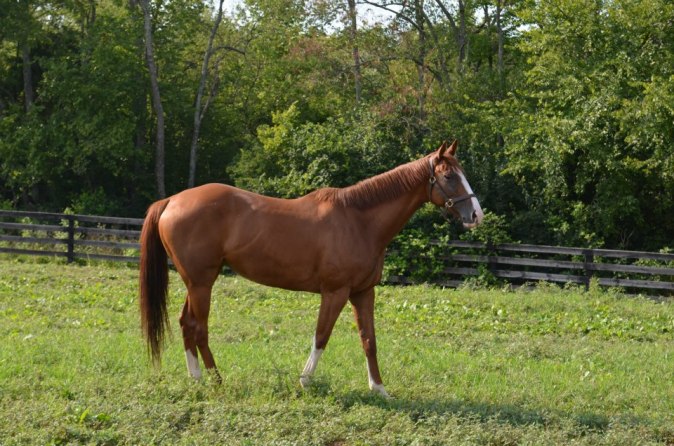
MyHeart’sreserved in retirement after some letdown on Danielle’s farm.
The majority of her horses were kept for life. But with her fields filling up, and these mares being both sound and not of broodmare quality, she knew a different course needed to be found. So after a year of let down, when Valencienne and MyHeart’sreserved told Danielle that they were ready for a new job, she began hunting.
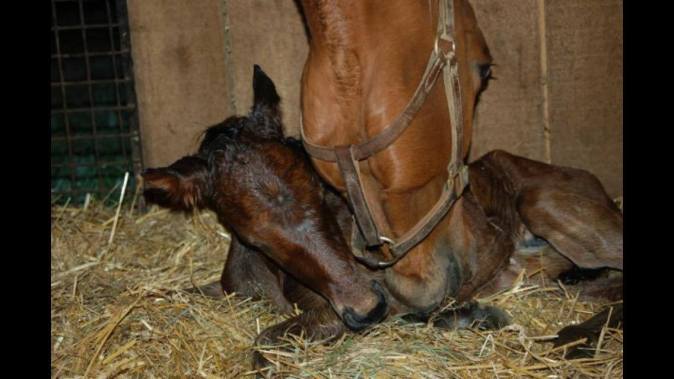
A good start with Valencienne
She was recommended a local facility called Thoroughbred Sport Horses (TBSH) by a fellow horsewoman. Being told that the woman was a well-respected horsewoman, who had retrained and sold hundreds of ex-racehorses, she jumped at the chance of placing her horses with them. And on March 15th, 2016 Danielle’s two fillies were delivered to TBSH with the promise of a good start, a great home, and a future as sport horses.
Their pictures were immediately placed on the website the following day, with tropical backgrounds of rain forests and beaches, their bodies photoshopped and superimposed. Danielle had thought nothing of the strange advertising, but waited impatiently for the continued updates and potential sale. She was excited to follow their careers, and looked forward to the photos and videos to come.
But all she received were crickets.
For months she waited patiently, assuming that the horses were just not ready for advertisement. But then she became concerned. She messaged the owner of the operation numerous times, first asking for information, and then demanding.
And then she got desperate. Which is where Luke got involved.
Danielle was so concerned over her horses well being that she reached out to the owner and offered to bring them home. She knew that time was money, and the longer that the horses resided in their facility without even a video being uploaded of their ridability, that they were losing money. But her offer was ignored, and her pleas denied. And that’s when the story took a turn.
They asked Luke if maybe he or I would reach out, hopeful that they would be more accepting to an offer from someone unconnected to the owner, and yet even he was turned down.
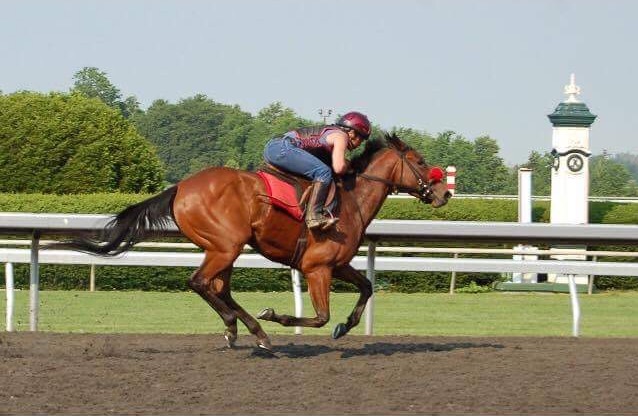
Valencienne training at Keeneland
A broodmare manager of a commercial thoroughbred and polo breeding farm, a lifelong horseman, and the owner of 2 retired racehorses – and yet his offer was ignored.
Which is where things got interesting, and the story began to unfold.
Danielle decided to pursue one last approach and asked a friend of hers from Pennsylvania to buy Valencienne in June. The facility refused to show the horse in person, and pre-purchase examinations could only be performed by their own personal veterinarian. But after asking only two questions – (1) “Have you ever ridden a horse” and (2) “Have you ever owned a horse,” the horse was sold.
Under the facade of the horse being sent out of state, we offered to go pick up the horse in order to deliver it and were denied. They claimed that only commercial shippers like Brook Ledge or Sallee were allowed on the property – and the horse was sent to a mutual friends farm.
What were once tiny red flags had quickly become an electronic billboard. This was not normal; this was not OK.
Valencienne arrived at Danielle’s farm on June 30th, 2016 in dire shape. She had dropped over a hundred pounds in only three months, and her feet were severely neglected, long, and chipped. Her mane was untouched, and her coat was dull. It was glaringly obvious that Danielle’s concern had been justified. What had started as a simple wish to provide a safe and fun future career for her horse had turned into a personal hell.
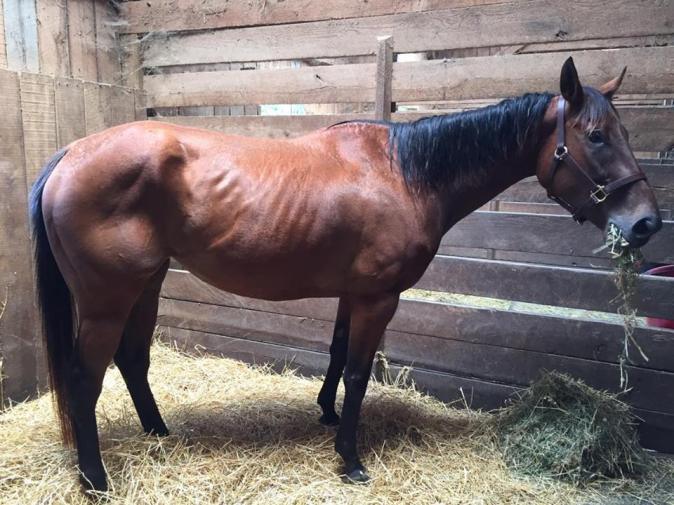
Valencienne when she arrived home
And it was obvious, MyHeart’sreserved would need to be bought as well. And thankfully, she was.
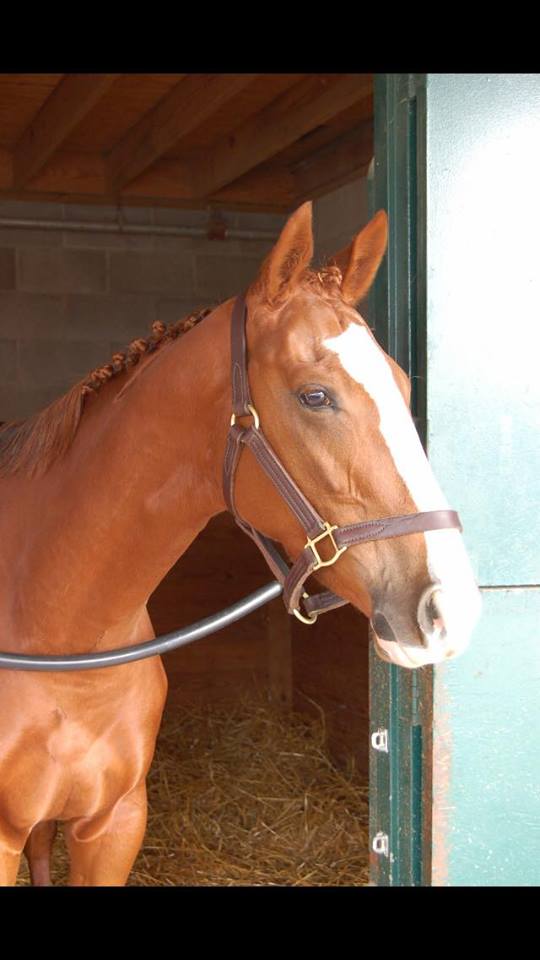
Myheart’sreserved before a race at Keeneland
On August 11th, 2016, MyHeart’sreserved was bought by another friend – this time from Iowa, but was instead shipped to the Sallee holding facility, and eventually to Danielle’s farm. Her ribs jutted out from under a layer of skin, her feet were long and chipped, and her mane matted with burrs. But, at the end, she was home.
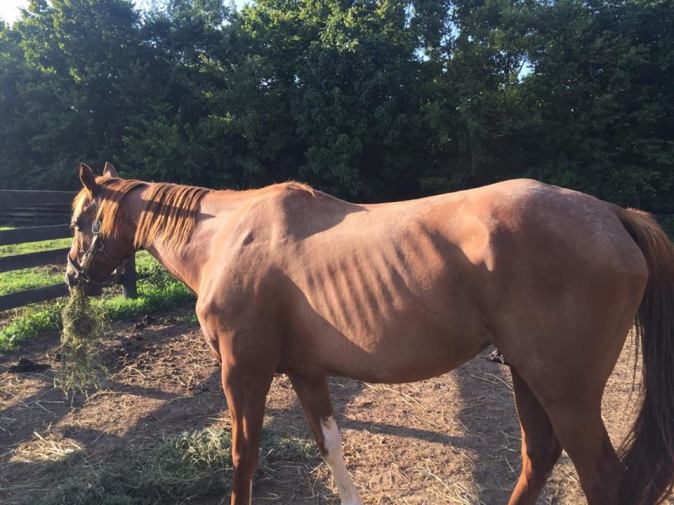
MyHeart’sreserved when she arrived home in August
Danielle contacted me soon after this to vent her frustrations. Throughout her ordeal with them, she had been contacted by numerous other people to alert her to previous situations with this same organization. She heard horror stories. She was informed of deceit and inappropriate behavior.
And she was appalled that this organization got away with this behavior. She was hurt that she had fallen for their lies. But mostly, she was devastated that her horses had to suffer for even a single day due to her decision.
Hers is a unique story because no aspect of it can be questioned as a rarity or slander. She had owned both horses before donation–one since birth, one since she had claimed her. She had let them down off of the track herself, and knew their soundness and disposition.
There is no falsity in this claim or exaggeration – just a breeder and owner who wanted to do right by her horse – tried – and failed.
And she decided that she wanted her story to be heard. She wanted people to learn from her own personal heartbreak and decisions, even if it meant a cease and desist or a lawsuit. And she asked me to help her; to be the voice.
So please, listen. Be a critical judge of character and a constant skeptic. Not all rehoming organizations are created equal, and not all rescues are in it for the horse. And heed the red flag’s – or the glaring billboards. Go with your gut. Your instincts can protect and preserve the lives of that animals that you love. Learn from Valencienne and MyHeart’sreserveds, and let their story affect your actions. Do it for the horses – for no one else will.
****EDIT: The daughter of the owner of this facility currently resides in California, and has no affiliation with the operation.
When I was a small child, I earned the name of Ramrod.
My beloved Uncle Bob would giggle as he watched my evil pony attempt to unmount me time and time again, and holler out from the side of the arena “Ride ’em Ramrod!” He told me that by the age of 6, my back would stick up ramrod straight, and I would get this look of absolute determination on my face.
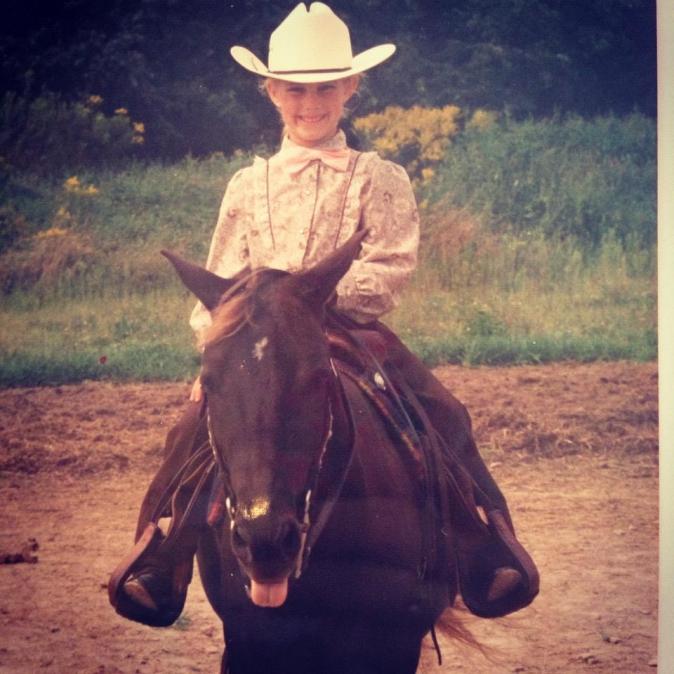
Evil Pony
A little blonde cowgirl on a heathenous 11 hand pony – it was quite the spectacle.
That pony eventually took me through the lower levels of the United States Pony Club, but where we truly excelled was in 4-H. Chocolate was multi-disciplinary. We racked up the ribbons in western pleasure, driving, hunter hack, and yes….we even won Showmanship.
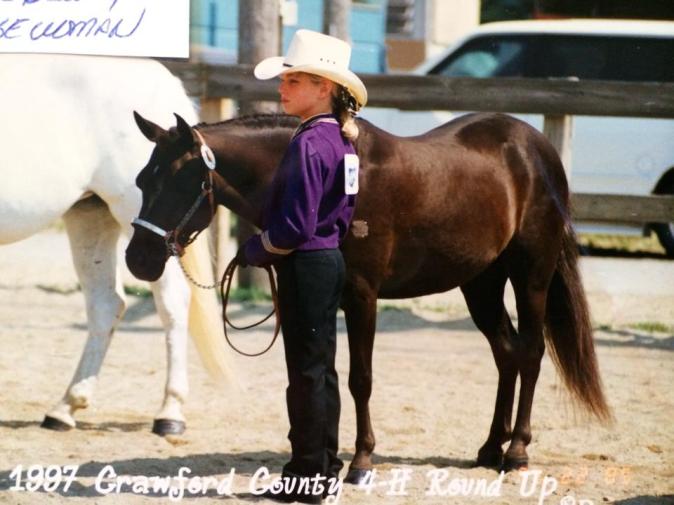
Conquering Showmanship
I hated Showmanship. The perfectionism. The attention to detail. The cleanliness. The hours of standing still only to step one way or the next. And I made this readily apparent with my faces at the judges and my ridiculous dances when I thought they weren’t looking. And yet because I was in 4-H, we were forced to do it.
A few days ago, I read a Facebook status about a young girl who seemed to share this mentality. She had qualified for the State 4-H Horse Show, and was wondering if it was even worth it to go for a non-riding class. The comments ranged from support to utter ignorance, and I couldn’t help but want to chime in.
Because, I am here to say, that 4-H Showmanship was quite possibly the most influential class of my life.
And this status, and the comments underneath it, were written at the most opportune time. Because in two days, I will begin working yet another Keeneland September Yearling Sale. 18 draining days of 14 hour long work periods. 4,000 yearlings paraded around almost 50 barns. And over $250,000,000 dollars worth of horseflesh accounted for.
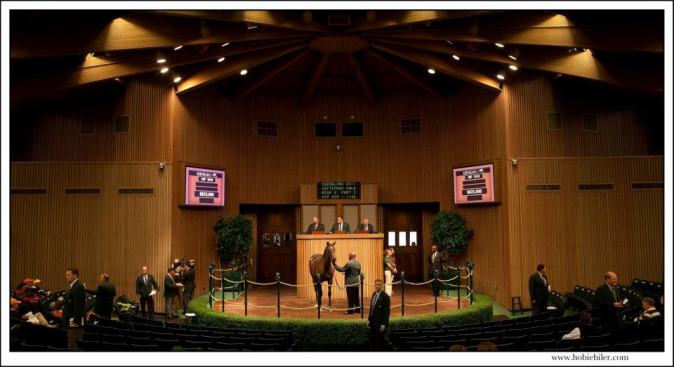
Those select few people who are considered capable enough to work with these 1,000+ pound uncastrated yearling colts and spirited fillies will rise before the sun, and prepare the horses for the day. They are bathed and rubbed to a gleam. Their hooves are polished, and their manes are gelled flat. Stalls are mucked, clothes are changed, and then the real work begins…it is Showmanship on crack.

Rubbing to a gleam. Photo by Susan Black.
We begin parading the yearlings at 8am. One after another, they are walked up a laneway and back. Their movement and straightness is evaluated, their demeanor and brain assessed. Only this time, it is not for a rosette or a trophy – it is for hundreds of thousands, of not millions of dollars.
Just like I was taught by a 4-H leader many moons ago, we stop and stand the horses to exaggerate their strengths and hide their weaknesses. We move from one side to the other with a swift subtleness. The judges are no longer cowboys clad in suede, and instead are replaced by executives, professional athletes, and Sheikhs alongside their Hall of Fame trainers.
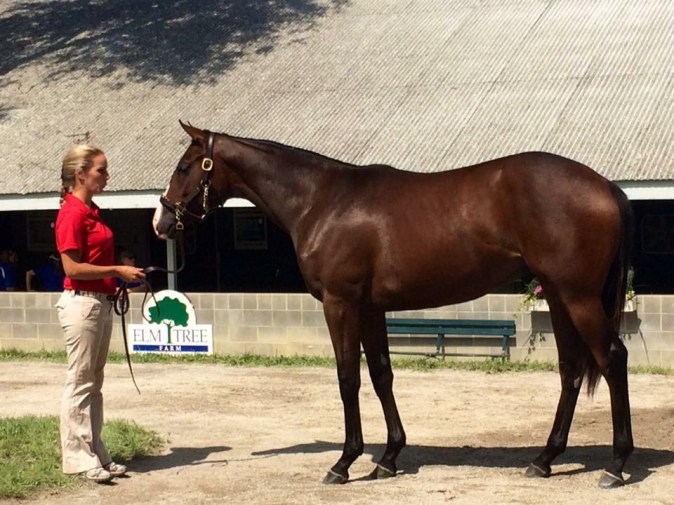
Highlighting the good. Masking the bad.
And as we shift from one side to the next, it becomes apparent that it is not just to flaunt our assets, but to also ensure the safety of the onlookers. Horses around us spontaneously combust in acts of athleticism and anxiety, and it is our job to maintain them. To be their leader, their trainer, their reassurance, and their friend. To demand that they behave when needed and acknowledge their infancy when required. And to add to that, most of us have only met these horses a few hours beforehand.
It is the yearling sales. And I love it.
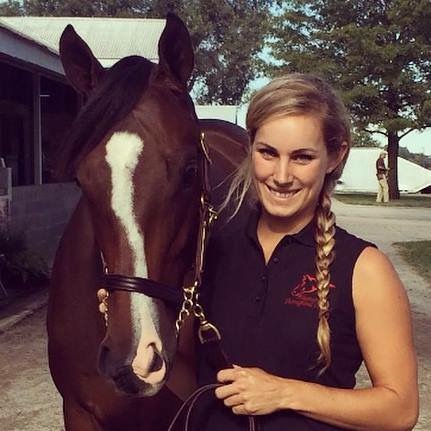
My happy place
I am asked all of the time by students, young adults, and fellow graduate students how I got my start in this crazy world known as the thoroughbred industry, and I never have a one word answer.
I learned so much about veterinary medicine from a vet that I worked with during high school. I learned how to handle difficult and unbroken horses during my stint as a cowgirl in Wyoming. I learned how to properly bandage a leg and give an IV injection as I prepared for my ratings in USPC. I learned how to drive a truck and trailer and a tractor from a mother and father who refused to allow their daughter how to go through life without driving a stick. And, at the end of the day, I learned how to show a yearling on the dusty fairgrounds of Crawford County.
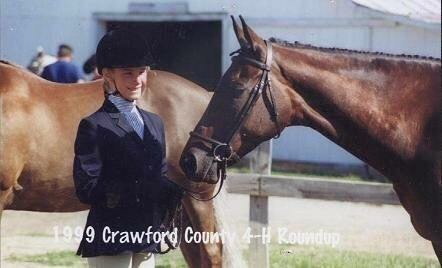
Showmanship rockstar
Surrounded by rhinestones and quarter horses, I was taught how to stand a horse still. How to move them forward from a safe location along their shoulder. How to ask for an impulsive walk, and how to move them away from you through a turn.
I learned a skill that was paramount to so many aspects of my life – and not just the commercial auctions. From conformation shots of sales horses, to flexion tests for a vet, and hopefully even an FEI jog – this ability to show a horse on the ground is paramount.
So I hope that the youth of our country read this and take a step back. Is showmanship and halter boring? Heck yes. But should you listen to your trainers and leaders, learn how to do it to perfection, and then log those skills into the back of your brain for the future? Please do.
Because we are badly in need for skilled horsemen and horsewomen in this up-and-coming generation, and those horribly boring Showmanship skills might just be exactly what you need to get one foot into the door of a future job. A future career. And if you’re anything like me, a future life.
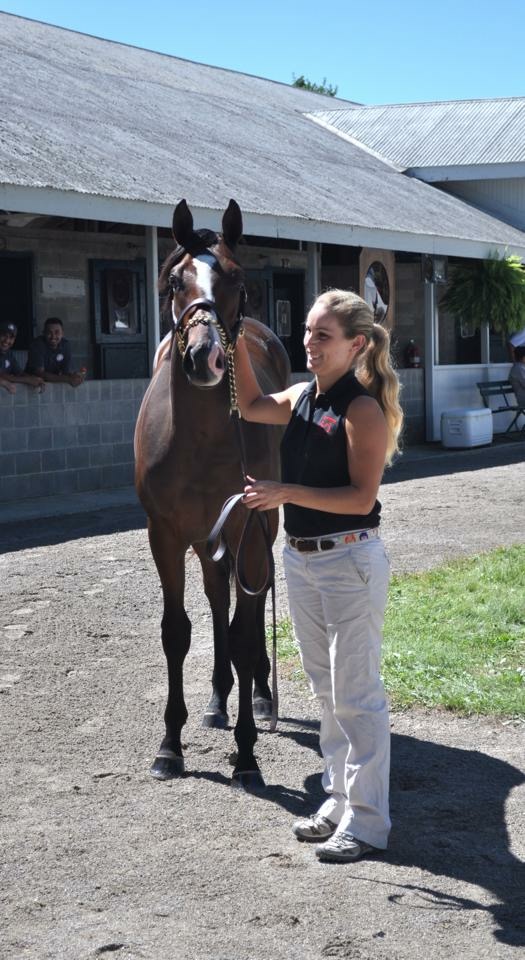
When I was fifteen years old, my trainer pulled my mother aside and recommended that I see a sports psychologist. She said that I was a much more capable rider than I gave myself credit for, and that my biggest road block was my own brain.
I was officially diagnosed as my own worst enemy – and fifteen years later, without the therapy that was recommended, I am still there.
I don’t like showing, and this has become even more apparent these past few years than ever before. And I have started to realize that I am not the norm. Many others lament over the price, and the time, the effort and the heat, and yet still show up weekend after weekend and commit to this lifestyle of being a competitive horse show-er.
Not me. I am fairly opposite. I lament over the same struggles, and the same problems, and yet at the end of the day, I find entering a show the most anxiety-inducing aspect of my life. Definitely worse than taking an exam in biochemistry, possibly worse than analyzing data on a statistical software. And I. Just. Don’t. Get. It.
I am a capable rider. I am fearless at home. And I am constantly trying to get better. To be better. But when it comes to shows, there is an anxiety that emerges from the deep depths of my soul, and lingers for days preceding the show. I lose sleep. I have nightmares about trotting down centerline only to realize I am naked. Or to go into two point only to realize I pooped my pants, or worse – I missed a fence.
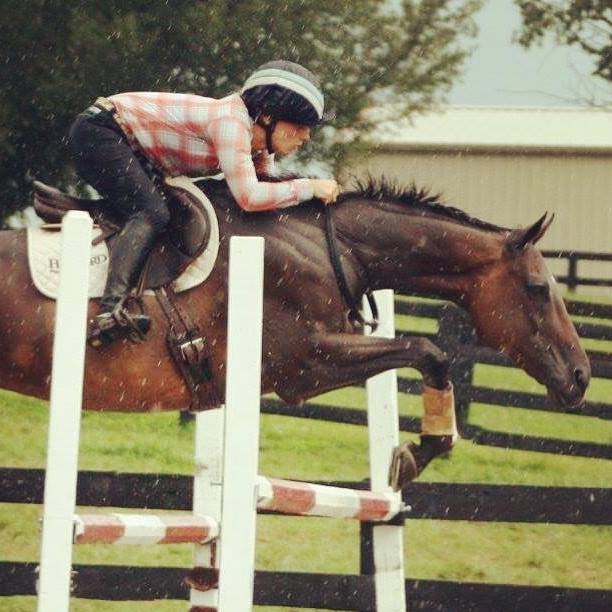
Fearless at home…
I wake up in a sweat, and check my iPhone. I will realize it is only 3am and that I have two more hours to sleep before even considering waking up, but I wake up instead. And I pour myself a cup of coffee and sit on my couch, attempting to take a deep breath. I will pull on my breeches, tack up my horse, and head out to the dressage arena or the in-gate, and I will ride. And 99% of the time, I will do just fine. Only for me, fine isn’t good enough.
Because I have realized that there are two types of people in this crazy horse world. There are those who are afraid to fall, and those who are afraid to fail. And I am the latter.
Before I moved up to training level on Mak, I sent messages to those people around my that I respect their opinion the most. My trainer, my best friends, the man who owns my barn, and my mother. I lamented over my decision and gave them all the reasons why I should not. And each of them wrote back in exasperation that I was not only ready, I was beyond ready.
And I hemmed and I hawed. I skipped one event, and then another. And then I entered. I dotted my eyes, crossed my tees, and paid the million dollars to gallop around 18 fences.
And then I got so nervous I was nauseous. Only I realized that my nerves were very different than the nerves that my friends were feeling.
I wasn’t worried about getting hurt. I knew that the risk of me falling off and being injured were very small. Mak was amazing. He would do his best to take care of me, and I had the skills to stick onto him even in the case of a refusal. But that wasn’t what induced the nausea. That wasn’t what caused the anxiety. It wasn’t a fear of falling – it was a fear of failing.
And for me, it has always been pass or fail.
When I spend $300 of my own hard earned dollars, which accounts for about a week of working in the lab as I pursue my doctorate, I want them to be spent wisely. I set goals for myself, and am such a perfectionist that I am unhappy unless I have reached each of those goals successfully.

You see a pretty dressage horse…I see a rider looking down.
For Nixon it is about rideability and adjustability, being able to collect his canter to fences, and getting through the finish lines on Sunday. But for Mak, it is so much more. I want a softer and more uphill trot. A stadium round that looks like a hunter round. A double clean cross country. And a well behaved and well mannered horse – day-in and day-out.
And because the standards are higher, the risk of failure is greater. And because the risk of failure is greater, the pressure for perfection is almost palpable.
But because I am me, I choke in the worst way possible. Instead of tackling my demons, lowering my standards, and getting over this phobia, I just hide. I don’t enter the shows, even when I can afford them. Or I enter a level lower than I know I should be competing at. Instead of addressing the issue, I exasperate it by letting the anxiety build, and getting farther and farther away from that road block that becomes competitions.
I wonder if maybe this is why I enjoy riding young horses so much, and why I am so much more willing to compete them instead of Nixon or Mak. With a young horse, the expectations are lower. Pick up both leads, stay in the dressage ring, and jump all of the jumps in the correct order. If they accomplish this – it is the perfect day. But if they don’t – it is not the end of the world. We can write on social media of “baby moments” and no gossip will be whispered.

Galloping with slack in the reins on a baby is a win!
But that is not ok. In order for me to grow, I need to force myself outside of my comfort zone. So many people comment that I am the bravest person they know, without realizing the internal anxiety with which I am struggle with.
So here is my resolution. I will put myself out there. I will enter my horses in the next show. I will set reasonable goals, and I won’t beat myself up too badly if they are not met. I won’t worry about what people are saying as they check the online scores, and I will hug each of my ponies at the end of the event before loading them up and hauling them back to the comfort of their paddocks, acknowledging that we have both tried our hardest and deserve a pat on the back.
And maybe, just maybe, I will finally call that sports psychologist. I’ll let you know in a few years if I have finally been fixed, but until then, I will keep saddling up. That, I will never give up.
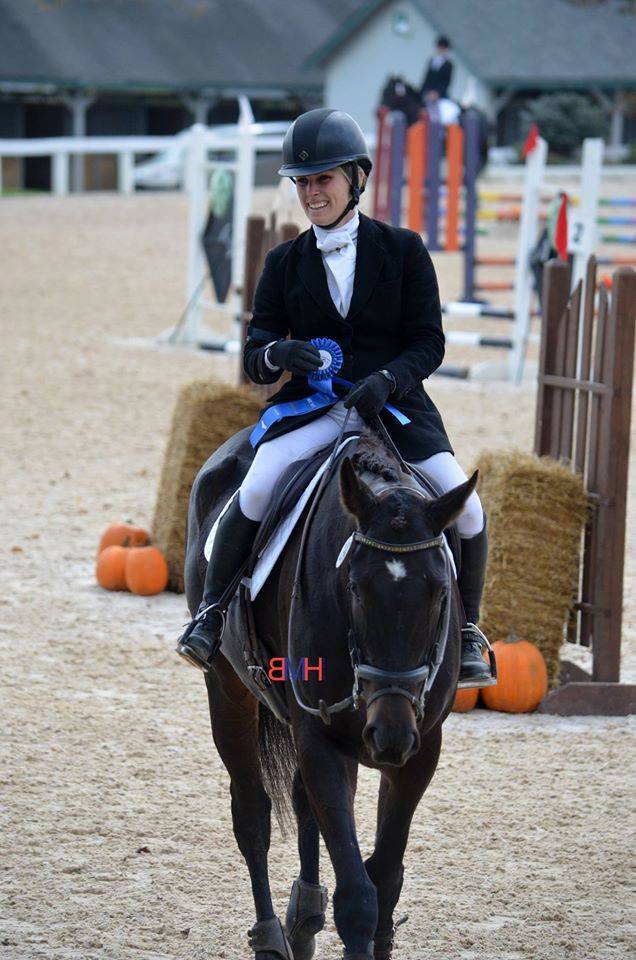
I wrote the first installment of my blog entitled Couples Therapy last week. It was the end of a long month where my horse and I battled constantly. He hated to be groomed, he hated to be caught. He hated to walk hack, to flat, to jump. And I was over it. I didn’t crave the ride that I had previously.
I went to the barn and tacked up Mak, and then Kennedy, and then stood in front of Nixon’s stall and stared at him. Contemplating if it was worth tacking up, contemplating if the stress of the ride was worth the risk of reward.
Would he be good? Would he actually trot and not jig? Would I be able to canter him without grabbing for the brakes every stride? Would I be able to stop him without turning him into a fence – and if I did turn him into the fence, would he stop? Or finally just jump?
And I wrote the blog explaining this exasperation because I wanted people to realize that it isn’t always rainbows and butterflies. That, just like any relationship with a human, there are good days and bad. You will have arguments, and disagreements, and sometimes – you will just want a day or two of no contact with the outside world at all.
With the invention of social media, we are immensely exposed to each others lives. There is a beauty in this, as it allows me to stay connected to friends from afar, and family members have access to my daily minutiae that they otherwise would not get to experience.
But the problem with social media is that we get to pick and choose what others get access to. My friends who are mothers post of their children’s dance recitals, but never mention them talking back or breaking that window with a baseball. My friends in relationships post of their loved ones surprise flowers and immense generosity, but never write of picking up socks or being infuriated by their lack of romance.
And those with horses post relentlessly – which I can’t complain about, because I do as well. We post of blue ribbons, and automatic changes. Flawless rounds, and horses galloping to the gate when called. We talk about finishing on our dressage scores, and how the stadium round was PERFECT with “only one cheap rail”.
My own Facebook page reads no differently. The majority of my horses are for sale, and even if they’re not, I’m cognizant of how easily social media can be stalked in the future. Mak was never meant to be a sales horse, but is currently listed – and I know that if prospective buyers scroll through my page, they will just see flawless photo after flawless photo and captions describing the athleticism, ease, and scope that he possesses. I did that intentionally. I did that with a purpose. No one wants to read the bad, they only want to hear the good.
And I tried that with Nixon. I kept our problems away from social media all of last summer, and instead tried to focus on the positive. I twisted bad rides into good moments, and never let anyone know that he was so tough. And, at the end of the day, it worked.
He turned into the horse that I had verbally proclaimed him to be. He ended up being the most ridiculously talented, athletic, winning horse I had ever owned. And win we did. We won combined tests, we won the dressage portion of the Retired Racehorse Project TB Makeover, we won jumper shows, and he won my heart.
And because of my exaggerations, and my ultimate lack of truth, I began to hear people talk about Nixon. At shows, fellow competitors would mention the fact that of course Called to Serve won. Or my friends would message me saying that they were happy that I had been placed into a different division. Heck, my amateur status was questioned by USEF simply because another competitor was concerned about their chances against him. He got the reputation of being good. Really good.
I began to realize that this was mostly my fault. I didn’t spend much time talking about the struggles. The toughness. The arrogance and the cockiness. The horse salesmen in me had a hard time admitting his flaws, but was good at promoting his strengths. They only saw him win, and didn’t see my lack of sleep the night before the show as I worried if he was even ready.
So I began to post more honest statuses, but always dubbed them “Conversation’s with Nixon” which my friends and followers rather enjoyed. I would explain some aspect of his poor behavior from his point of view, explaining why he had done exactly what he had. If he had bolted during his walk/canter transitions that day, I explained from his point of view that he just “wanted to win the gallop” in Tokyo. If he attempted to bite me while grooming, I told my followers that he had just been letting me know that his salt lick was finished and my sweaty arm would suffice. And my friends and followers ate it up. They laughed and commented of their own struggles with their horses.
But then three months ago, Nixon popped a splint. He spent 4 weeks on stall rest and 4 more weeks with no riding and controlled turn out. And then we began legging him up again. In these eight weeks, he gained about 200 pounds, and his ego inflated alongside his belly.
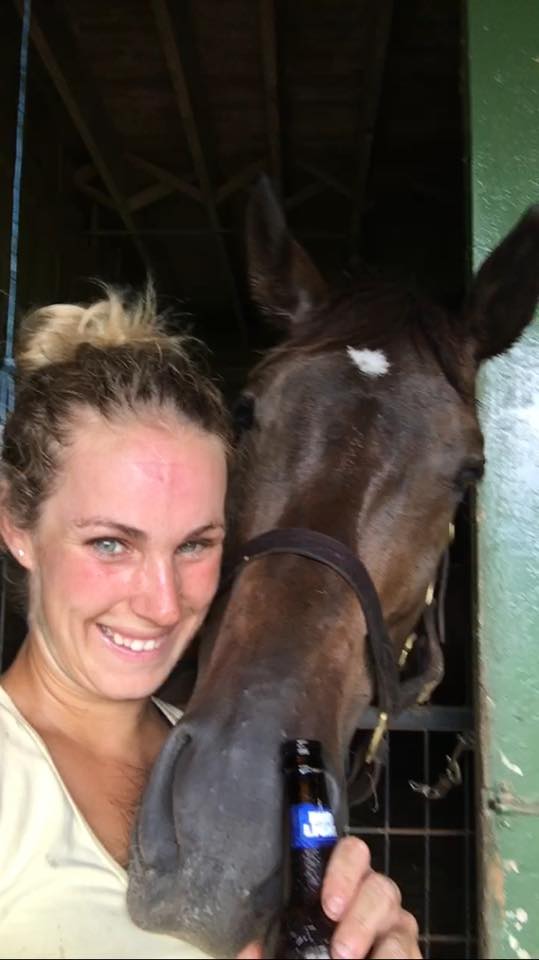
Stall rest was tough. We drank a lot.
I got the go ahead to start legging him up about 6 weeks ago, and went about it hesitantly. At first he was great. Out of shape and without much steam, he began his trot sets like an angel. And then as his fitness increased, combined with his newfound size and strength, he got hot. And we began to brawl.
I wanted to know where my 2nd level dressage horse had gone. I wanted to know why we were suddenly charging cross rails again. I changed bits, I changed martingales. I tried to hack before, or hack after. We tried less riding, or possibly more. And nothing worked. I would come home upset and defeated, wondering what it was that I was doing wrong, or what lack of communication was going on between the two of us. Was it the heat? Was he in pain? Ulcers? Kissing Spine? EPM? A brain tumor?
I wrote the last blog during this time, and the response was pretty intense.
Because everyone who responded saw the situation in black and white. If he was misbehaving, it was either 100% my fault because I sucked at riding. Or it was 100% his fault, but solely because he was in pain, or telling me something was wrong. Many people messaged me and told me that they feared for my safety and that I needed to get rid of him before I got hurt. And others told me that I needed to find a horse better suited to my skill level, and let him go to a real professional. That it was obviously black and white – and he was black, and I was white.
And I’m here to tell you that horses are not just black and white. Well, they are, but they are also bay. And chestnut. And spotted, and dappled. And sometimes, they’re a beautiful grey.
There is so much grey in this sport. In these relationships with these animals. Because they are exactly that – living, breathing creatures with a brain, a heart, and four extremely strong legs.
Not all people are made for every horse, and I support that statement strongly. I have written blogs about finding the right horse for you, and I truly believe this to be true.
But, if you ride long enough, at a high enough level, you are bound to find both good times and bad. The horses underneath you have opinions, and emotions, and sometimes they just wake up on the wrong side of the stall.
And we as riders have stress from our jobs, our boyfriends, our income and our families. Sometimes we go to the barn as a stress release, with a clear mind and a clear heart, and sometimes we walk into the aisleway begging for a fight. Or as I like to say, cruising for a bruising.
I believe that you should be matched with a horse who is well suited to you, but we all must also understand that horses are not robots. And we are not dictators. This sport is a conversation, a partnership, and a relationship that continuously ebbs and flows, growing and regressing daily.
Last month was tough. I’m not going to lie and write a fluff status saying that it was a great time in my relationship with Nixon. Both Nixon and I were not in a good head space, and we battled because of it.
Because I have met a horse just as stubborn, tough, intelligent, and cocky as myself, and because of that – we can, and will, brawl.
But after writing the initial blog, I went back to the barn and regrouped. I tacked up, swung on, and reached down and scratched his neck. I draped my legs loosely around his barrel, and gathered my reins. I sat up straight and I asked him to bend, to soften, and to relax his poll.
And for the first time in many weeks, we had a fantastic ride. He remembered how to half pass, and how to do haunches in. The next day I set fences, and he calmly and softly cantered towards them and over them.
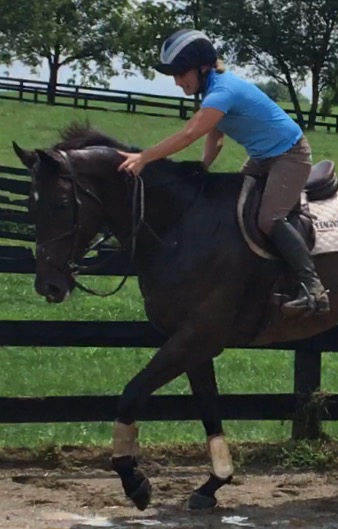
Happiness is back.
We are happily in the middle of Couples Therapy. Where there isn’t yes or no, life or death, black or white. Just a lot of conversations, negotiations, happy mediums, and grey area.
“He hit me again.”
“Can you see this bruise?”
“It wasn’t his fault, I was in his way.”
These were the messages my girlfriends received most of the last two weeks. And if it was anybody else, any other woman – in this entire world, their responses would have been different.
I would have been told to go to the nearest shelter, or call 911. I would have been told that he would never change, and that he didn’t love me. Or that he had mental issues, and needed to be left – running, and screaming.
Instead, I was told the opposite.
Because the man I’m in an abusive relationship with, isn’t a man at all. He’s 1400 pounds of solid muscle, shod hooves, and raging adrenaline.
It’s not my boyfriend — it’s my horse.
And the responses back are the opposite of what I would expect to read.
Instead of being told that I don’t deserve being thrown against a wall, I am asked if his back is sore. Instead of photographs of bruised arms and battered hips invoking rage or sympathy, I am told to change my bit. And each time that I write my girlfriends in a rage over being taken off with, or tossed into the air, nose bleeding and hands blistered, I am told that it is my fault – not his.
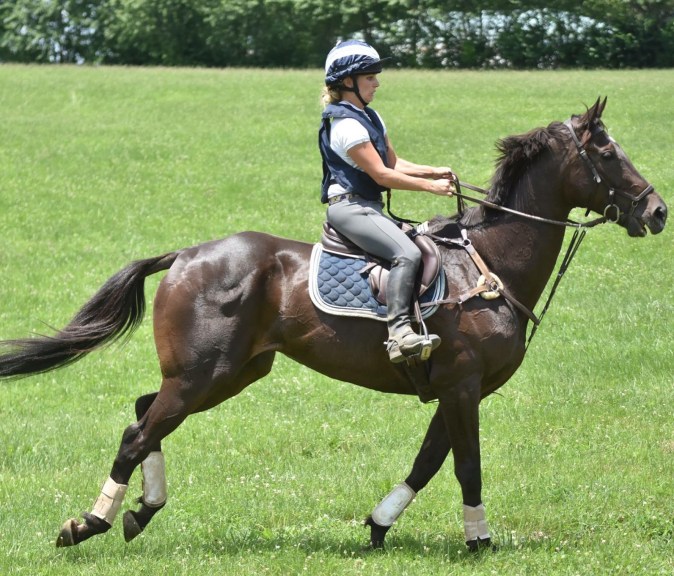
My face says it all. Photo by JJ Silliman
And I wonder – why is there this juxtaposition? Why is it ok for this massive beast of an equus to toss me around, when it is so NOT OK for my 180 lb. manfriend to? Why am I told every day that it is always my fault, and never his, when the opposite would be said if it was a human? If it is never your fault as a woman to be abused by a man, why is it said to always be your fault as a horsewoman?
I posted a humorous status about exactly this on my Facebook page a few days ago. Explaining this relationship based on abuse, after a long day at the barn where I ended up sore and exhausted. I wrote (jokingly) that if nothing changed in a few weeks, I would be admitting defeat and someone else could get the bastard. And I watched as comment after comment was posted telling me how this entire situation was my fault. How I was doing SOMETHING wrong to ask for the abuse. It’s not his fault, it’s just yours.
And I started off agreeing. Just like a woman who had been cheated on, I had to admit that I was warned. I had been told by his previous lovers and relationships that he was a jerk. He had never lied to me and tried to convince me otherwise. Just like a woman who might google a man before entering in a serious relationship, I had done the same – and had found horror stories of his past indiscretions.
Mug Shot.
He had mugshots and a jail record, and I had known all of this before signing on the dotted line into this marriage of horse and horse owner.
I entered into the relationship as any woman does – believing that I could train him. Put the seat down, do the dishes, grill a steak, not kill me on cross country — ya know, the basics.
But as all women in the past 2016 years have found, the man could not be trained.
Sure he mellowed as his six pack turned into a beer gut, and his glistening coat got a little muddy. He let me believe that the improvements were being made, while secretly plotting his future midlife crisis.


He knew all along that he had me duped by his stunning good looks, his $500,000 salary, and his pristine pedigree. He lured me in with a few good nights out on the town and a couple of blue ribbons. He waited, and he plotted, and right when my heart was full and my commitment to him for life secure, he snapped.
He forgot how to half pass, he forgot how to jump. He couldn’t seem to figure out how to trot, and definitely didn’t remember his lateral work. But he remembered how to gallop, and he remembered how to bite. He found a renewed love for spooking at invisible mythical creatures, and a stunning ability to avoid all contact from water while being hosed off.
And I hung my head, feeling like this was entirely my fault. I had married the beast, making the bed that I would be forced to lie in. It was my fault that I was being assaulted on a daily basis, and not his. He was bred and raised to be this way. His entire life he had gotten away with these bad habits, so who was I to try to change him?
I heard over and over about how the tough ones are the best, and how they make us greater riders and better horsewomen and men But I’m also here to tell you that sometimes these tough ones just suck. They’re cocky. They’re arrogant. They know how ridiculously good looking they are. And, at the end of the day, they’re just jerks.
But I’m not a quitter. I’m not yet filing for divorce.
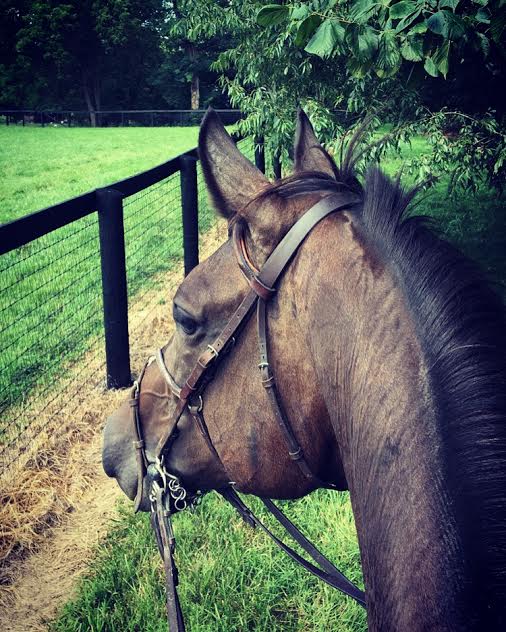
Couples therapy
But I did ask him if we could do couples therapy, and he agreed. So for the next few months, a few times a week, we are going to go to therapy (a lesson), take long walks holding hands (road hacks), and joint bubble baths (bran mashes). And I hope, and I pray, that we can get this relationship back on route. We’re going to see if the chemistry that made us fall in love can be reignited, but contained. We’re going to see if this marriage of horse ownership can be save. If not, there is going to be one sexy lawn ornament in Lexington, Ky, and one bitter divorcee in me.
 A Yankee in Paris
Recent Comments