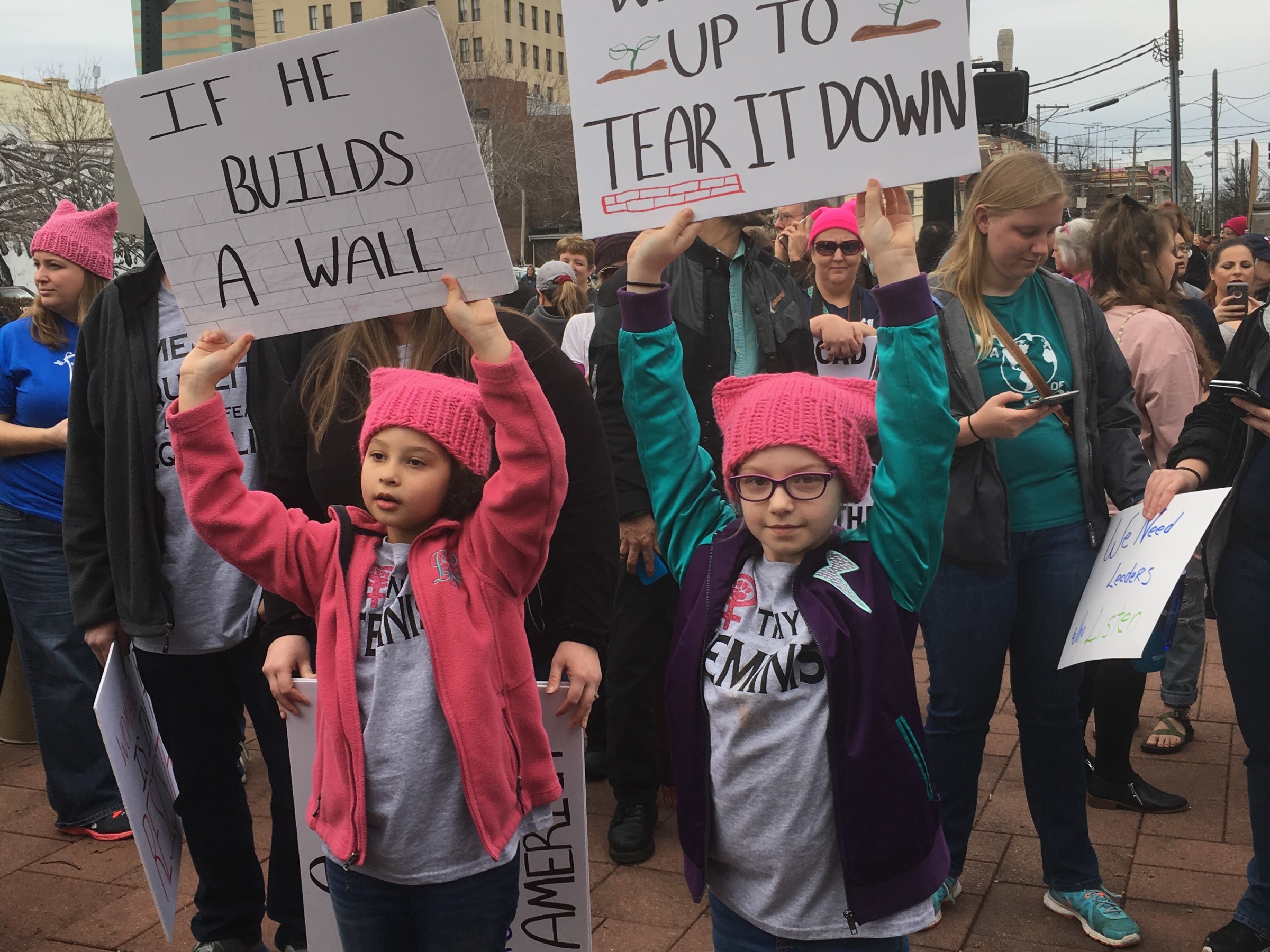

I wasn’t sure if I wanted to participate in the Million Womens March on Washington when I was first invited by a friend on social media.
I grew up in a family of lawyers, surgeons, and politicians – an educated bunch if there ever was one. Sexism did not exist in my family, and women were invited into the arguments right alongside the men. My grandmother was one of the brightest and impassioned women I had ever met, and there wasn’t a single woman for 3 generations back who wasn’t college educated.
And because of this, our holidays were spent arguing. My grandfather was an esteemed lawyer, and he would start every conversation with a topic. Us children and grandchildren were allowed to weigh in. There only came a few stipulations – you could neither cry, nor scream, and if you made a statement without a fact, you were out.
OUT.
You were asked to leave the dining room table, and with that, the conversation. Because rational debate did not have time for tears or hysteric screams. It did not have time for statements based on ignorance instead of intelligence. It did not have time for lies instead of facts.
It did not matter at that table which side of the argument you stood on, the rules were the same. As we got older, he encouraged us to play both the plaintiff and the defendant. He wanted us to use our minds and see the conversation from both sides of the table. We were forced to rationalize other peoples feelings and opinions.
And it worked.
Out of his five grandchildren, three are lawyers. One is a board certified orthopedic surgeon. And then there is me. The free spirit. The naysayer. The one who didn’t stick to the chosen path, but who found a path just the same. The one who should be defending a doctorate in veterinary sciences in just a few short months. With a focus on reproductive physiology, specifically on the innate immune response of the uterus. And who will use every ounce of those skills gained at that dining room table in that defense.
And I decided, just yesterday morning, that that would be why I would march. Only it wouldn’t be in Washington D.C., it would be in Lexington, Kentucky.
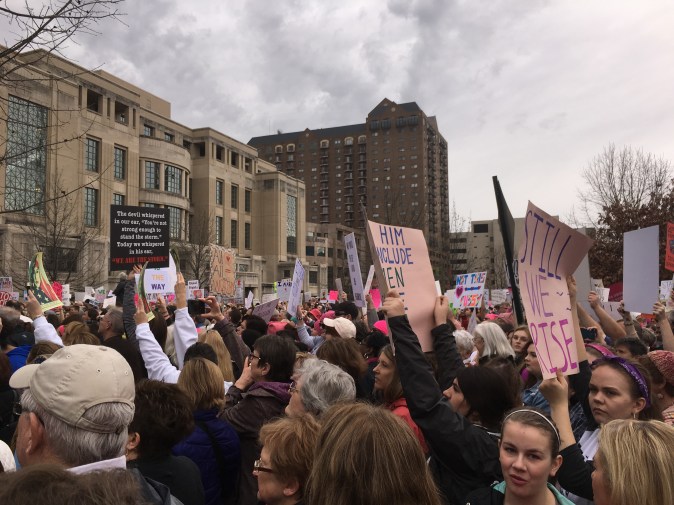
I would march for the woman who didn’t get to experience that upbringing. The one who was always told she was lesser, never equal. Who wasn’t given the opportunity of a college education, nonetheless a doctorate. Who was told that women were created to produce embryos, not to study them.
I would march for the woman who has chosen to use her uterus for reproduction. Or the one who had no choice. For the woman who maybe understands that she is pregnant, but has no scientific basis for how fertilization occurred, or what her body is truly experiencing. Who seeks out assistance in this endeavor, and turns to Planned Parenthood. Who wants nothing but a healthy baby, but can’t afford an expensive HMO. So she walks down the street to her local clinic for her ultrasounds. Her prenatal vitamins. Her advice.
I would march for the woman that does not want the embryo growing inside of her, but has nowhere to turn. The one who was unsure if the condom broke, or who was told that contraception was a sin. Who has been listening to politicians tell her that gestational length is 9 months and not 10. Who has been told that an abortion is murder. Who has watched as her uterus is discussed on major networks. By journalists who do not know what D&C even stands for, and simply shouts “DNC” over and over in a rage.
I would march for the young black woman who is experiencing suppression like mine, only far greater. Simply because I have a different melanin circulating my body, and therefore was bestowed the ability to be greater. Better. Smarter. Wealthier. Right? My heritage traces back to Ireland, and theirs to Africa. Both a suppressed people. Both an enslaved people. But I am greater, right? Only I am not. I am far from greater. And I want that to be known.
I would march for the latino or latina who is here illegally. Whose parents found his or her hometown to be too dangerous and sent them across the border at the age of 13, with nothing but a backpack and a wad of cash. Who tried to do it the legal way, saving up dollars every month to hire a lawyer to file for a visa. Whose lawyer in Mexico took the $8,000 and ran. Whose police officer was so corrupt that there was nothing that they could do to that lawyer. So they saved up another $1,500 and hired a coyote. A scary man who would have unlimited access to their teenager as they raced across the border under the darkness of night.
I would march for the gay man or woman who just received the right to marry their partner of twenty years and now fears the dismissal of that sacred document. The man or woman who had to face off the ignorant Kim Davis and won. The man or woman who has married that partner and adopted a child who otherwise would have spent their formative years traveling through foster homes. The man or woman who now fears the effect of that dismissal on those children.
I would march for the children that are born, whether they be mine, my sisters, to that young black woman, or the latina who lives next to us. For those little girls and boys who will grow up in 10 or 20 years and ask why. Why did that woman march? Why was it needed? Who were Donald Trump or Matt Bevin? Mitch McConnell and Paul Ryan? And I hope that their mothers and fathers can sit them down and open up a history book, and explain that 2016 was a scary time. A time where few people felt safe. A time where few people got along. And a time when their mother/aunt/father/uncle/brother/sister decided that that needed to end.
That the only thing to fear was fear itself.
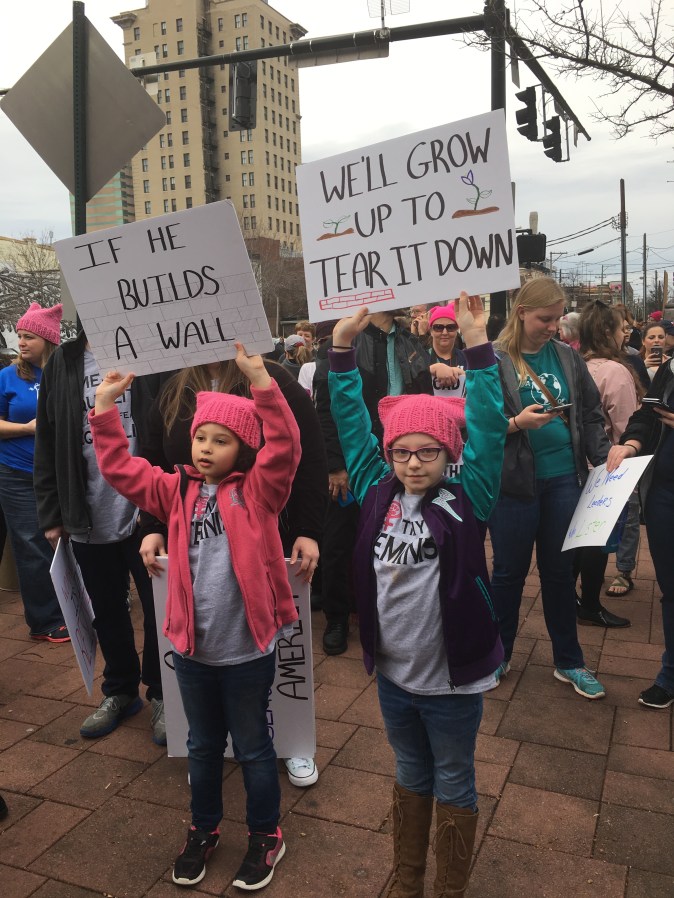
And finally, I decided to march for me. For a young woman who always seems to be sticking her neck out to be guillotined by the masses. Who goes to bed at night with tears streaming down her face after reading the negative comments. The young woman who so many think has it together, but who is constantly questioning her ability. Her strategy. Her worth. The young woman who questions everything she believes in constantly, and wonders when it is time to quit. I march for that same woman who swears that she will quit, and then is remotivated by the young women and their parents who reach out to tell her of the impact that she has. I march for them. Because I marched for me.
I march because my voice is the only thing that I have. I march because I am constantly wondering when I should shut up. Because I am told that my brain and my being will receive $0.70 for every dollar that my male labmate will make. And because in the last few years, I have realize that so few others will use theirs. I march for those of them who refuse to use their voice because of fear. And I march for those who refuse to use their voice because they disagree. I march for the ones who fear their lack of informed decision, and I march for those who think their information is better than mine.
I was told that yesterday was a protest of Donald Trump and his administration, but honestly, my distrust of him was not a motive for me.
I did not march to protest anything. Instead, I marched for proof.
To prove that we are equal. To prove that we are better than the rioting and looting that has happened. To prove that we can come together as a united entity. To prove that we are strong enough. Brave enough. Verbal enough to get what we want accomplished.

To prove to the woman from Jessamine County who reached out to my friend and I with tears in her eyes to say that she was overwhelmed with emotion after seeing the crowd because she didn’t know anyone “like her.”
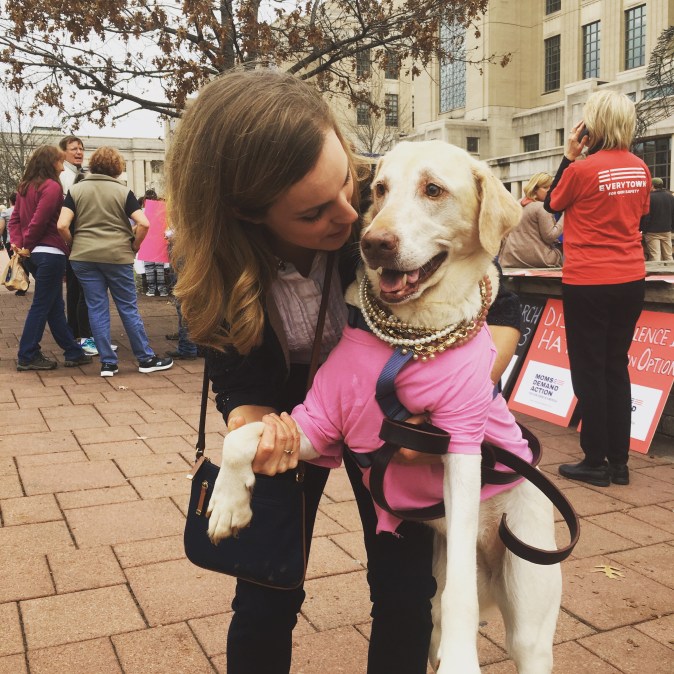
To prove to the small latina girls who played with my dog as their mother and grandmother listened to the passionate speeches that they are just like me. That their accent doesn’t make them any less.
To prove to my friend Maggie that she is not alone. That her Facebook posts have not fallen on deaf ears. That she does have a kindred spirit, even if it means marching on a bruised and broken foot.
To prove to the world that we can find empathy for all. To the black women who found empathy and formed a line to shake the police officers hands as they marched by them, thanking them for their service to keep our citizens safe.
Women of all colors, all orientations, and all religions, who marched as one in a town that bleeds blue on every day of the year besides election day.
And finally, to prove to myself that I am not alone. That there is a purpose for people like me. For those of us who want to use our words, our minds, and our audiences for good. Women who want to get things done with praise, not punishment. Who want to use our platforms for change through organized unity of peaceful protest. Who were raised by the strongest of men who showed us that women were just as strong. Just as capable. Just as smart.
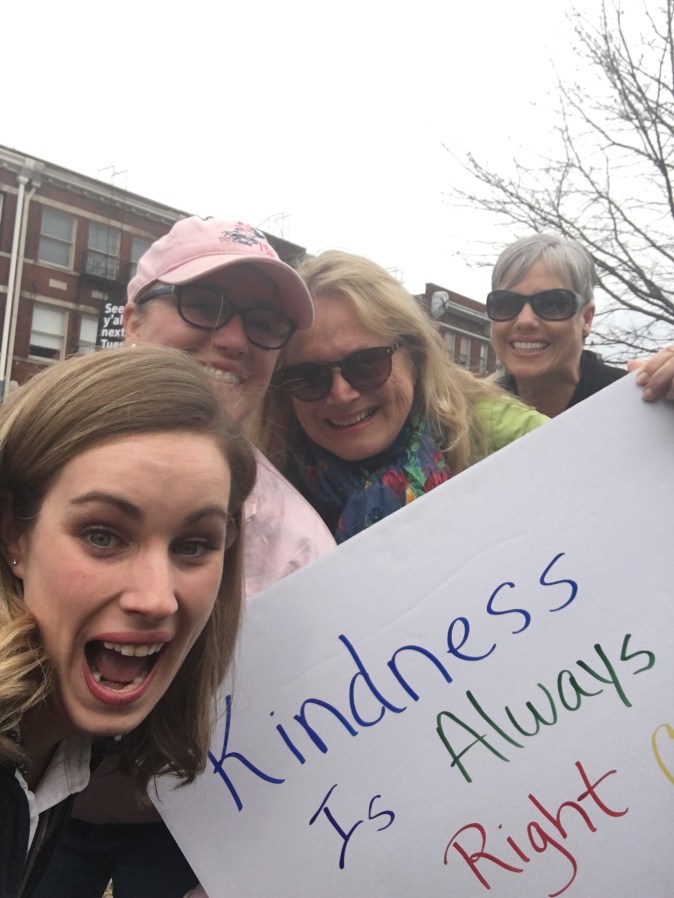
That is why I marched.

I can remember exactly when I first stepped foot onto the soil of the Kentucky Horse Park.
I had moved to Lexington, Kentucky 0n September 12th, 2008. My father had passed away on September 5th, and following his funeral and wake, I had packed my clothes, my cat, and my college degree and began the 7 hour drive down I-75 to the bluegrass.
I arrived with nothing. I knew no one in this town, and promptly quit the job I had lined up as a small animal vet tech. I had about $1,000 to my name that I had saved up as a bar back during the preceding summer, and was as depressed as a person could get.
But what did I have? I had the Kentucky Horse Park. Because I had Funny Cide.
I would find myself waking up day after day and climbing out of my bed with one plan for my day – one mission alone – to go visit Funny Cide.
He had become my favorite racehorse after I watched him streak to a victory in the 2003 Kentucky Derby alongside my father. We had loved Funny Cide because he was the peoples horse. He wasn’t owned by a Sheikh or a wealthy business tycoon. He was owned by a group of men who lived just miles from where both my father and I had attended college in upstate New York. And because of that, we cheered him across that finish line until our voices were hoarse.
And so day after day, I would drive myself to the Kentucky Horse Park to whisper sweet nothings to Funny Cide, and feed him a peppermint. I didn’t have a horse of my own, and with no job, he was as good of a motivator to wake up as it got. And by residing in the Hall of Champions – just one aspect of the education department at KHP, he was accessible to all.

Funny Cide and I
Possibly more importantly, he was accessible to me.
And I slowly realized that just as I had campaigned for him during his highest moments in life, Funny Cide was now supporting me as I attempted to reenter a happy life.
This morning I learned of a strategic planning meeting at the Kentucky Horse Park that had occurred last night. I read mixed reviews about the meeting – both from those who thought that it went well, and those who thought that not enough horse enthusiasts had come. And both speaking of how important it was for our government officials and our fellow equestrians to understand why the Kentucky Horse Park is an important part of our culture. Our economy. Our lives.
Most of us understand that we currently have an administration in our state government which is not very equine-centic, and they are at odds with those of us who are – and in the middle of this conversation is the Kentucky Horse Park. It might not profit the state of Kentucky a large amount of funds, but it has always been there for us as riders, horse lovers, and as an educational tool for those millions of Americans who have never even seen a horse up close.
And as I read the statuses about fear of the Kentucky Horse Park morphing into something we don’t even recognize, I couldn’t help but think about Funny Cide. And how many of my friends have a similar story, a similar affinity to a specific aspect of the Kentucky Horse Park. It offers so much to our community, in addition to the world at large. It is a premier destination to so many – both equestrians and not – to share one thing, and one thing only – a desire to learn more about, do more for, and work alongside the horse.
But what Bevin, and many people in this state don’t realize is just how much the Kentucky Horse Park encompasses. So here are just a few things available to us because of The Kentucky Horse Park, in no specific order:
Just as I spoke of before, the Hall of Champions is an amazing destination for anyone who has any interest in horses. Stalls filled with the greats – from thoroughbred racehorses to standardbred harness horses, it allows you to interact with millionaires. As the able handlers bring them out for their parades, you can see the horses chests fill with pride as if they are in the saddling enclosure once again. It is truly a once in a lifetime experience.
The Rolex Kentucky 4* 3-day Event
The only FEI 4* event in North America, Rolex is by far one of the greatest weekends in Lexington, Kentucky. Premier riders from around the world travel to our little town to compete for the title of “The Best.” And yet Rolex is not just for venters, with the shopping, the eating, and the accessory shows entertaining for all. My entire family loves coming on this weekend, and I have yet to meet someone who hasn’t.
The Horseback and Horsemanship Experience
This is an amazing educational experience for those of us who don’t personally own horses, and yet have craved riding once since birth. The capable handlers and equestrians of the KHP staff will teach you about general horsemanship and tack, and then lead you on a trail ride throughout the horse park in a once of a lifetime experience.
The Retired Racehorse Project Thoroughbred Makeover
Over 350 equestrians of all disciplines ranging from eventing to barrel racing come to the Kentucky Horse Park to compete for the title of America’s Most Wanted Thoroughbred. With $100,000 in cash prizes in addition to the bragging rights, it is also a great show for anyone who loves horse racing and wants to interact with the animals that they adore as they transition to a new career.
The sport of royalty is brought into our backyard with weekly polo games with players of all levels – from a half goal to 10. And it is free for any citizen who wants to have their Pretty Woman moment to attend. So grab a flute of champagne and a floppy hat and go be your best Julia Roberts as you watch some of the most fit and trained horses gallop at breath taking speeds while their riders keep their eye on the ball.
What was once a destination show at Madison Square Garden is now located right here at the Kentucky Horse Park. And the elite hunter and jumper riders travel here to win the most prestigious of year end awards. In addition to the general classes is the Puissance, an evening of death defying leaps over a (foam) brick wall that keeps getting higher. Paired with your favorite microbrews from around town, it is an evening that even your husband will enjoy.
The Kentucky Classic CDE (Combined Driving Event)
An FEI event in its own realm, the elite combined drivers travel to the Kentucky Horse Park for a weekend of the highest level of competition. Watch as the drivers convince their teams of carriage horses navigate obstacles that would make most Rolex horses blush at breakneck speeds. Agility and endurance are combined with the most heightened levels of training on this special weekend.
The Egyptian Event: A Premier Arabian Show
One of the oldest and most refined breeds of horse comes to the Kentucky Horse Park for its premier show. The Eqyptian Event is for the specific horses that can trace their lineages back to the roots of the breed – dating back thousands of years. And they open their doors to explain what exactly encompasses the traits that these breeders are looking for, and how those correlate with their ability as endurance mounts.
What horse lover didn’t own one of these statues at a young age? Breyerfest is literally Christmas Day for the pony-obsessed child, as they get to interact with the horses that these statues are mimicking. Fun demonstrations, great shopping, and meet and greats for those starstruck children make the event truly one of a kind.
United States Pony Club Festival
The United States Pony Club is one of the oldest organizations that stands upon proper education and safety of all riders, and at the pinnacle of its foundation is the Pony Club Festival. Riders from all regions of this country compete amongst each other to be selected to represent their club and region at this nationwide event, and it happens right here in Lexington. Be prepared to see a lot of khaki shorts and knee high socks, but no saddle will have a speck of dust on it that weekend.
Lying alongside the outskirts of the Rolex XC courses main field is a turf track that might go unnoticed on most weekends at the Kentucky Horse Park. But for one weekend in May, it will be adorned with timber and brush jumps and lined with cars. Twelve hundred pound thoroughbreds will come careening down the turf as they find their stride to the jumps as the crowd of tailgaters cheer them towards the finish line.
Road to the Horse: A Horse Starting Competition
A weekend devoted to the starting of usable horses, Road to the Horse is a favorite for many equestrians around the world and fills the stands of the Alltech arena. Skilled trainers are selected and then matched with young horses with no prior training and compete with each other to show which persons techniques and ability is the best. By the end of the week, the teams are able to perform at a level that most riders would be jealous of.
While you can find the Horse Park full of Range Rovers and wide brimmed hats on many weekends, on this particular one you are more likely to find a dually and a Stetson. Come watch great cowboys attempt to stick on for 8 seconds, wrestle a steer, or tame great beasts. Its a fun-filled evening for the entire family, and for a great cause.
For the equestrian in us who loves the American Quarter Horse breed, there is the Kentucky Classic. A four day show that encompasses all classes from halter, to hunt seat, and western, it is a destination show for so many within the Quarter Horse breed. So grab your rhinestones and polish your silver, and head down to the Kentucky Horse Park.
Quite often at the Kentucky Horse Park, one will find themselves traveling to their competition arena and pass what appears to be herds of small ponies with abnormally tall teenagers alongside them. If you see these mounts, decked out in matching polos and colorful saddle pads, you should turn around and follow them. Watching these skilled riders and their faithful companions challenge each other in their mounted games within the Rolex Arena is mesmerizing – a day well spent for any horse lover.
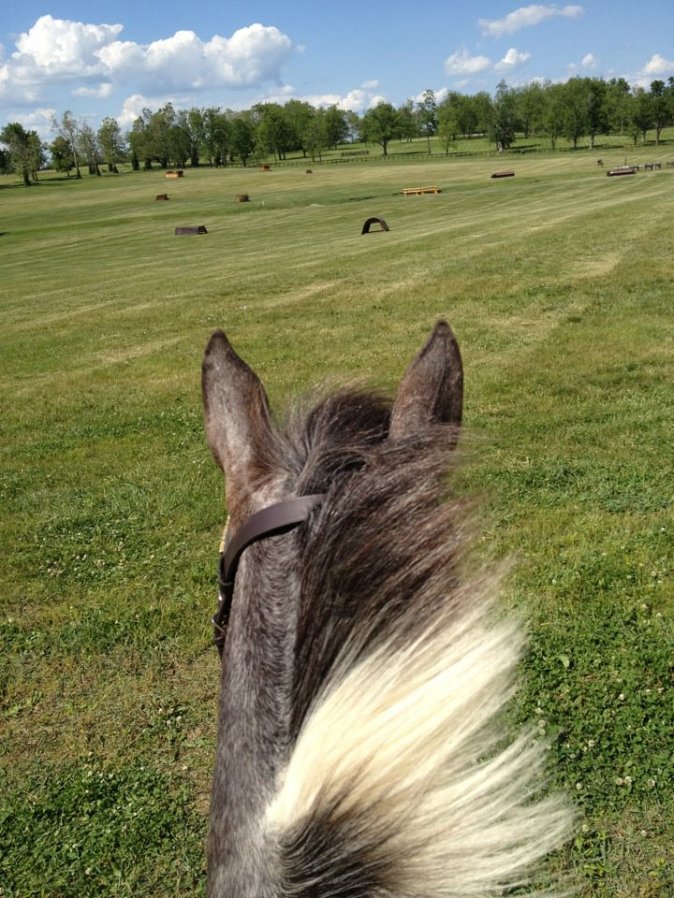
Getting to school XC for the first time at the Kentucky Horse Park
The Kentucky Horse Park means so much to so many of us – from a show grounds for premier shows to an educational tool of our local school system. It is a part of our trainers and horsemens business plan, a destination for our families vacations, and a place that we as young children dreamed of visiting.
The horse industry in Kentucky has a 3 billion dollar economic impact on the state, and it is understandable that so much of that is in the breeding, selling, and racing thoroughbreds.
But so much of it is also in exactly what the Kentucky Horse Park exists for. The local jumper trainer. The 4-H participant. The little girl whose family can’t afford riding lessons, but who put a Breyer under the tree every year. And someone like me, who was a little lost in the world, but who knew that her love of horses would guide her way back to happiness.
We need our government officials to understand just how truly special this facility is to us as horse-enthusiasts, and exactly why we need it. So please, click on the link below and sign our petition to keep the Kentucky Horse Park as a place for all things horses, and then comment below with your story. What makes the Kentucky Horse Park special for you? Why do you want to keep horses in the Kentucky Horse Park?
CLICK HERE to sign the petition to keep the HORSE in Kentucky Horse Park
Last night, my manfriend drove us to one of our last dinners away from the farm for the foreseeable future, and I felt my brow furrow as he handed me his cell phone and told me to read.
He had received an email with an alert for a diagnosed case of Equine Herpes Virus-1 (EHV-1) in the state of Kentucky, and was (rightfully) unnerved by what this could mean for the horses under his care. As the broodmare manager of Mt. Brilliant Farm, he was in charge of a plethora of horses – ranging from newborn foals to the pensioned mares turned out on 100 acres of lush bluegrass. These horses wellbeing and survival depended on he and his staff and EHV-1 was nothing to laugh about, especially for those of us taking care of pregnant animals.
And in the last few weeks, we had all read and heard of the cases of EHV-1 that were occurring at The Fairgrounds, a racetrack located in New Orleans, Louisiana. There had been (unsubstatiated) comments of horses leaving the facilities even after quarantine had been put in place. There had been (non validated) mentions of horses moving from barn to barn even after cases had been diagnosed.
But like most things in the horse industry, for those of us located states away, it was out of sight, out of mind.
Except for it wasn’t – at least not for me. And my boyfriend knew how closely I had been following the situation.
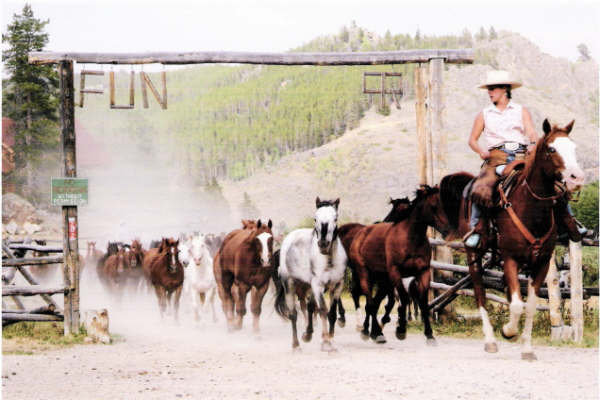
Over a decade ago, I worked on a ranch in Buffalo, Wyoming. Having been a guest to the ranch myself for years, I had applied at the age of 20 to be employed as a wrangler and therefore in charge of the care and training for a herd of over 150 horses. Routine lameness exams, the assessment and diagnostics of many illnesses including strangles, and even the occasional euthanasia – all of that was in the hands of the wranglers.
And with it came a plethora of stories. Of prior cases. Prior horrors. And one of those was of a horrendous outbreak of EHV-1.
And as I listened to the wranglers speak of the devastation that this outbreak left – of horses sitting on their haunches like labrador retrievers, of the chronically ill with heightened respiratory infections, and of the dozen horses that had to be euthanized – I couldn’t help but wonder.
Was it because of the level of animal husbandry that caused this outbreak? Was it the lower than usual number of vaccines that they received? The close quarters or the lack of top veterinary care?
And I walked away that summer thinking that this wouldn’t happen anywhere else. To any ONE else. But it did.
This same virus swept through the english riding facility of the University of Findlay. A top notch facility by any means, with horses who were stalled, fed, and cared for with the highest level of care. It also killed 12 horses there – leaving a devastation to the faculty and students that no one could imagine.
And at that moment I realized that no horseman was safe, and I began to dig.
Why wasn’t there a vaccine for the neurological strain? Why were we able to (for the most part) prevent the abortive aspect of this virus, but not the strain that cause this devastating incapacitation of the hind limbs?
In 2007, after hearing these horror stories from the ranch and beyond, I wrote a 13 page document in regards to a literature review on this. Under the prompting of my Cell Biology professor Dr. Ana Estevez, I chose EHV as my topic of interest for our final project.
Little was understood at that time on what mutation shifted the disease from causing a little cough and nasal discharge to that of irreversible neurodegeneration. And most papers ended with the statement that more was needed to be done, more needed to be found.
Flash forward a decade, and here I am sitting at a lab bench at one of the most famous equine research facilities in the world: The Gluck Equine Research Center. Only 12 hours after reading of the EHV-1 case that is now so much closer to home, I begin my morning by putting on a white lab coat and preparing my samples for analysis. And as I wandered down the hallways to get ice for them to thaw on, I bumped into one of the world leaders in equine virology – Dr. Udeni Balasuriya.
Dr. Balasuriya is not only brilliant, but he is also extremely amicable and his infectious laugh can be heard down the halls of Gluck on most days. And because of this, he has become one of my favorite faculty in this department.
So today, I beseeched upon him to hold the elevator and let me pester him on this topic.
And what I learned was alarming.
He told me that while the equine herpes virus-1 (EHV-1) usually only causes mild respiratory distress, it can migrate via infected white blood cells to other sites of the body including the uterus and central nervous system, leading to abortion, neonatal death, and in my experience – the severe disruption of the nervous system which leads to extreme neuropathy, now referred to as equine herpesvirus myeloencephalopathy, or EHM.
These reports of the cases of EHV currently existing in the United States would have you believe that the transfer from a simple cough to a neurological nightmare resides in a simple switch of one nucleotide, or the molecules that make up our DNA, in addition to the DNA of viruses. In science, we call these “SNPs” (single nucleotide polymorphisms), which can then completely change the amino acid and protein that they encode for.
In the EHV-1 virus, this is a switch from an A (adenine) to a G (guanine), and therefore the horses are tested for a “non-neuropathic A” or a “neuropathic G” which Dr. Balasuriya was quick to point out was far too simplistic as well as potentially dangerous.
Numerous reports have shown found horses with EHM to have a “non-neuropathic A” when one would have thought a “neuropathic G” should exist and vice versa, leading clinicians and scientists alike to promote for further research and better testing.
In a nutshell, while the horse in Northern Kentucky tested for a “neuropathic G”, and while that might be alarming, it can also be a false alarm – and the horse may only suffer from respiratory symptoms. Likewise, the horses who are testing from the “non-neuropathic A” in Louisiana may become ataxic in only a matter of days. It is, quite simply, not fool proof.
And I learned that that same outbreak at the University of Findlay had a silver lining: they were able to develop a cell culture of the neuropathic strain that had swept through their barns. Now known as T953 strain or the Findlay Strain, it was taken from a horse suffering from EHM, and is now able to be used by researchers around the world who are attempting to eradicate this disease.
I also learned that Dr. Balasuriya and his lab had been working to find a way to inhibit the pathogenicity of this virus and its potentially dehabilitating neurologic outcomes. For years now, he had worked with this neurologic strain in an attempt to figure out how to stop it. He had shown that a potent antiviral – called interferon alpha, or IFN-a – was not effective, leaving the T953 strain was resistant to its effects. But he was also able to show that the resistance of this strain to those effects was because of its ability to suppress a key aspect of cell function – the JAK-STAT pathway.
And I won’t go super sciency and try to explain this pathway, but one crucial takeway is that any dysregulation of this pathway can lead to immune disorders, or even cancer. So amazingly, the virus is able to single-handedly suppress the immune system of the very host it was invading.
And while all of this was cool, at least to the dork personified which is me, it didn’t do much to help us prevent the disease. And I asked Dr. Balasuriya that big question — WHY?
Why don’t we have a vaccine that can prevent this strain? Why don’t we have any efficacy in our coverage over the neuropathicity of this virus? And his answer was both simple and devastating….
Funding.
I have written before of this awkward state of limbo that we as researchers exist in. We have the ideas, but without the money. We have the ability, but without the support. And we have an impassioned audience – one that you as horse enthusiasts encompass, who will write a status or type out a comment in all capital letters, but who won’t then follow that up with putting money where their mouth (or fingers) are.
Researchers have access to the strain of this virus that is neuropathic, thanks in part from the blessing in disguise that was that outbreak at Findlay. They have the experimental design set up to inoculate animals with that strain in order to produce antibodies that can then be injected into horses. It would require a ton of horses to prove its efficacy, and a ton of money to perform this study, but the ability to do so exists.
So where are we, seemingly yet again? Yet again we have cases of another horrific disease that can lead to devastation – both financially and emotionally. We are watching as it spreads and wreaks its havoc, and running around like chickens with our heads cut off as we try to prevent its ability to spread even further. And yet again, we are acting retroactively instead of proactively.
In retrograde, we wait until a horse gets sick before sounding the alarms.
Proactively, we can actually develop a method to prevent that from ever happening.
So please, for the sake of our future horses and their caretakers, lets start thinking ahead instead of behind. Lets start putting our money where our outspoken mouths are and fund the researchers like Dr. Balasuriya who want to assist you in this journey, and help future generations of horsemen and women who want to do whats best for their mounts.
It takes a lot for progress to be made. It takes motivation, such as a disease outbreak. It takes intelligence, such as in the great mind of Dr. Balasuriya and his comrades that exist in these hallways of the Gluck Center. And it takes money. So please, be a part of the forward progress and donate.
Where?

I woke up at 6am this morning and refused to leave my bed, acknowledging this it was a bitter 8 degrees outside in what should have been a mild Lexington, KY. I reached for my phone and turned on Facebook, scrolling through the updates alerting me to comments, likes, and shares.
And then I began scrolling through my Newsfeed at my friends adventures from the previous evening. And I paused when I saw that my friend Kait was still having difficulties getting one of her training horses to load onto a trailer. And while I began to peruse the comments under her post, I gave her a metaphorical head nod from a fellow warrior of the ALH (Anti Loading Horse) club.
“You should only feed him when he’s on the trailer”
“Have you tried shaking a plastic bag behind him? Works every time!”
“Blindfold him!”
“Sedate him!”
“Kill him!”
And the kicker? “Send him to me, I ain’t never met a horse I couldn’t get to load good.”
I couldn’t take it any more. I typed out a message to her, explaining that I couldn’t get into a social media war this early in the morning before I had even drank a cup of coffee, but I just wanted to let her know that I had been there. I had also tasted humble pie.
In fact, any decent horseman who had spent enough time around these creatures would admit that they had been there. And it doesn’t taste all that great.
When I first got Nixon from his race owners, it became quite apparent that horse trailers were not his favorite thing. And this was understandable. Nixon had shipped from the track in New Mexico to his owners farm in Lexington, Kentucky in order to be retired. He had won $500,000, a G3, and was one of the upper echelon in 2012. But that didn’t matter in 2015 — at least not to his van drivers.
They claimed that they had heard some noise upon entering the highway in New Mexico, but hadn’t stopped to check. 12 hours later, when they arrived in Kentucky, they opened the ramp to find a 1250lb 17hh horse on the ground. Cast against the wall, with blood and open wounds covering the majority of his hind end.
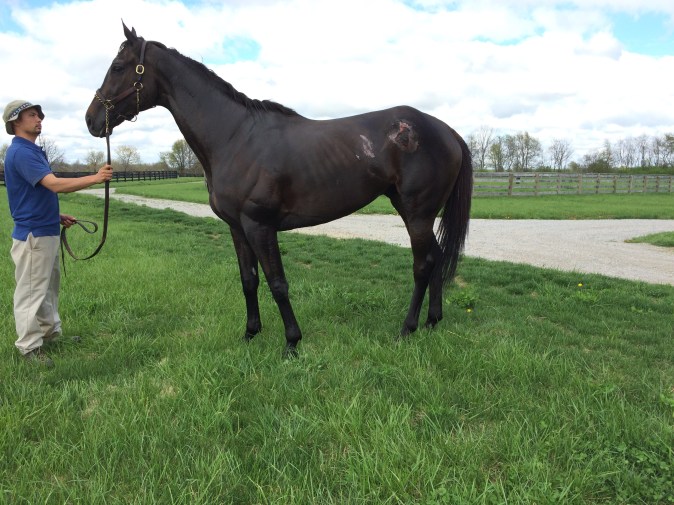
Nixon the day I met him, a few days after his trailer accident
And that was how Nixon entered his second life.
And I tried every trick I had up my sleeve. I had always considered myself quite capable at training horses to load, and had even been called upon by other horsemen to assist. My methods were quiet, simple, and involved a lot of rewards and food.
And none of them worked. At least not with Nixon.
After loading hundreds, if not thousands, of horses in my life, I ended up owning the single one that my methods didn’t work on.
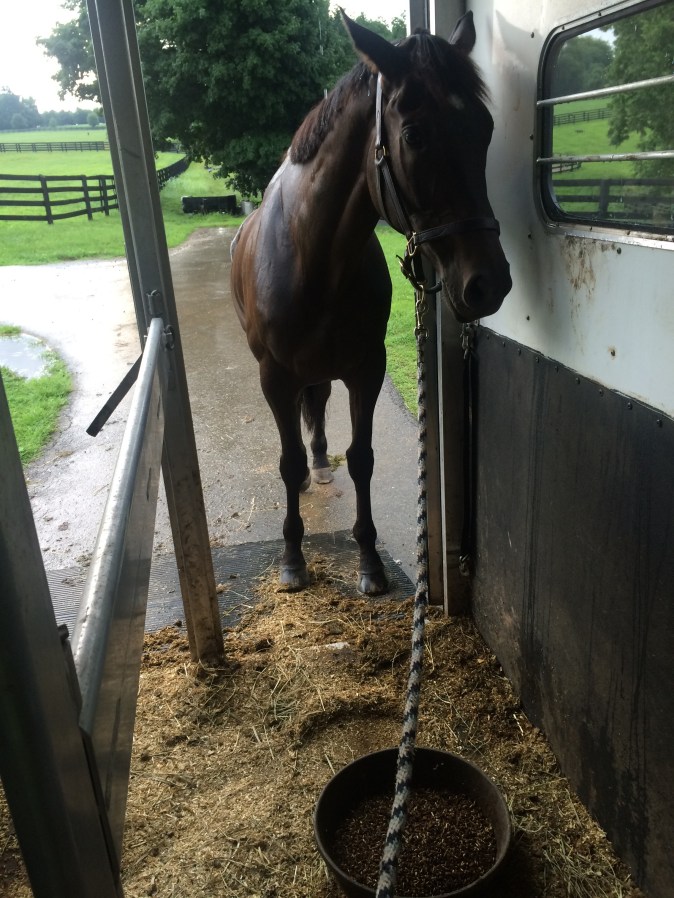
Attempting to do meals in the trailer…
And it wasn’t just loading. Nixon taught me that a lot of my preconceived notions about training, retraining, guiding, and just thoroughbreds in general were not foolproof. He taught me that not every horse can go out and hack happily right away. Not every horse can canter in company. Not every horse can be ridden bridleless. And specifically that not every horse develops into a sport horse at the rate that my previous mounts had.
In a nutshell he was, and still is, frustrating as all hell.
But 18 months later, I have come to terms with this. Nixon now loads, albeit just for me and in a specific fashion, one which now infuriates my manfriend.
But thats ok, because I don’t want to be one of “those” people. The overtly confident person who is constantly advertising and preaching that their methods are fool proof. Those people who leave comments on every one of my friends statuses saying that they are wrong, and this specific person is right. That says that they can ride any horse. Load any horse. Jump any horse. Hell, lead any horse.
We see those people in every aspect of this industry – from show barns to rodeos, and everywhere in between.
And I used to be that person. But slowly, and steadily, my ego has unravelled.
First it was in my riding. I showed up to Wyoming in 2006 and told the head wrangler that I could ride any horse he put me on. Silly little eastern girl from Pennsylvania, I knew that I could stick a buck – I had done it all of my life on my trainers show ponies. But seventeen falls later, in less than a week, and I backed down.
And I left that ranch with a bruised ass, and a bruised ego.
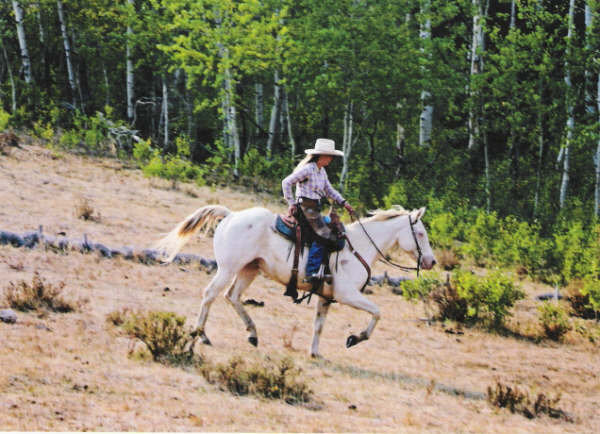
See that death grip? My first taste of scared.
And then it was the thoroughbred industry. I showed up to my first September sale and told the farm owner that I could show any yearling, any time. I had no comprehension that these horses mutated seemingly overnight as they shipped from their homes to the sales ground, but I knew that I could handle each of them at the farm. A few bites, a hell of a kick, and a loose horse later, I admitted my flaws.
And I walked away from the sales with a new sense of my surroundings, and my ability.
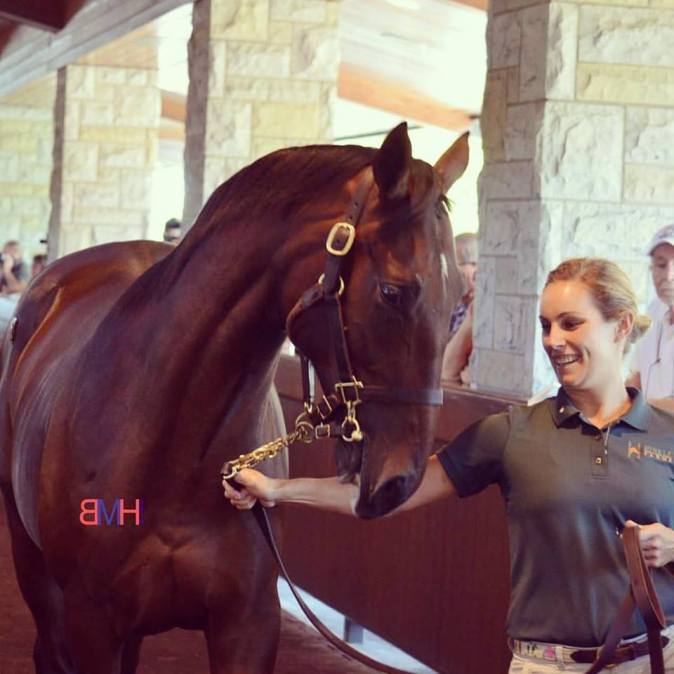
Getting “kisses” from a colt
But it wasn’t until I owned Nixon that I truly realized just how inadequate I truly was. But is it inadequate? Or it is knowledgeable? Maybe realistic? There is a happy medium between the two – between knowing what you are capable of, and what you are not, and the sensibility to ask for help in the place where those two meet.
And that place is called humility.
Nixon has humbled me in ways that no other horse has before. And this amuses me to no end, because it appears to everyone else that he is my “big” horse. The horse who has earned me any reputation that I currently possess. The one that threatens people, that gets me sent messages on social media begging me to not enter the same division as my friends.
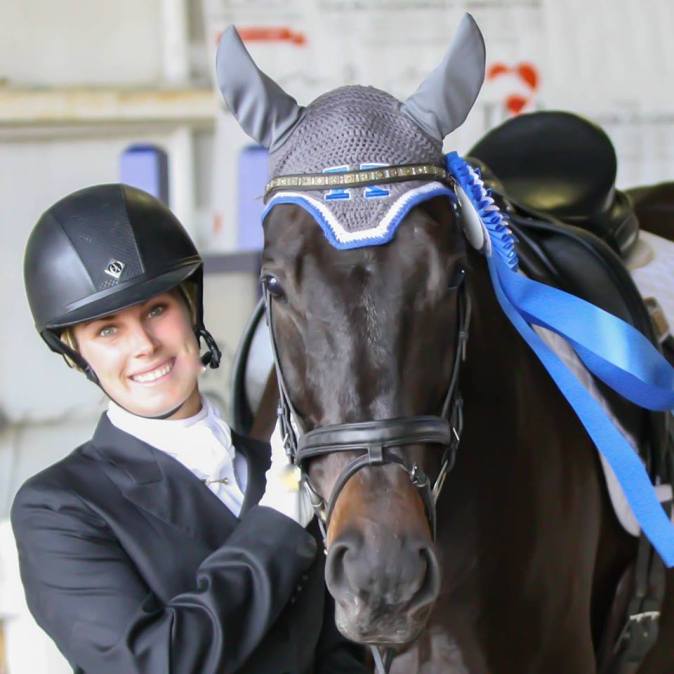
The “big” horse
But he’s also the horse who taught me that even with the resume that precedes my name, I am not invincible. Even with the hours logged or the skills gained, there will always be that horse that tests you. That shows your outer limits of comfort. And that proves that you are not perfect, or the best at anything.
And I think we as horsemen all need that horse. I don’t mean that I want every horseman to get hurt, but I think that we all need to eventually meet our match. We all need to realize that the gimmicks don’t always work. That speeding the process up with tricks doesn’t always end up with the horse on the bit or in the trailer. And that the one sized training box doesn’t fit all.
These horses will send you home from the barn shaking your head and shaking your fists. Most of them will lead you towards a drinking problem as well. But at the end of the day, they better you.
Nixon has already forced me to question everything I ever believed in. He has led me three steps backwards to reassess who I am as a horseman. He has forced me to admit when I am in over my head, and reach out for help. He has shown me that I am not perfect.
But hell, who is? No one.
No one is perfect. And no horse is either. Avoid the people who claim that they can do anything with any horse. Wait it out. Eventually they will meet their Nixon. They will find humility, and they will have two options when they meet that evil thing. They can either be humbled and learn from it, or power through and get hurt.
I choose to learn. I chose to eat the humble pie. And it still tasted like crap, but I’m learning to like it.
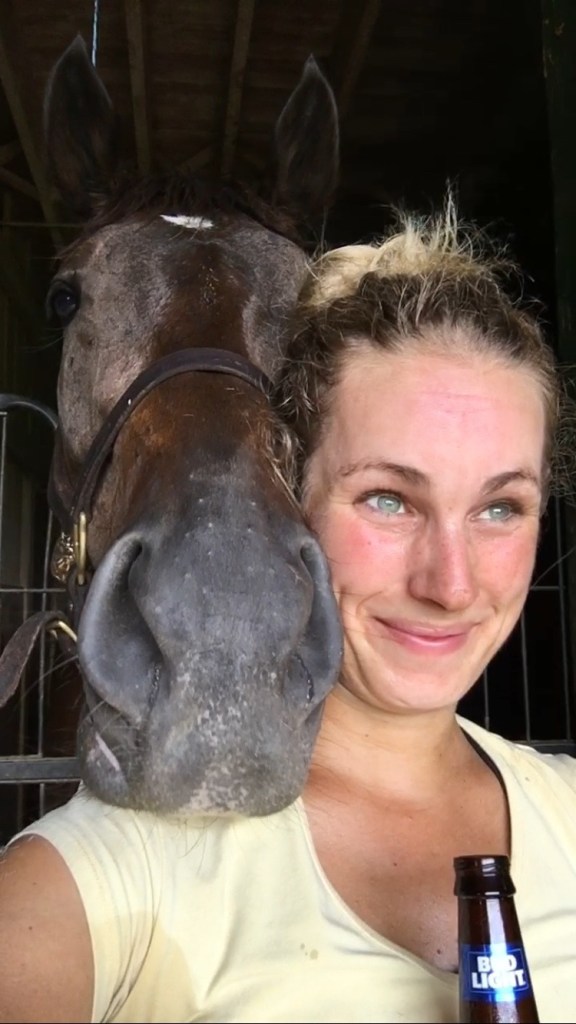
Having a drink with Mr. Humble Pie himself…
We have all been there. You are sent to the principals office, or a report card comes in the mail. You come home with a detention slip that needs to be signed, or hell, make that one phone call from jail.
And while your mother runs around in a fit, yelling and screaming about why, and how, and for God’s sakes – with whom, you committed this crime with, your father sits quietly at the kitchen table with a poker face only previously seen on ESPN.
He waits. Patiently and calmly, chewing on the words that he is about to use towards you as weapons. And his calm demeanor and thoughtful debate are what scare you the most. You know the dreaded words that are coming.
“I’m disappointed in you.”
These words will cause so much more pain than anything the police, the principal, or your AP Biology teacher could ever have thrown at you. Because at the root of it all is the fact that he loves you. And his quiet disappointment will trump whatever threats, rage, or retaliation that any other force can throw.
That is how I feel about horse racing.
I love the thoroughbred horse. I love every single aspect of its life. The minuscule differences between stallions, and the selection of matings. The science behind breeding the mare, and watching embryogenesis take place. The trials and tribulations of delivering the foals into the world. The nutrition and exercise physiology behind sales prep and breaking. And finally, I love watching the power, endurance, and heart of these horses as they gallop around a well engineered track.
So much goes into this. So much time. So much thought. So much research. So much love.
I showed up in 2008 as an outsider. Traveling to the bluegrass by way of Pennsylvania, Wyoming, and then college in New York, I had never even stepped foot onto a racetrack until moving to Lexington, Kentucky to follow a boy. And yet within only one year with backstage access, I was hooked.
The boy was dumped. And I was immersed.
And for the past decade I have watched as my passion for this sport ebbs and flows, finding both extreme excitement in the highest of peaks, like in the journey of American Pharoah, followed by the greatest frustration in, well, so many other things.
And I have written about this journey on this blog, A Yankee in Paris.
Someone once called my blog “Thoroughbred-centric” and I loved that description. I want to be a middle man; a bridge. I want to let the horse enthusiast get a birdseye view of the backstage pass that I was given so many years ago. Let them witness the amount of time, dedication, commitment, and most importantly love, that goes into producing these racehorses.
I also want to let the racing industry see the ability, heart, and reward that goes into retiring these horses sound and allowing them to transition into second careers successfully. Let them see the pride and joy that goes into their horses first jump, first trail ride, and first show. The bond that is built between their horse and its new person.
And I want to let the complete outsider, such as 99% of my high school graduating class – and my entire family – see just how amazing these animals are overall.
And that is when I get frustrated.
Just yesterday, I posted on my blog’s Facebook page that the main character in one of my previous stories was entered in his first race. Buddy had a tumultuous start into this world, as his mother prolapsed and bled out immediately after delivering him. And I had used her story to explain to those horse enthusiasts exactly why and when we as industry members choose to use nurse mares.

Buddy
Since starting this blog, I have learned that those same horse enthusiasts who share the stories of these foals can be brought into the folds. Because they will choose to follow racing for exactly this reason: an affinity to that specific horse. And I have tried to use this fact to bring them into this world that we all love.
I knew they loved Buddy. I also knew that they would love to hear that he was now named Walk Tiz Way, and that he would be breaking from the gates for the first time on this day. So I posted of this, hoping to lure them in.
But then I was bombarded by questions. When was the race? Where could they watch it? What were his chances? Who owned him? Was he safe?
And I tried to respond. I pulled out my trusty apps and snazzy websites, only to realize just how little I could provide. Horse Races Now said that the post time was 4:10, but Equibase said 3:10. Neither provided which time zone they were providing the times for, and neither offered any other information – such as which channel would be providing the race.
I clicked on TVG, and saw that they did in fact have the 5th race at The Fairgrounds on their countdown, and hurried to tell those who were intrigued. And then we watched the post time draw nearer while messaging each other on social media with anticipation. 10 minutes. Then 6. 2. And finally post time.
And then TVG switched. To the 6th at Aqueduct.
My readers typed in rapid rage, wondering where Buddy was, and why we couldn’t see the race. And I rushed to text his exercise rider, asking for updates that I could at least provide to them.
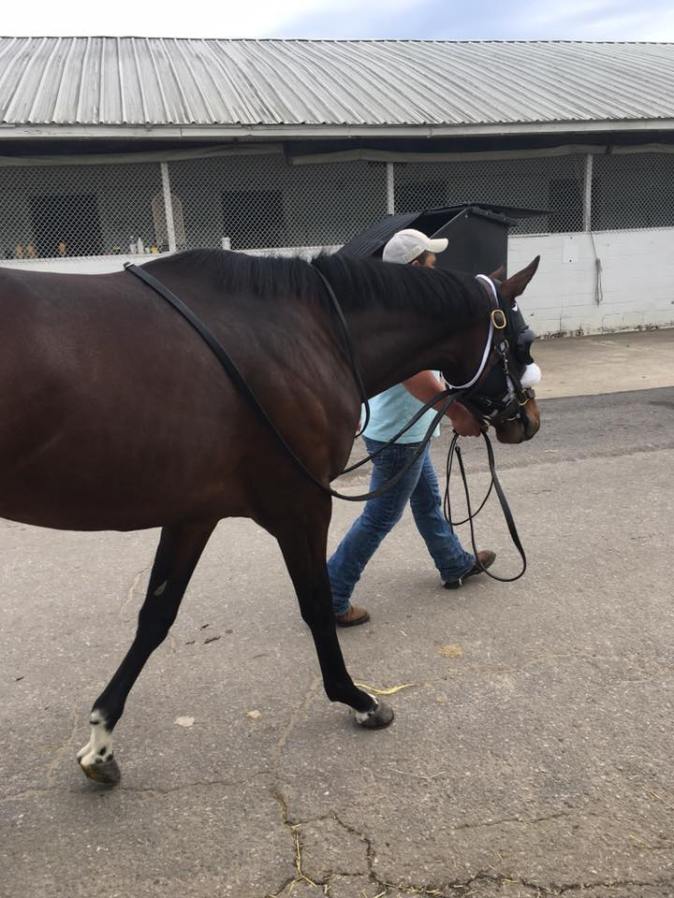
Buddy on his way to the paddock. A picture I only got by chance that I know his rider…
Buddy didn’t run well, but maybe more importantly, we left a handful of people with a bitter taste in their mouth. Women and men who could have possibly learned to love the sport were left feeling as though it was just as impossible as they had thought to get involved in the game.
And I didn’t have any response that would convince them of otherwise.
I turned to my social media to voice these frustrations, only to realize two things: 1) this was a common occurrence, even for industry insiders, and 2) there were solutions to these problems, but you better hope to be an industry insider to have access to them.
I learned that I should have opened an Xpressbet account to stream the race on my cellphone. But really? I was sitting on my couch in front of a 45″ television, and I was to assume that I had to watch it on my 12″ laptop or 4″ cellphone. And in addition to this – I was to tell all of these people that they too would need to download an app when they already had the television in front of them – a television that had not one, but two, channels just for horse racing.
I learned that Horse Races Now provided post times in EST, while Equibase provided post times in the time zone where the racetrack is located, which again, would only be found by a google search. And I was supposed to reason this to the readers as well, further complicating their desire to learn, as most didn’t even know where The Fairgrounds was located.
I learned that TVG commonly had a race on their countdown only to switch to another race, and that most people chose to go the route of streaming – either via Horse Races Now or Xpressbet – which is great…if you have access to high speed internet, and don’t mind the lag time that either may provide.
And what bothered me the most was the fact that I felt falsely advertised to. Had TVG never had the race on its list, I would have had 15 minutes to find another route to watch – most likely through one of these other avenues. But instead, I thought that my race was set to watch…until it was too late for another avenue to be pursued.
And sadly, I also learned that many industry insiders were quick to make an excuse for a problem in the industry, instead of admitting the problem existed.
And that is where the parent in me comes out.
I love racing. But just because I love something doesn’t mean that it can’t make mistakes, and that it can’t do better.
Horse racing needs to keep improving. On so many levels. From a welfare perspective, from a level playing field for gamblers, and from a marketing standpoint. I have written before just how frustrating it is to defend an industry that doesn’t seem to want to defend itself, and I still stand by that.
And I acknowledge that we have already changed so much, and these changes are exactly what have kept me involved.
Our aftercare for these horses is immense, and growing every day. Mass Spectrometry is finally being utilized; providing for quantitative drug testing. The economy is growing, causing the sales to be profitable. And the industry is finally opening their doors to any person who wants to walk through them through Horse Country.
But that isn’t enough. We can’t rest on our laurels. And we need to change so much more.
We need a sport that is easily to follow, easy to attract, and easy to hold on to. We need an industry that not only lures people into its stone walls and iron gates, but with a clicker to actually open them. And then once they are in, we need to hold onto them with all of our strength.
Some of these changes are simple, some are not. But if we want this industry to actually obtain the fan following that we desire, they need to happen. I want my mom to be able to have access to every foal that I have ever pulled into this world, without getting frustrated by simple things such as a time zone. I want the readers of this blog to be able to watch the horses that they have learned to love through these stories with ease, such as Bode, Hit Girl, and now Buddy, without becoming unenamored because of an ability to watch.
And I want this sport to be the sport that can handle a loving member of its family tell them that they’re disappointed, and instead of asking for an emancipation from that angered guardian, admit fault. Go to detention. Learn from its mistakes, and move on.
I was tagged in a post yesterday to alert me to the fact that one of my blogs was the second most read in the “Amateurs Like Us” section of Chronicle of the Horse. This brought me a smile to my face, and I literally giggled out loud in glee.
I started this blog in 2013 as a joke. My boyfriend had begged me to get off of social media, and I told him that 90% of the reason that I post on Facebook is for my family. I don’t get to talk to my mother and siblings every day, and my aunts and cousins even less. And yet when we get together for weddings and funerals, they all tell me how much they love being updated about my journey through life.
His response? Write a blog.
And with that, A Yankee in Paris began. AYIP. Ha ha. Get it? COTH? AYIP? No? OK, whatever. It makes me happy.
That first year, I had a total of 1,000 views. And I’m fairly sure that 700 of them were my mother and the other 300 my Aunt Holly. Since then, this crazy thing has grown tremendously, or in an exponential fashion for those nerds of you out there in reader land. This year, almost 300,000 people viewed my blog, and thats not even counting those of you who have read it on sites such as the previously mentioned Chronicle of the Horse.
So as 2016 wraps up, and we all wait anxiously for the clock to strike midnight on this ridiculous year, I thought it was only fitting to look back on the most read blogs on my own site. I also thought it was appropriate to thank every person who has helped spread the word of AYIP, and supported me on this journey.
To John Wilkinson, my editor at Horse Network who has had my back since day 1, and is probably the most supportive outsider of my writing. To Natalie and Ray from the Paulick Report who give me so much renewed energy towards this industry that we support. To Molly at COTH who is always getting my words to the masses. And to the rest – to Horse Illustrated, Eventing Nation, Western Horseman, and every other website or magazine who has asked to share something that I had deemed important. Thank you all – every single one of you.
So here it is, the top 5 blogs of 2016 from A Yankee in Paris. I hope you enjoy:
This was a blog that I didn’t know if I ever should have written. I had never met Philippa, but had appreciated her excellence from afar. But I couldn’t stand to read the outcry for eventing to change, strangers turning her families unimaginable suffering into their own sounding boards. So with that, I began to type. It is only fitting that this amazing woman be supported with the most clicks on this site, and I was honored to be written to by her family and friends to let me know how appreciated the words were. This one is for you Philippa.
“Left to left, this world keeps shuffling us around. Left to left, we keep going. Keep galloping. Keep jumping. But left to left, we must keep loving. Keep thinking. Keep inventing. Keep changing. Because left to left, we must keep riding.”
2. Hunter for Dummies: An Eventers Guide into the World of Samshields, Draw Reins, and Pearls
From the saddest of posts to the most humorous, that is what I find the most enjoyable about writing my feelings and sharing these stories. And after a trip to the Kentucky Horse Park for Country Heir I, these words needed to be shared. I know that it caused a huge outpour of both giggles as well as rage, so why not poke the beast again?
“And at the end of the day, I conquered yet another goal on the bucket list. Right there next to “play hunter princess on a thoroughbred you brought along yourself” I get to put a big fat check mark. Lets be honest, thats all that really matters. My pony was phenomenal. My posture didn’t suck. And my pearls, well my pearls are placed safely back in my jewelry box – polished and glistening, ready to play another day.”
3. Nurse Mares: Why we need them, and how to stop the production of nurse mare foals
Anyone who reads this blog continuously knows how I feel about the misconceptions about the thoroughbred breeding and racing industry. One of these misconceptions is the belief that live cover causes the production of unwanted nurse mare foals, and the use of this misconception for the adoption facilities to gain funds. I have written of this a few times, but this was my most recent post, and also one of the most read and shared. I can’t thank those enough who use my words for their own ability to spread the truth, and hope I can provide you with more ammunition in 2017.
“But we – both as scientists and industry – can actually solve this problem. While we can’t eliminate the need for nursemares, as the risk of a mare suffering a catastrophic injury or illness while pregnant or post-foaling will always be there, but we can stop the production of the nursemare foals. And you can help. How? Take the $5, $10, or $500 you would donate to this fraudulent activity and instead give it to an equine researcher.”
4. A plea for skepticism: Choosing which rescues and adoption agencies to back
This blog was a long time in the making, as I both watched and assisted Danielle in her journey. I wasn’t sure if I should ever write it, and the threats of legal action were dangled in front of my face numerous times. But I knew that I had the facts, and I knew that they were true, and therefore stuck my neck onto the guillotine. And I’m so happy that I did. For this blog sprung the facility in question into action. Management has shifted hands, horses have been rearranged, and I am hoping that they are cleaning up their act. And if my blog can play even the smallest role in the betterment of those horses lives? Well then, line up the guillotines.
“And she decided that she wanted her story to be heard. She wanted people to learn from her own personal heartbreak and decisions, even if it meant a cease and desist or a lawsuit. And she asked me to help her; to be the voice. So please, listen. Be a critical judge of character and a constant skeptic. Not all rehoming organizations are created equal, and not all rescues are in it for the horse. And heed the red flag’s – or the glaring billboards. Go with your gut. Your instincts can protect and preserve the lives of that animals that you love. Learn from Valencienne and MyHeart’sreserveds, and let their story affect your actions. Do it for the horses – for no one else will.”
5. Defending the Suck: Turning pro
And last but not least, coming full circle, is this story. I decided to write this specific list of the top blogs because COTH had posted my own story amongst the Amateurs Like Us section, and its only fitting that the story of my transition to professional rider makes my own list for the best of 2016. It ended up being quite the easy decision, and hasn’t affected me all that much. Well, except for the fact that I have gotten to teach a few really amazing “students” and that I can now almost afford that cup of Starbucks.
“So here goes kids. As of Friday, I am a professional rider. I am now (obviously) great. I woke up on Saturday with lower heels, higher eyes, and a left arm that suddenly and miraculously listens to my brain. I am Mary King, William Fox Pitt, and Buck Davidson all rolled into one. I will obviously get sponsored by Amerigo and Vespucci, Eskedron and Eby, and tackle all of the 4*’s in the world. And maybe, just maybe, now that I am a professional rider, I will stop getting bucked off of Frank.”
~~~~~~~~~~~~~~~~~~~~~~~~~~~~~~~~~~~~~~~~~~~~~~~~~~~~~~~~~~~~~~~~~~~~~~~
Thank you, all of you, for reading, supporting, and sharing this tiny little platform. Your positive messages have brought me so much joy, and your negative ones so much motivation to be better. Bigger. Stronger.
Lets ring in this new year with a bang. From all of us here at AYIP. From me, Manfriend, the terrible two (Nixon and Kennedy), Mak, and the love of all of our lives – Frank.
XOXO

I am the confident rider that I am because of Empire Maker.
I learned to love thoroughbred sport horses again because of Empire Maker.
And I met Lindsey Walczak because of Empire Maker.
I had posted of my horse Dynamaker on the Retired Racehorse Project’s website in their Bloodline Brag. Getting Mak at the age of four had been one of the best decisions I ever made. He was simple, he was easy, and he was fearless. While others spoke of their frustration with their thoroughbreds, I spoke of the ease with which mine took to retraining and a new career.
He loved to jump. He loved to explore. He loved to compete. And I posted all of that on RRP’s page, letting others know that maybe all of these things were caused because he was by Empire Maker.
A few months after posting Mak on the bloodline brag, a fellow rider reached out to me. She told me that her name was Lindsey, and that she also had an Empire Maker. She wrote of how similar they sounded, and how much they looked alike. And although she lived in South Dakota, her OTTB had taken to being a hunter/jumper with ease, even in a rodeo-riding town.
I got to know Lindsey fairly well through Facebook Messenger, Instagram and her trips to Rolex. I watched as she journeyed from South Dakota to North Carolina, bringing Reckless with her. From vet calls and saddle fittings, to horse shows and trail rides, I watched her relationship with her Empire Maker unfold.
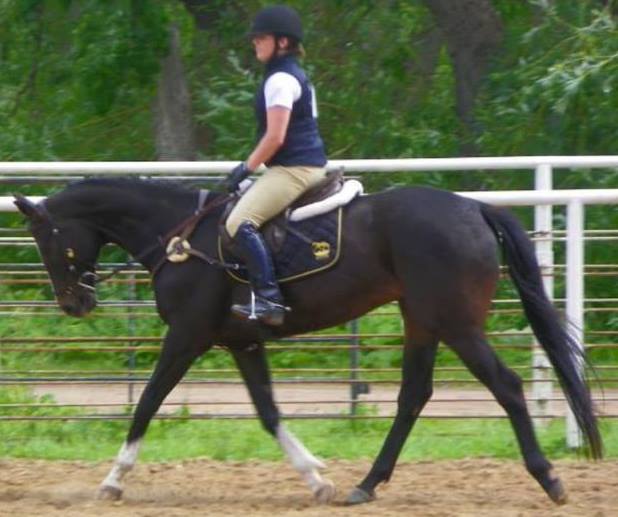
Lindsey and Reckless Capote, her Empire Maker
At the same time my relationship with my Empire Maker was moving along at a steady clip. Mak took me to my first training level event, over big fences, and to more trail rides than I can count.
I would take Mak out to my trainers farm for lessons as often as I could. And as he would pass out in the middle of the arena while I watch the other students jumped the course, my trainer Allie Knowles would laugh.
She knew his pedigree – she knew he was by Empire Maker. And she laughed because she also had an Empire Maker.
And where are Mak was sloth-like, hers was more like a tiger. While Mak would pass out in the middle of a lesson, Atticus would be off exploring every possible thing he could. And where Mak was jumping 3′ fences and grazing the polls, Atticus was stepping over 4’6.
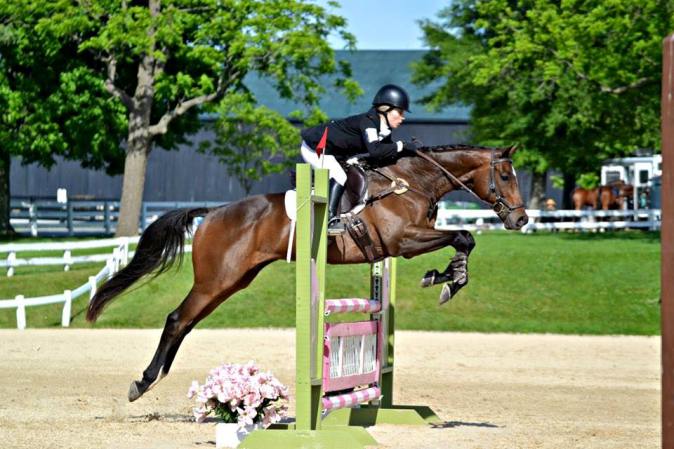
My Empire Maker, Dynamaker
We laughed at how different they were – besides their looks. Both had been stamped by their father as dark bays, with flashy faces, and minimal white on their legs.
Allie moved Atticus up the levels only to find out that an advanced horse he would never make. As the levels got more difficult he expressed his disinterest in various ways. She would come home, regroup, reroute, bring him back a level or two, and try again.
But it just wasn’t meant to be. And so last winter, she turned him out at her fiancés thoroughbred breeding farm, essentially retiring him from eventing. Her Empire Maker was not going to be a Rolex horse. In fact, she resigned herself to the fact that he might simply be a pasture ornament.
That is until last week. I woke up on Friday to devastating news. Lindsey had lost Reckless to a painful battle with colic. The surgeons had opened him up only to find a hole in his diaphragm, one that may have been there his entire life.
She had to make the excruciating decision to put him down.
And then she messaged me. She spoke of how strong her grief was. She tried to reason through her words of just how lost she felt. And at the crux of it all, was that she had to get a horse to replace him immediately. She had recently adopted a Haflinger named Porky to be Reckless’s companion, and now the companion was in need of a companion.
So I did what anyone would do. I posted on my Facebook a cry for help. Did anyone know of a companion horse that Lindsey could have? And I watched as Allie shared the post, reaching out to her own large social media following.
I spoke to Lindsey often during the next few days, trying to see if any of the leads had been for the right horse. One that would fit her needs as well heal her broken heart.
And she told me that none of them seemed perfect. Because none of them were Reckless. She knew she wouldn’t be able to replace him, but she wanted to at least try. And maybe, just maybe, that meant finding another Empire Maker.
Suddenly it dawned on me. I had one friend who had an Empire Maker, and one that needed one. I immediately text messaged Allie and asked her not only if Atticus was available, but also if he would fit Lindsay’s needs. At the most basic level she just needed a companion. But at the highest level, she just wanted to continue her weekly riding lessons where she did dressage, jumped a few fences, and occasionally competed at local schooling shows.
And I watched the wheels turn in Allie’s mind, as she processed just how perfect this home might be.
Not only would Atticus get a home where he would be doted on and cared for at the highest level, he would also be providing a Christmas Miracle for a fellow equestrian. Allie herself knew what it felt like to lose a heart horse, and understood the pain.
And with that, Atticus was offered to Lindsey.
So today, Lindsay drove from Charlotte, North Carolina to Paris, Kentucky to pick up her new Empire Maker. I know that Atticus will never replace Reckless. I don’t think any horse could. But because of Empire Maker I got to meet Lindsey. Because of Empire Maker I got to watch a beautiful relationship unfold. And now, because of Empire Maker we will get to watch another.

Lindsey, Atticus, and Allie
I can’t wait to read the statuses, see the photos, and be a witness to this journey. I know Allie can’t either. It is nothing short of a Christmas miracle that one equestrian had an Empire Maker at the exact moment that another equestrian needed one. And while Lindsey heals from the loss of Reckless, maybe Atticus will make her days a bit more jolly and bright.
In a time when we are all just looking for a little bit of hope, a little bit of light – it is so necessary that we find it in the small things. To push away sadness and fill our hearts with as much joy that we can find during this holiday season. In our families, our friends, and our horses.
And maybe in the joy found through a mutual love of thoroughbreds, and specifically a stallion named Empire Maker.
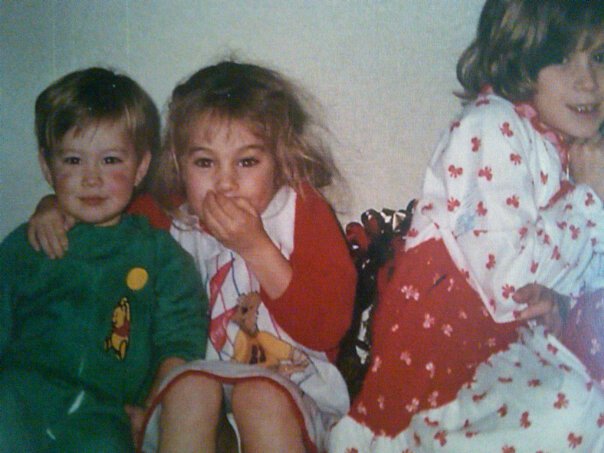
The holidays are hard.
I sit here on the 12th of December, knowing that Christmas is just two weeks away. The duties that I am required to do are mostly finished. Presents are purchased. The tree is up. My travel arrangements are made to go visit family and friends.
And yet there is something always lurking. Always missing. Something that loss brings to you, and resurrects its ugly head every year.
Because the holidays are a milestone that never pass.
When your loved one leaves, that is what you think of. What milestones will they miss? My father will never walk me down the aisle. He will never meet his grandchildren. Never learn that I have not only started, but now nearly finished, a doctorate. But those are one-timers. A hurtful, yet quick, searing of suffering.
But holidays, and birthdays, and anniversaries aren’t swift. They come back year in and year out, and leave you with a cyclical pain. They bring back the strongest of memories, usually ones that leave you with the most heartbreak because they are the best.
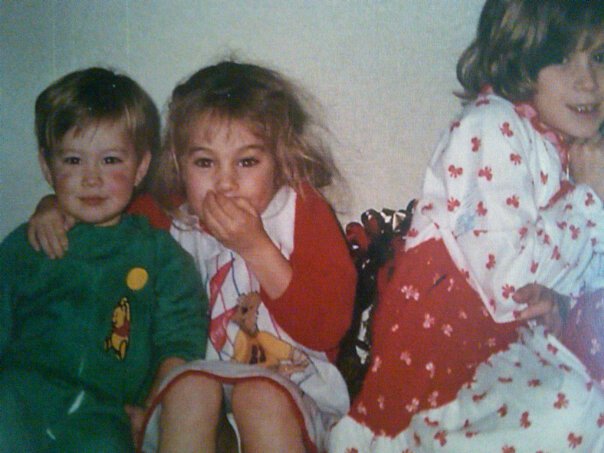
Waiting on the stairs to see if Santa arrived…
The sight of a Christmas tree makes me remember when my father used to message Santa Claus through his mind. I don’t know what made us believe that Santa used ESP, and/or was an alien instead of a chubby old bearded man, but we believed. He would bring his long pointer fingers up to his temples and begin mumbling in a nonsensical way, attempting to get Santa “on the line” while we kneeled before him, excited for the scavenger hunt that only Santa knew how to begin.
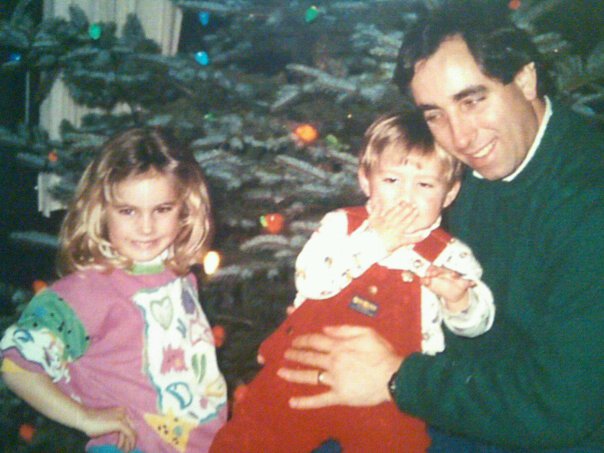
Decorating the tree…
Wrapping presents makes me yearn for an argument with my father as he bartered with my siblings into wrapping anything he had purchase for my mother. He was a brilliant surgeon, but a horrendous present wrapper. When we were older, we took the bribe in exchange for $20. But when we were younger, we would venture down to the basement with him and be his faithful assistant. I can still remember the feeling of the ribbons as my tiny fingers anchored down the knot so that he could make the most pristine bunny ears.
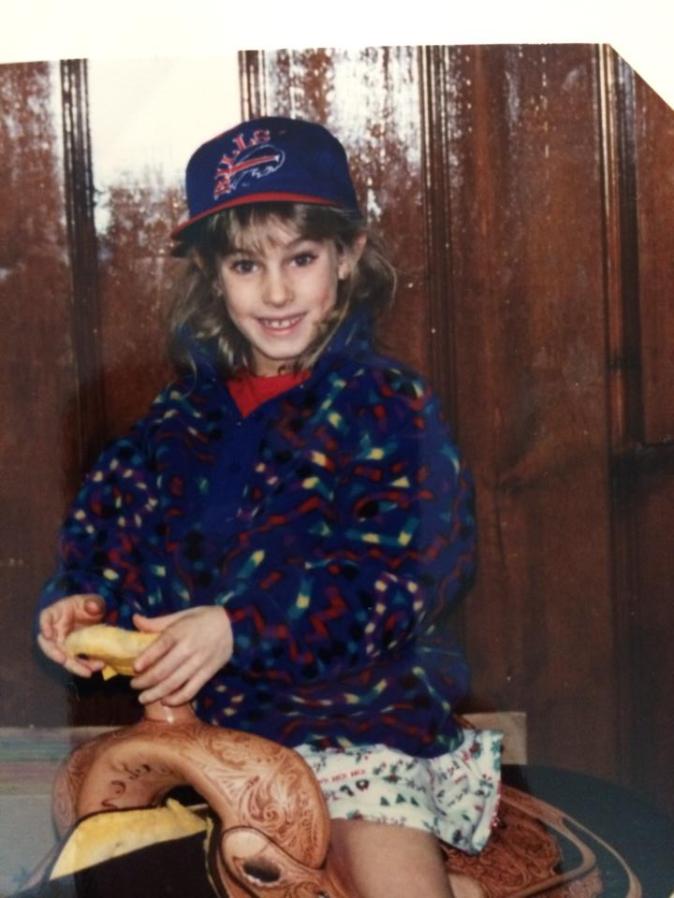
Getting a western saddle for Christmas at the age of 8….
Or the thought of going home will leave your heart both anxious, as well as feeling trepidation. In just a few days my significant other and I will be traveling to Chautauqua Lake, New York. It is my favorite place on this planet, and somewhere Luke has also come to love with all of his heart. It is currently covered in snow, which means that we will get to sled down the front stairs, build a snowman, start WW3 in a snowball fight with a plethora of Fedorka children that all have wicked arms and no mercy. It will be beautiful, it will be full of family and feuds, and it will be hard.
Because although Chautauqua Lake is one of our favorite places, it is only in our lives because it was my fathers favorite place. He was born there, he spent his entire life there, and his ashes are now spread there. So instead of sledding next to him, or tossing a snowball at him, we get to acknowledge that the snow that we touch is a part of him. The waves that beat the slate banks are him. Everything we look and touch embody him.
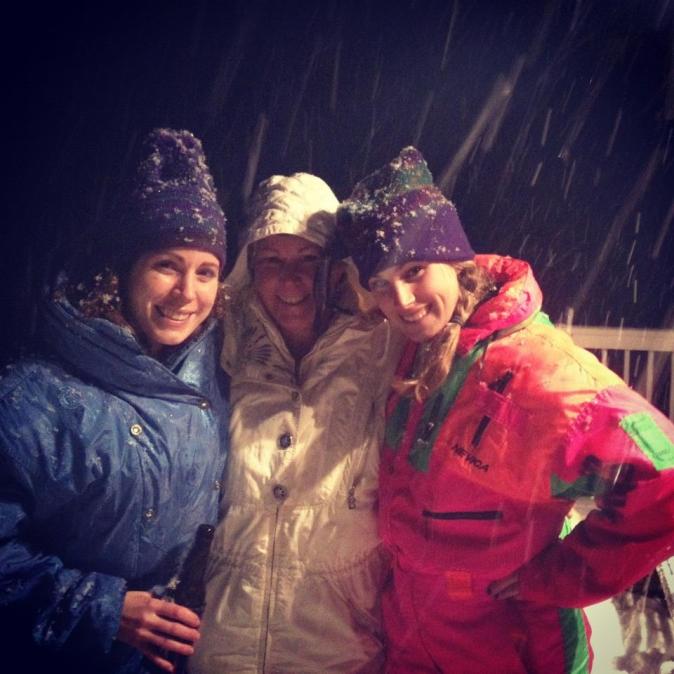
The new normal at Chautauqua…
I lamented of this to my dear friend Amy yesterday, someone that has also experienced the loss of her father, and she said that it takes longer than a decade to learn to love the holidays again. For me it has been 8 years of uncertainty over my feelings for them. 8 years of these bipolar emotions ranging between love and hate. Excitement and anxiety.
So this year, I am going in full force. I am attacking the trepidation and learning to love Christmas again. I am radioing into Santa and telling him that I am ready. Little things like baking cookies, or putting that ornament back on the tree that brought me such sadness. To big things like Secret Santa Stockings, the new Baskets of Cheer, where we will be surprising the patients of the Markey Cancer Center with gifts of holiday cheer.
I want my holiday cheer back. I also want my father back. And my uncles. And my grandfathers. And everyone else that I have lost. One of these things I can work on, the other I cannot.
So few family remain, but I’m now realizing that we are growing in size at the same time. We might be down on the founding members, but I have gained a brother in law, and a sister in law. I am lacking Santa’s lackey, but now have a super significant boyfriend (SSBF) that I adore.
So in honor of those that we have lost, lets celebrate. Lets honor their love of the holidays, and the love that we used to know with them alongside us. Lets be a little nicer to our neighbor, sing that Christmas Carol a little bit louder, eat a few more of those sugar cookies, take those ridiculous pictures with our animals, and travel just a little bit farther in order to be surrounded by those loved ones that remain. And lets have ourselves a merry little Christmas.
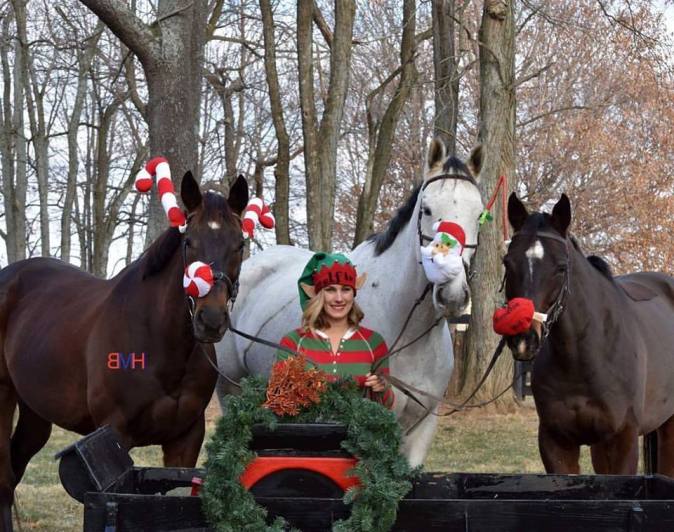

The life of a broodmare manager is not a glamorous one – which means that the life of the significant other to a broodmare manager isn’t either.
Sun up to sundown the work is hard, demanding, and it never ends. And that is just during daylight. Once dusk settles, the real labor begins. The mares are programmed to undergo parturition in darkness – both from a survival as well as an endocrine perspective. And because of that, us mere humans must adapt to their schedules.
Vet work at 7 am, mucking out until lunch. Treatments and medications spaced throughout the day in 6 to 12 hour intervals, and the constant leading to and from the pastures. And then the deliveries begin. Sometimes 2 to 3 mares a night. Always in the most inclement of weather, always in the most inappropriate of times.
From January 1st until mid June, this is a broodmare managers life. I left this lifestyle when I returned to school to obtain my doctorate, and yet somehow found myself living it vicariously through my manfriend Luke. He has worked on and managed some of the most successful nurseries in Lexington, Kentucky. And with that means a lifestyle dictated by the equines within the program.

Long sleepless night to produce this.
So it came as no surprise when we received a phone call a few years ago to meet the nightwatchman at the clinic. Although it was technically Luke’s “night off,” as the broodmare manager he was required to oversee all extenuating circumstances regarding his charges. And with one of the mares colicking – this would mean telling the waiter to cancel our order and run to the nearest equine surgical unit.
While Luke ran into the surgery wing of Hagyards Medical to assess the situation, I waited in the wings. Standing in heels and without a jacket, I silently shivered in the barn aisleway. From one farm manager to another, we all acknowledge this lifestyle. We all know that the horses come first and everything else second. And because of that – I could handle being cold for a couple of hours.
To keep myself distracted, I began roaming down the cement aisle and peaking into the other stalls. Assessing the other patients, I looked at one after the next, and then my eyes locked onto the most pitiful case.
A chromey chestnut newborn colt was nestled into a deep pile of straw with his nose tucked in between his front legs. His right hind leg was plastered in a cast from hoof to stifle, and a catheter protruded from his neck. His eyes were tightly shut as he slept, and his breathing was deep – completely unaware of his rather unfortunate start to his life.
I shook my head at the unfairness of life and the hurdles it places in front of us. But then giggled as I heard him begin to awaken and knicker out for attention. One of the technicians let herself into the stall, and Luke appeared from behind me to stare into the stall alongside me.
“Oh, thats another one of ours. He came in a few nights ago. His leg was completely useless to him immediately after we got him out. Dr. Rodgerson says that he tore his gastrocnemius muscle and will have to have that thing on for a few months.”
I shook my head and then looked back into the stall as the technician assisted the colt in standing to allow him to nurse. I asked what the prognosis was for this injury – an injury to a crucial part of the infrastructure of a healthy racehorse – what this colt was bred to be. It didn’t look great.

And as the technician planted her left leg under the weight of the plaster cast to give an anchor for the shakey colt to lean against, she mumbled “steadyyy, steady now buddy” under her breath. And with that, the journey of Steady Eddie began.
Eddie spent the first month of his life in the clinic where he could receive around the clock care and intensive treatment. With his leg encumbered by a 30 lb. cast, he was unable to stand up or lie down on his own, requiring assistance.
But Eddie was smart, he quickly learned how to get the attention of the technicians and residents in the barn with his incessant knickering. He would whinny when he was hungry, knicker when he wanted to urinate, and scream when he wanted to play. He became a 250 pound labrador retriever, and the entire staff of the clinic fell in love.
And then he came home and was placed into the isolation barn with just his mom for attention. Luke quickly texted me to let me know that this personable foal was back on the farm, and I hurried to the barn to assess him.

Eddie being a heathen…
His leg was still in the cast, but he was stronger. He was able to get up and down on his own, and was happily romping around the 12 x 20′ stall with his right leg dragging behind him. It was a pitiful sight to see, but the sparkle in his eye and his desire to talk his way through a snuggle session were enough to warm even the coldest of hearts.
For months this was his life. A large foaling-sized stall, a plaster cast, and the attention of his mother. We attempted to change his behavior of dog to that of colt, but to no avail. Most nights Luke and I would take the dogs for a walk up to the barn to check on him, and this usually ended up with extra snuggles,a romp, and a giggle or two.

When even Luke gets attached, you know its a cool one…
He quickly became a member of our family, but as is life, we knew in the back of our mind that we didn’t actually own him. And on top of not owning him, he was owned by a large thoroughbred breeding operation that bred their horses to either sell or run. And if Eddie couldn’t do either, he would be of minimal use to them.
Even worse, if Eddie couldn’t even be turned out, he would be of minimal use to the world.
So with diffidence, we awaited the removal of the cast. And then the big day came, and Eddie became a free man…only he didn’t. His leg had almost no strength, and the muscles were completely atrophied. His gait was irregular, with little impulsion offered even at a walk. And as we all stared at the otherwise beautiful colt with grimaces on our faces, we acknowledged that this journey might be over for Eddie.
But we just couldn’t give up. He had become a favorite of not only ours – but the entire farm. From the lowliest of grooms to the owners, he had become a point of pride and a creator of smiles.
Eddie went through extreme physical therapy and rehab, but never fully regained strength in his hind leg. And our efforts to turn him into a racehorse quickly became a campaign for his life as a pasture ornament. But at 4 months of age, Eddie had never been turned out. By 6 months of age, he had never met another horse besides his mother. And again, it was made apparent that he wasn’t ours.
His owners had already put over $50,000 into vet bills, and were looking at a lifelong commitment to an apparently useless horse. A horse that would require future vet work, farrier bills, feed and water, not to mention a paddock and a stall. And in exchange, he wouldn’t earn them a dime. He would never be ridden, nonetheless run. And for an operation that is in this as an investment, this appeared to be a cash poor one. A money pit.
So this is where the story ends – right?
Everyone knows that the thoroughbred breeding and racing industry is in this entirely for the money. For the pewter and the roses, the accolades and the press releases? The public assumes that the end of these stories end up with an unwanted horses – either euthanized or sent to slaughter. The owners back on their bluegrass farms toasting each other with their decanters of bourbon.
Wrong.

I can see over 4 plank!
Because Eddie is soon turning two years old. He still walks with a hitch, but he gallops out with a strong, although irregular, stride. He exists within the same stone walls that he was born on, and happily grazes within his personal 30 acre field. He has a best friend – a retired graded stakes winning gelding who earned the farm almost a half a million dollars.
One horse was profitable, one was not. One earned the pewter and the notoriety, one earned them nothing but sleepless nights. One horse’s name is recognizable by many, while the other was never actually named. The only thing that bonds these two colts is that of a great owner who cherishes the horses who bring her joy. And both horses bring her joy, albeit in different ways.
So Steady Eddie is here to stay. As the best useless colt to ever exist.
I just left a meeting where one of the highest faculty members of my department said something both resoundingly honest and yet fantastically appalling
“We live in a society where facts and data are not even considered.”
And those of us around the roundtable giggled, acknowledging that he was referencing the current climate of our nation and the most recent presidential election. And then as the laughter faded out, each of our expressions faded to one of alarm and disconnect.
Because we are scientists. And this is true.
It is not easy to become a scientist. You must first draw the ability to write in cursive, and add 2+2 in order to be considered an elite member of your 2nd grade class. You are then run through the gauntlet of academically heightened classwork before entering high school. While in high school, you are placed in the AP classes and shoved towards the stone walls of liberal arts educations, ivy league institutes, and mass advancements. Organic Chemistry is a bitch, and you learn the inner workings of the Biology Department, not Phi Kap. And while you learn to brew your own beer, you most likely don’t get the chance to perfect the keg stand.
Following this, you being your masters and doctoral research. You are taught not only how to conduct an experiment, but how to draw from the data with which you obtain. You are instructed on the proper analysis of data, and the statistical model which will give you both power and breadth. You are instructed of what a controlled setting means, and how to achieve one.
And that is when the first month ends. Because those are not the important parts of being a scientist – at least not to most.
Because the most important aspect of science is the ability to be the most negative, analytical, and pessimistic person possible.
We are taught to see the glass half empty. If the project worked 92 times out of 100 – it was not repeatable. We set our goals to lofty heights, and those heights must be reached in order for us to find any significance in our data. In agricultural worlds, this means a predicted measurement to 90%. In medical fields, this is tightened up to over 99.9%.
That means that when our science tells you that something doesn’t happen, it means that more than 99.9% of the time that it doesn’t. That also means that when our science tells you that someone does happen, it means that 99.9% of the time it does.
And that is just the beginning. Because just like our government is supposedly doing, there lies a labyrinth of checks and balances to prove that we are neither cheating nor lying. Science is not a Facebook status. It is not an episode of The Blaze where Tomi Lahren gets to make statements without retribution. No, we have editors to thank for that.
For every experiment that we perform, in order to have it have any merit in the scientific community, we have to submit it to a journal of repute. A board of our peers will review the manuscript and determine if it is both worthy of that repute, in addition to being fact based and full of merit. This eliminates the ability for Big Pharm to control the results, and to moderate the findings.
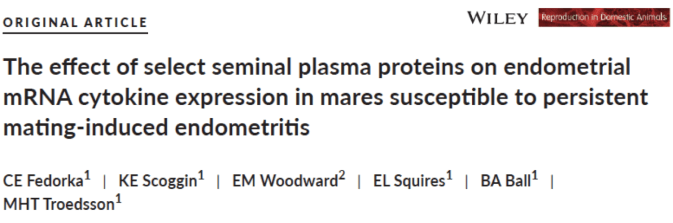
Getting your research into a peer-reviewed journal is actually harder than it looks. And kind of a big deal.
They analyze the experimental model, they assess the statistics. They recompute the math, and they evaluate whether or not the basis of the ideology was even worth studying. And then after months of edits, responses, and lengthy debate – the study is possibly published. This is why it is called a peer reviewed process.
Science: Experimental Design. Data. Ethics. Statistics.
A career, a subject, and a skill that still exists in the world – and yet one that people find little to no approval of until their loved one is dying of a terminal illness.
My life is surrounded by naysayers. From farm managers who couldn’t possibly believe that inflammation in their broodmares uterus is not always in fact caused by bacteria, to anti-vaxxer’s on Facebook who would rather believe a Playboy Bunny than a case-controlled and peer reviewed manuscript written by an MD/PhD.
These scientists have demonstrated life-altering or life-saving strategies. For your pets, for your industry, for your economy, or for yourselves. Fact-based. Controlled. With true statistical models utilizing numbers, not opinions.
And these things can give you data on any manner of things – from drugs used to treat cancer to exactly how much the economy is affected by the legalization of marijuana.
Just the other day, it was stated that more black men shoot police than police that shoot black men – but was that done with a paired T-test? Or with a nonlinear regression? Or heck, was it just a “55% is higher than 45%” statement that didn’t take into consideration the number of people evaluated or the non-controlled environment.
That is what science is for. That is what a proper experimental design contributes.
And that is what is lacking in our world. Facts. Statistics. P-values and controlled studies.
Only I shouldn’t say that they aren’t lacking – for they exist. They are just dismissed as quickly as the screaming child in the backseat.
There are scientists that walk among us. So maybe next time, instead of consulting your newsfeed on Facebook, you take the time to see what science has to say. Use Pubmed instead of Google and take the time to educate yourself.
And then with that education, change the world. Because Lord knows the scientists are trying to. They just need you to help them do it.
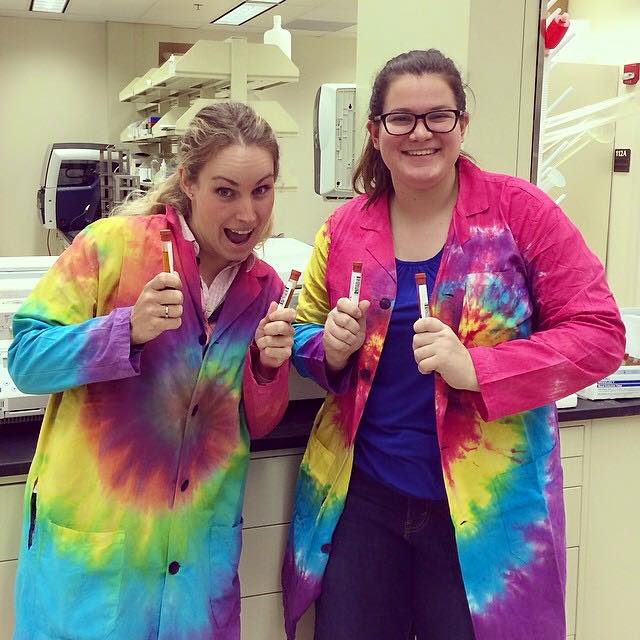
How I do science.

I have led an interesting life. In just 30 short years, I have experienced some of the highest of highs and some of the lowest of lows. I have witnessed things happen that one should not witness until grey hairs appear, and yet at the same time I am considered young to most.
Recently, I have gotten to speak of these experiences to a variety of students. From the women who enroll in my Equine Reproduction class at Midway University, to the kids who enrolled the agricultural department of the Greene County Career Center, my range of audience has been wide.
Most recently, I was invited to talk to the Equine Scholars at Georgetown College, and was asked to explain “my life.” What got me to this location? What made me choose a career in horses? How did this passion for riding and managing horses lead me to a doctorate in veterinary sciences? And more importantly, how did I get to experience these things in such a short time line?
Because my resume is not normal. My last name reading Fedorka does not ring a bell in any inner circle of the thoroughbred breeding and racing world. I didn’t experience my first horse race until the age of 22, and I didn’t see a mare deliver a foal until I was 23. Only 7 years ago.
But my story is one that most of these younger generation can relate to, one that motivates them. Because my name and my connections got me nowhere. Instead, a lot of hard work, intelligence, dedication, mixed together with a bit of desperation did. I have blogged of many of these experiences – from working as a wrangler at a ranch in Wyoming, to being hired at my first breeding operation moreso due to my ability to construct a website than my ability to lead a yearling.
But I made it work. And I grew both as a person and as a horsemen. And I fell in love with this industry of breeding, selling, racing, and retraining thoroughbreds. In less than a decade, they convinced me to go from outsider and wary observer to insider and champion.
So with that, I am now being asked to speak to this next generation of how to get to that foot in. And then more importantly, how to dig deep with that foothold and continue to climb the ladder.
These are my guidelines; my rules for success in this industry:
Don’t consider yourself above any job. Ever. I truly believe that this was how I moved up so quickly, and how I got to experience so much. Drive the truck and trailer? Sure. Wash foal butts? Yup. Go muck out and power wash the isolation barn? Ok. Do it all, and with a smile on your face and some country music blasting.
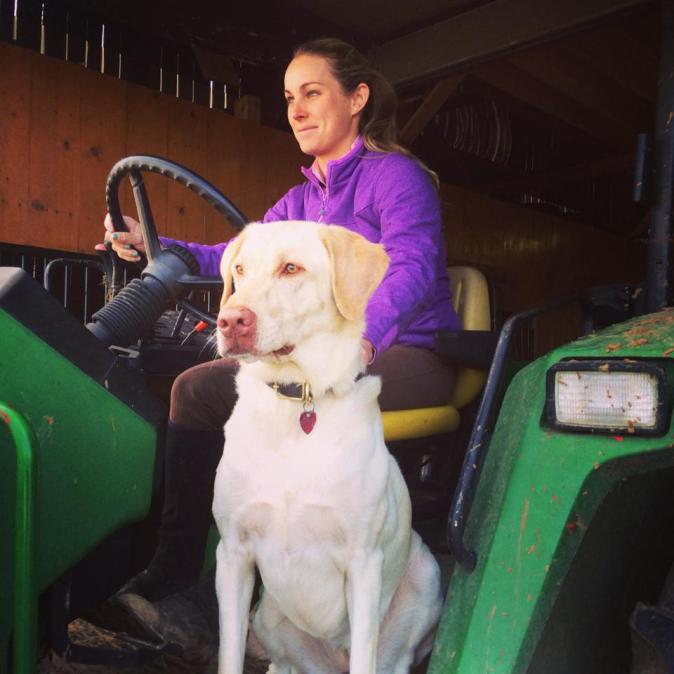
This was the first thing I learned on Chesapeake Farm when I was hired. I couldn’t tell you the difference between a Storm Cat and an A.P. Indy, and I sure as heck didn’t know how to put on a sweat. I had never heard of animalintex, and had never handled a hickory twitch. But what could I do? Show up every day on time with a smile and say yes. Come an hour early to meet the vet? Of course. Stay late to meet the shipper? Why not! I was a yes woman, a skill that every young person should learn to be.
2. Admit any insecurity – and then learn how to change that to a security. If you don’t feel comfortable handling stallions-that’s fine. I would rather you and the stallion stay safe versus having a bruised staff member, a lacerated stallion, and 2 mares that now need lutalyse. A good manager can teach much more rapidly than they can undo.
I call this my “Jackie” story. I interviewed a young University of Kentucky undergrad one spring as a potential candidate for an internship. She would be working under me as I completed my masters research project on the farm. And while I needed someone competent around horses, moreso I needed someone who was able to help me at a moments notice. Jackie Barr showed up and immediately admitted that she had zero experience with mares and foals, had never seen a rectal ultrasound performed, and couldn’t tell you the difference between oxytocin and hCG. But, she adamantly proclaimed with a smile that she was always on time and wanted to learn.
Jackie handling her favorite stallion, Zippy
And learn she did. Within weeks, she was fully competent on the mare side of the research, and by the end of the summer she was handling and collecting stallions. Jackie admitted all of her insecurities, but then made her want to learn apparent. By the end of the summer, we had offered her a paid position throughout the school year, one which lasted two years. Jackie because the right hand woman for every graduate student in our lab, and in exchange, we offered an education second to none. And at the end of her college education, it was our lab and its faculty that wrote glowing references for Jackie’s future – where she works at one of the premier warmblood breeding farms.
Be tough. Don’t cry. Ever. And I mean that. So many women have paved the way for you to convince the farms and their staff that we are just as tough as the men. And I don’t mean you won’t be upset, or that you won’t cry at home, but compose yourself when you’re on the farm. Always.
There were so many days where I felt frustrated, overwhelmed, exhausted, or had my feelings hurt. There were moments where I had to stand my ground and combat unhappy employees or fellow managers. I lost horses I loved, and was battled by horses I didn’t. And there were certainly situations where things didn’t go to plan and I felt the weight of the world on my shoulders. But I stuck to the motto that there is no crying in horses – at least not in public.
So walk quietly out to that farm truck, drive to the hay barn, and let it loose. But you will wipe those tears away, slap some cold water on your face, and get back to the job the minute those tears dry up.
Taking a moment to myself while still focusing on the job at hand
Be a team player. These guys that you are working alongside have probably been on that farm for 5-10 years, if not more. And just because they speak with an accent, or don’t speak English at all, doesn’t mean that they are automatically beneath you. These guys can be your best friend or your worst enemy. But when you are considered an insider, you will receive the most support and the best source of knowledge and information.
I was blessed by one of the best staffs in the business when I started at Chesapeake. At first they were hesitant – who is this little blonde thing who doesn’t speak a lick of Spanish? The one who gets to go inside the office in the afternoons instead of mucking out the rest of the barns? The one who gets to ride with the manager when we go on vet rounds? And yet they quickly grew more welcoming and less standoffish with every day that I picked up that pitchfork and mucked alongside them or offered to take the muck to the field when it rained.
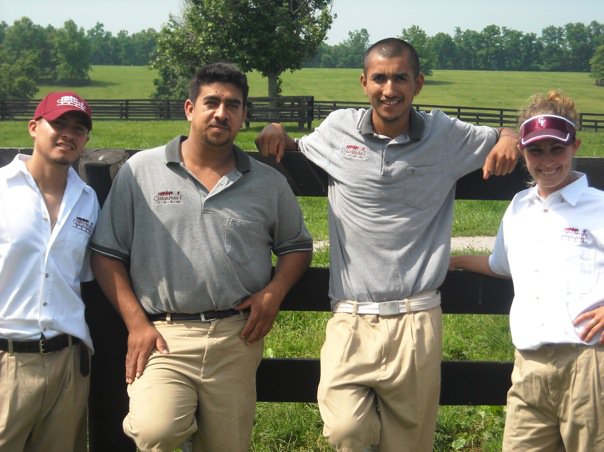
Being a team player, even if it meant wearing these god awful man shorts.
And those men who I didn’t know, nonetheless understand, became my family. They were the first to hand me a warm sandwich on a cold day, or a hug when I found out my grandmother had passed. They welcomed me to their families celebrations and handed me a beer at the end of a long day. And truly, they became the first friends I made in Lexington; friendships I still hold dear.
Be professional. This might be a farm job, and you might simply be in charge of mucking 60 stalls a day, but that doesn’t mean you are any less than the CFO of a company. So be on time. Dress for the job you want, not the job you have. Be cordial. Make connections with everyone around you. And realize that everyone is watching, at all times. You don’t know who that person is who you just made wait for 20 min to see a yearling. So always be polite. Always.
This goes for all aspects of life – from the farm, to the breeding shed, to the sales, and even the local pub. Some of the best connections I made in this industry were by sharing a pint at the local Irish bar. I have been offered jobs by people at the sales who I didn’t even realize were watching me. And I have met people who share that they had read my most recent blog and I had no idea that they even knew my blog existed.
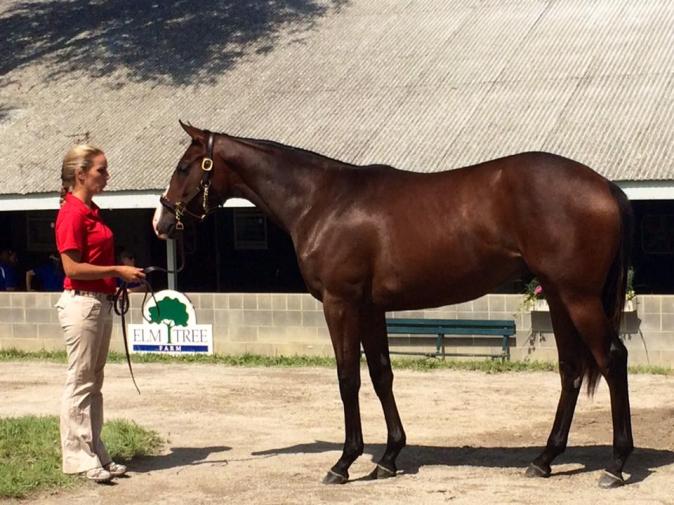
Someone is watching you. At all times. So hold your chin up, keep your hands soft, and be the first one to the rake or the hose.
You are your own business card. And they might not know your name – first or last – but they will soon recognize your face. So hold that face up. Say yes. Be professional. Be humble. And still be confident.
And perhaps most importantly – the most important rule of them all – is to be in this for the horses. Because they will never know if your last name is one of fame and fortune. And they will never know if you can’t spell Eskendereya. But they will forever be impacted by your hands, your mind, and your presence.
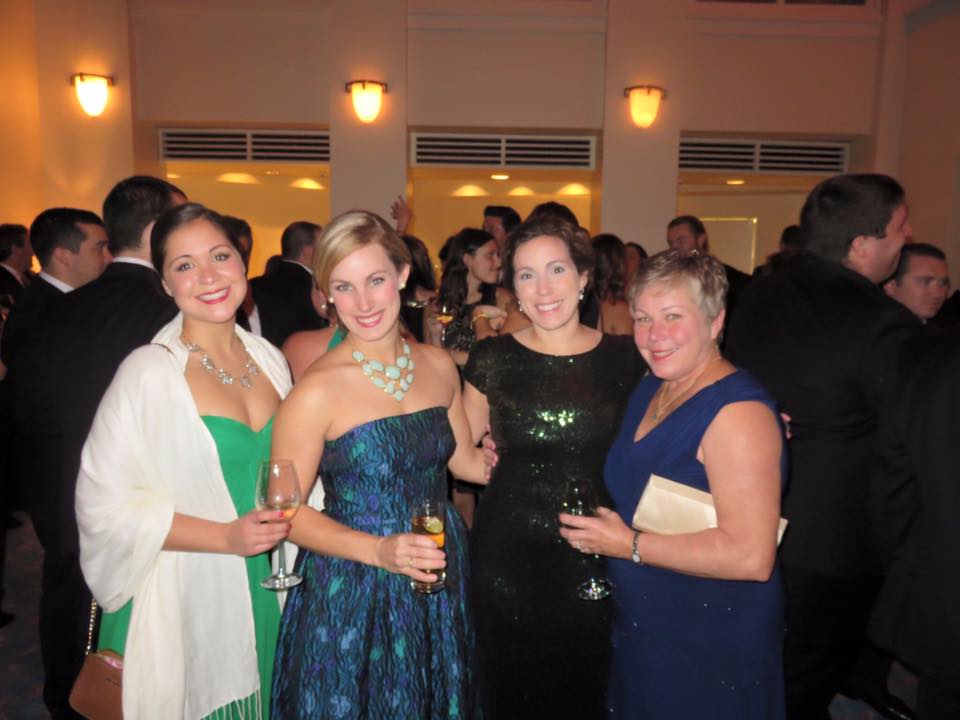
I woke up this morning and began preparing for my day. I had qualified for the Three Minute Thesis (3MT) competition at the University of Kentucky, and the final round was this evening at 5:30pm. Standing on a stage in front of a plethora of people, explaining the last four years of my life as a doctoral student and the research it encompassed – all in 3 minutes.
I would have to be witty and charming, knowledgable and entertaining. And perhaps even more importantly, I would have to be professional.
So I started rummaging through my closet in an attempt to find an outfit that would convey all of these things. What would make me feel powerful? What would make me feel good? And more importantly, what would be appropriate?
I put on one of my favorite dresses, and noticing that it only barely covered my shoulders, I added a navy blazer. And then I buttoned the blazer, and unbuttoned the blazer. I rolled up the sleeves and unrolled the sleeves, all the while looking at the mirror making faces to convey my distaste.
I loved this dress, but the minute the blazer went on, I felt frumpy. It in no way exemplified my shape – a shape that I was proud of, as it demonstrated the numerous hours a day that I logged in the barn riding horses, bucking hay, and carrying water buckets. But I knew that it would be deemed “too revealing” in academia, even though it was nearly a turtleneck. The blazer would have to be put on, and my self esteem would have to drop just a smidgeon.
But then I had an internal thought. Maybe if I looked a bit frumpier, I would actually be taken more seriously.
So sad, but so true.
This is the battle that I have been undergoing for the last 4 years. Heck, the last 30. It is a battle that I know is not my own, as both my sister and my sister-in-law have lamented over the same issue. Both of them are forces to be reckoned with. Intelligent, passionate, and with looks to boot. My sister Katie being a board certified orthopedic surgeon, while my sister-in-law Stephanie finishes up her 3rd year of law school at Syracuse at the top of her class.
Both are tiny women with large minds and even larger opinions. Both are stunning and love fashion. And yet both are constantly attempting to find that happy medium between feeling pretty, and looking “appropriate”.
And I don’t mean appropriate according to societies standards, for as long as you aren’t showing nipple, just about any outfit is apparently considered ok these days. No, I am talking about the standards that were constructed by male-dominated industries and offices over 100 years ago – standards that have barely changed in that century since.
We are told to wear skirts because pantsuits are considered too aggressive. We must wear heels, but only of 2″ or lesser, as any higher would be considered hypersexual. Our hair must be controlled and styled, but preferably placed back in a no-nonsense bun. Makeup must be applied, but only to convey the idea that we tried, not the idea that we care. Oh and don’t even dare consider showing cleavage.
And sure these things are easily done while still looking attractive if you are gracing the pages of Vogue, but not all body types fit into this mold of the shoulder padded blazer, button down, and non-form flattering pencil skirt. And lets be honest – absolutely no one looks good in kitten heels.
But perhaps more important than the fact that we are uncomfortable in our attire is the fact that it is being dictated. By the men in the office. By the audience watching our presentations. By society.
Just look at the most recent presidential campaigns – or hell, the most recent 8 years. The double standard is glaring, and exists on numerous levels. Eight years ago the media actually covered the fact that Michelle Obama was not wearing pantyhose. She was constantly spoken of on the talk shows because of the fact that she showed her – GASP -arms.
God forbid this woman who campaigned for healthy eating and exercise actually be proud of her body.
She was always dressed in high style. She had fun with fashion, and yet never revealed too much – unless, of course you are like my grandmother and are still horrified at her lack of pantyhose. And yet she was constantly crucified. And perhaps more importantly, it was constantly mentioned.
She could be giving a speech on the current developments in cancer research, or the kidnapping of 100+ young female students in Africa, and yet the headlines the next day would be that she had worn Roberto Cavalli and that her arms were looking a bit flabbier, a bit softer. And I am not saying that this hasn’t been happening for decades – because good lord, I still call my sunglasses my Jackie O’s. But that doesn’t mean it’s OK.
And it became so much more evident in the past year. Hillary Clinton could do no right according to everyone from the fashion bloggers to the extreme right and left wings. God forbid she dress in a pantsuit when she is not a man. God forbid she wear kitten heels when Melania was wearing 5″ Manolo’s. If her hair was parted to the left or to the right, or if her wrinkles appeared deeper.
Her male counterpart could barely button his jacket over his rotund gut, and yet it was the always polished HRC that took the heat. Whose outfits were discussed instead of her policies. Who’s heel height was mocked instead of the height of the wall that Trump was declaring he would build.
Pantsuits instead of policies. Biceps instead of bipartisanship. Fashion instead of fascism.
This is what our daughters and their peers are seeing. It might not be discussed at your dinner table, but they are growing up in a world that considers what you wear more important than what you say. They are taught to be pretty, but not too pretty. They are taught that beauty usually equals ignorance, and that what you wear conveys a message.
And they are growing up into adults like me, or Steph, or Katie. Progressive women who have spent the last 30+ years defining themselves as independent thinkers, opinionated minds, and passionate employees. Women that any many would hopefully want beside them in surgery or in court. Women who have earned every last initial both in front of and behind their names.
But women who still look into the mirror in the morning and wonder, “Will I be taken seriously today? Will my thoughts be considered over my hem length? Is my eyeliner applied too thick, or is this lipstick too bold?” We are told that we won’t get the job unless we play the game. That looks might get you in the door, but that they should be gently masked by the protocol. The standards. The rules that were created so long ago.
These thoughts should not exist. I should not worry about what I look like. I should not worry about my pantsuit conveying a message. What should I worry about?
How about — will I kick ass today?
So go out there, kick ass. Break the glass ceiling and the stereotypes. Be emboldened to wear that pantsuit or show that shoulder. Be strong. Be powerful. And at the end of the day, feel not only good about what you have accomplished, but beautiful while doing it.

Strong women looking fabulous.
 A Yankee in Paris
Recent Comments