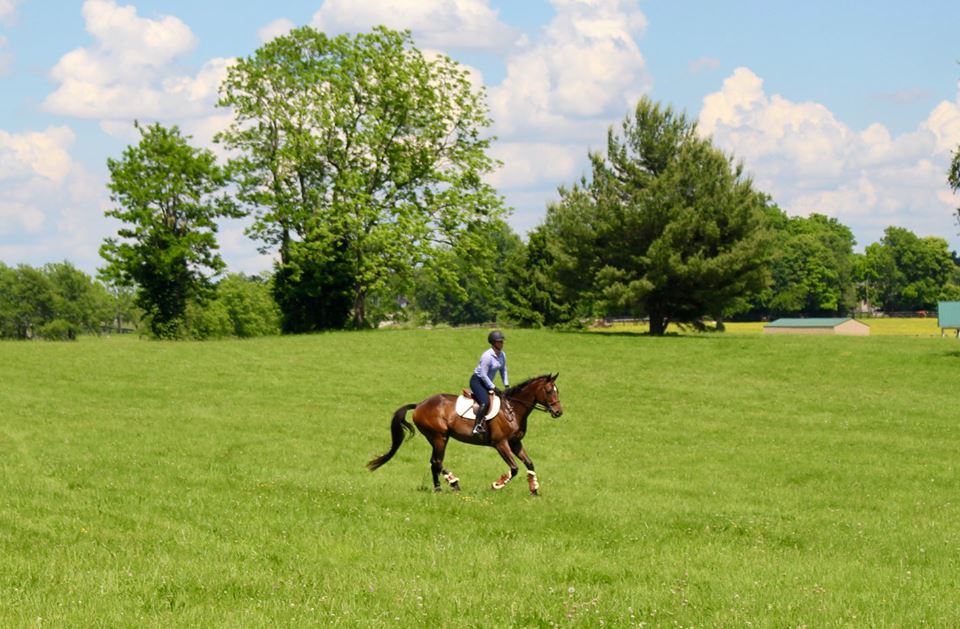

I am blessed. I have learned that the only way out is through. And that the only way to get through is with a smile on your face, and to be surrounded by good people.
The horse industry is full of them. Good men and women who are there to hold a horse, grab a bucket, or run back to the barn for a crop. People who are willing to answer every question, haul any horse, and hold every hand through a tough time. I am blessed to have surrounded myself with them. And in the past few weeks, I have realized just how essential they are to my journey. Because when a broke and struggling graduate student is trying to navigate her way through this upscale world of equestrianism, it is damn near impossible to do it without a little help from her friends. These amazing women who have held me up and anchored me down. My Fairy Godmothers.
This was no more apparent to me than in the last few weeks as I scrambled to get my life put together. I realized a month ago that Nixon was not ready for another event. And as I lamented over this, I was chatting with my friend, and professional dressage rider, Ellen Murphy. She told me that the KDA (Kentucky Dressage Association’s) recognized dressage show was only a few weeks away, and that I needed to dressage queen with her. I hemmed and hawed, telling her that I didn’t think that Nixon would stack up against the fancy warmbloods. I didn’t know if I could afford it, and if I was going to eat Ramen noodles for the next month, I at least wanted to be competitive.
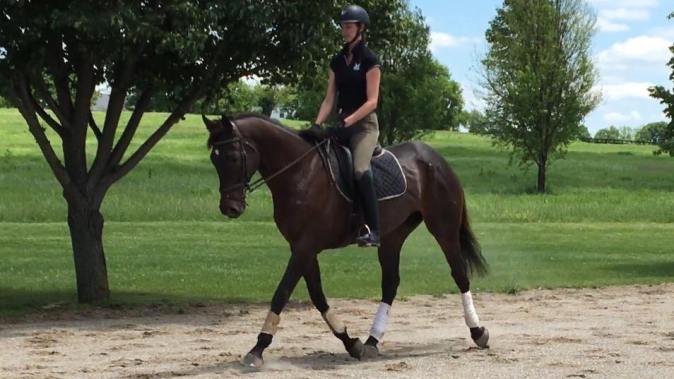
Ellen hopping on Nixon to help me out.
And yet, as one of those good people, she offered to help. The next few weeks were spent in a constant conversation with Ellen. Registrations, entries, studying and analyzing my test, and conversations discussing training techniques for Nixon — she put up with my constant neurosis. She answered every question. And then when the weekend of the show rolled up, she held my hand.

Trying to mimic Ellen.
And the only payment that she ever asked for, was that I get on her sales horse and jump him…and maybe a margarita.
Where Ellen held my hand in the dressage world, I found another helping hand in hunterland. I got Mak back a few weeks ago from his lease situation. I knew that I had to get a record put on him this summer. We could do an event or two, reiterating the fact that everyone already knew – that he was a lower level packer. Or we could see how he fared in a recognized hunter show-something I had never done.
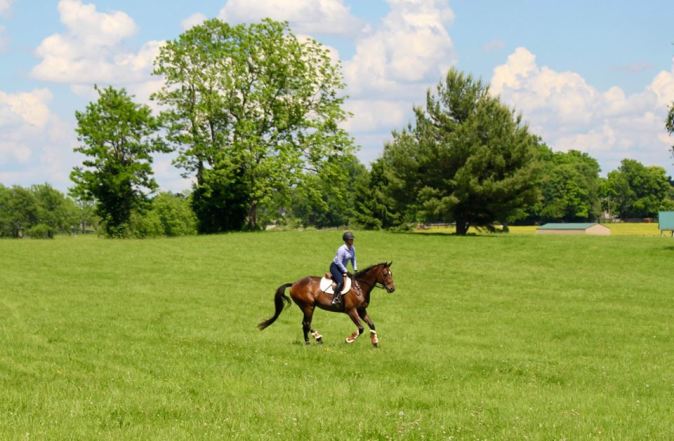
And that is where Abby Converse came in. The questions were asked, the entries were paid, and yet Abby never seen flummoxed by my incessant ignorance. And although she is a professional rider herself, she willingly came out and put training ride after training ride on my eventing-turned-hunter thoroughbred. She tacked up on 90 degree days. She giggled at his confusion over the speed she wanted him to crawl in. And she explained each of her rides to me in an analytical form, something I needed to understand her strange and confusing hunter-ways.
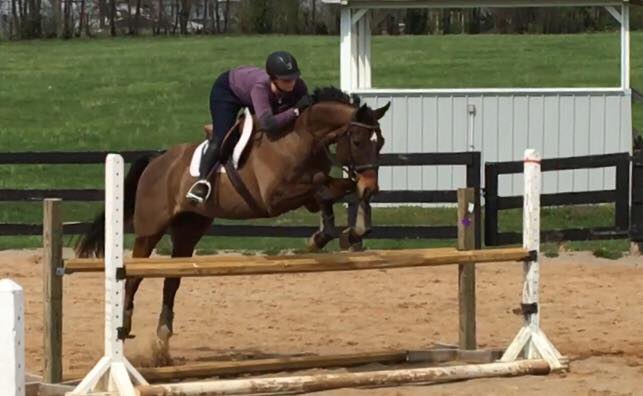
Strange and confusing hunter ways…
And then, just like Ellen, the only payment she ever asked for was a high-five and a margarita.
And, as are horses – while I was getting Mak ready for his big hunter debut, Nixon decided that he wasn’t getting nearly enough attention, and popped a split. The horse that could run competitively in the Santa Anita Handicap somehow got injured dressaging.
And as I lamented over this relatively insignificant blemish, a third helping hand appeared. My fellow eventer and amazing friend, Leah Snowden messaged me one day to ask how he was doing. And like only a great friend can, she immediately offered her amazing rehabilitation services.
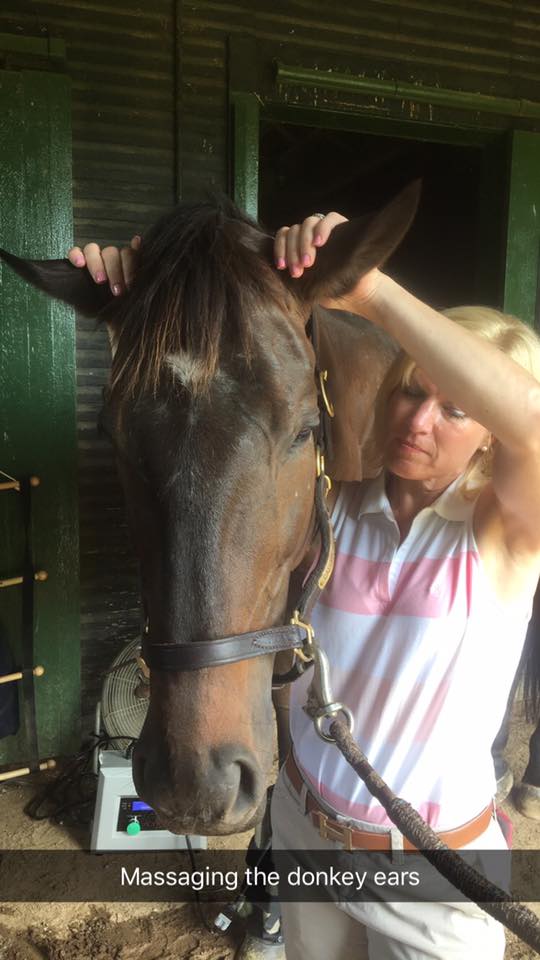
She told me about this new instrument that she had and how it had worked wonders on her own horses. The Cytowave was brought to the barn, attached to Nixon’s leg, and ran for an just an hour. And Leah and I sat there and had a solid girl talk. We fed peppermints to the ponies. And we watched as Nixon begged for our attention.
And at the end of the session, I ran my hand down his leg, and found the splint to be half it’s original size. I stood up in amazement and asked Leah how I could ever possibly repay her. Again, all she asked for was a margarita.
These amazing women that I have surrounded myself are the best. The best riders in their fields, the best horsewomen in their discipline. But where they truly stand out to me is in their hearts. They are professional riders, professional farm managers, and corporate owners. And yet, when little old me is in a pinch, each of them block out hours of their days to help me.
And I do hope that they know that it is cyclical. I might not be able to offer some fancy piece of equipment or some educated words of wisdom. But I can clean a mean stall, run a fast 100m dash back to the stalls, and polish one hell of a hoof.
But why? Why are they so helpful, and so understanding? We hear all of the time of the vindicative and snotty professional. The one who only cares about the money and the fame. So what separates these amazing women from the rest? Were they also the young struggling rider, who didn’t have a bank account to stand on? Did they also pound the pavement and count their pennies? Probably. I have heard their stories and seen their ribbon’s.
Or maybe, just maybe, they just really love margarita’s….
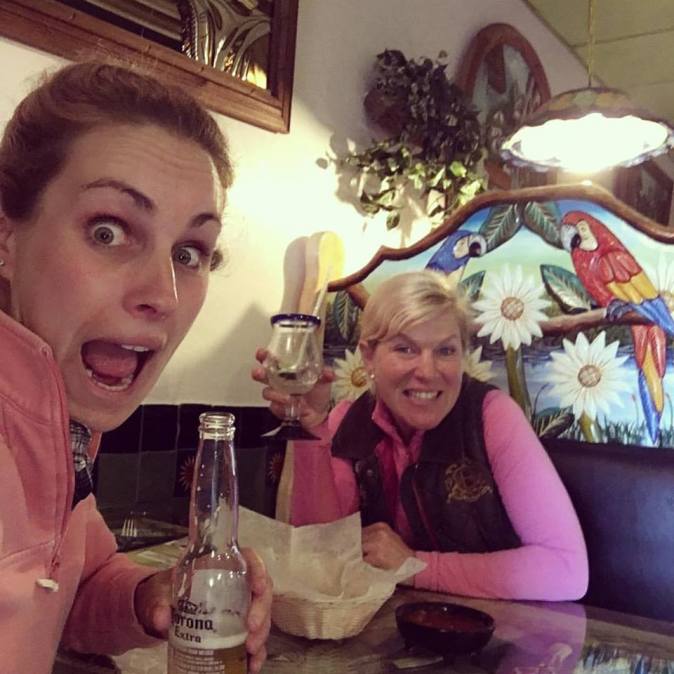
The only payment they ever need.
Because, lets be honest, this entire world is one big cycle. And these amazing women – these Fairy Godmothers of mine – get it. They paid their dues. They worked their way up. One trot set, one jump school, and one early morning at a time. And each of them had a mentor of their own – their own Fairy Godmother who waved their wand and a tricky yet talented horse appeared. And now each of them is paying it forward. Through me, through other young riders, through each sales horse.
Mile after mile. Ride after ride. They lend a helping hand, they pick a struggling rider up. Hack after hack. Jump after jump. They wave their wands and a text message, a big smile, or a high-five appears. And although I didn’t leave a glass slipper on the horse path while hacking back from the arena, I can leave them this. An acknowledgement to all that they have done. A shout out to their brains, their hearts, and their souls.
An ode to the Equine Fairy Godmother.
Bippity. Boppity. Boo.

I was emailed by the United States Equestrian Federation last week with an inquiry. Someone had filed a complaint into my amateur status, and they were asking for a rebuttal. How did I wish to respond to these statements? Could I defend myself?
I responded back to the USEF with a bulleted list of responses. I told them that I had in fact managed Hinkle Farms, but that this complaint was both unfounded as well as amusing. I told them that the idea of me profiting money off of training horses and teaching lessons was completely incorrect. And I explained the fact that I had trained a horse for the Retired Racehorse Project that was owned by my (super) significant other, but that I had actually legally purchased just a few weeks ago.
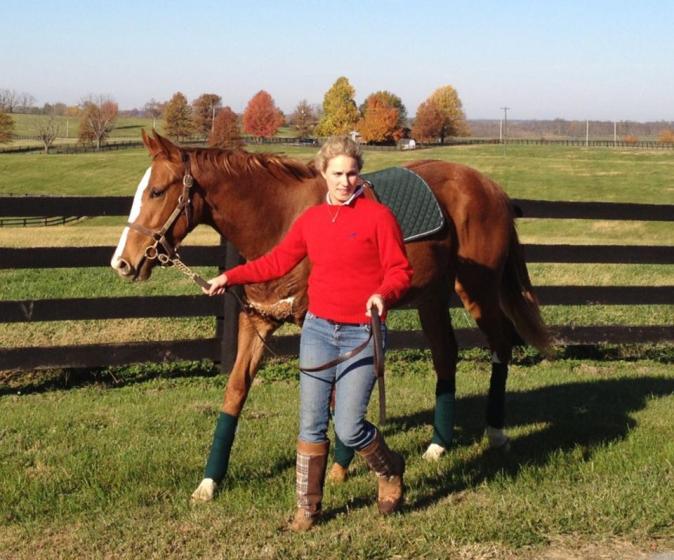
Managing a TB farm required a LOT of this.
I had been the yearling manager at Hinkle, and then was promoted to the assistant manager. I foaled mares, I groomed yearlings, I stared at them as they walked around an equicizer, and I studied the black screen of ultrasound machines as we scanned reproductive tracts. There was no riding involved, and if being the manager of this farm meant I was a professional rider, then so is every veterinarian, vet tech, and farrier. But, even more amusing to this complaint was the fact that I hadn’t worked there in over 3.5 years.
And my second defense: Nixon. I had trained Nixon without profit. Luke did not pay me for training rides, nor did he pay me for competitions. He owned the horse, and therefore paid for his board, his bills, and his life. I rode the horse, and therefore was in charge of his grooming, his maintenance, his biting when least expected, a few kicks here and there, and holding him with a chain shank for the farrier. The game plan was for us to sell him, and split the profit 50/50. Instead, I fell in love, and purchased him myself from Luke last month, after selling another horse.
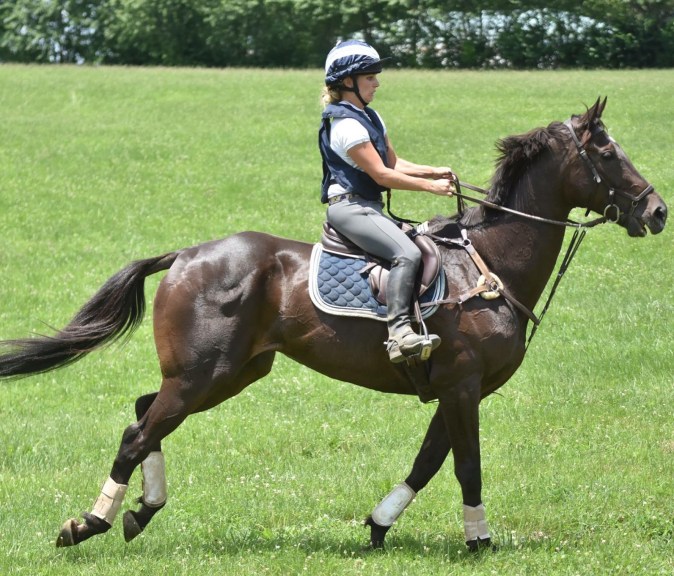
Whats not to fall in love with? Besides my face. Photo by JJ Sillman
The USEF was amazing to work with, and nothing about this is directed at their staff. They were easy, amicable, friendly, and professional. So when they asked for a bill of sale between Luke and I, in addition to a written document from Hinkle Farms stating the dates that I worked there, both were quickly provided.
And then I got angry.
Because of someones overt concern over my life, I spent the majority of my day on Friday defending the suck. Hours that could have been spent studying equine disease and infertility due to the fact that I am getting my doctorate in both. Time that could have been utilized to ride my ponies. Explaining to the USEF that I was, truly, and obviously, an amateur, and that none of these inquiries violated any of the rules. And in addition, I took time out of both Luke’s and Anne Archer Hinkle’s days as well – both of whom are thick in the middle of breeding season, and one of which is planning her wedding.
And I laughed as I explained just how amateur I am – four years ago I entered my first horse show in a decade. Last year I completed my first training level event of my life. And today, well, today I finally earned my first two scores towards my bronze medal in dressage – at FIRST level.
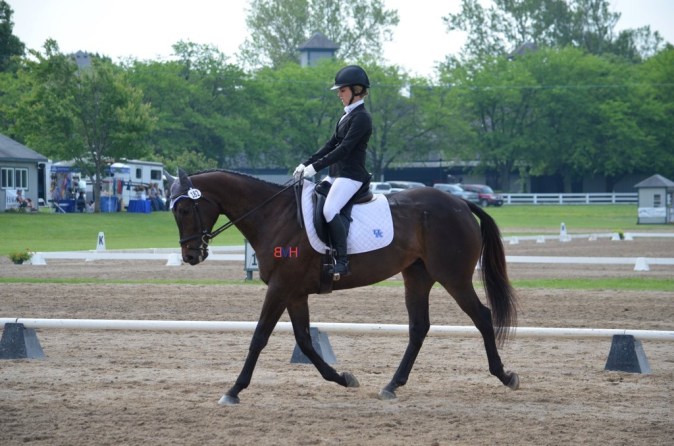
I just learned how to sit up, now if only I could stop looking down. Photo by Melissa Bauer-Herzog.
I do not teach lessons. I do not train other peoples horses. I spend the majority of my day hacking on the buckle at a walk, sometimes bareback, sometimes bridleless, and usually with a smile. If I can afford it, which is rarely on my graduate student budget, I take lessons with a select few people here in Lexington that I feel are the best. If I can’t afford it, I go and school with friends who I appreciate constructive criticism from. I circle, and I jump. Occasionally I gallop. And sometimes I rope. All the while listening to the latest Beyonce or Taylor Swift on my iPhone. Usually alone.
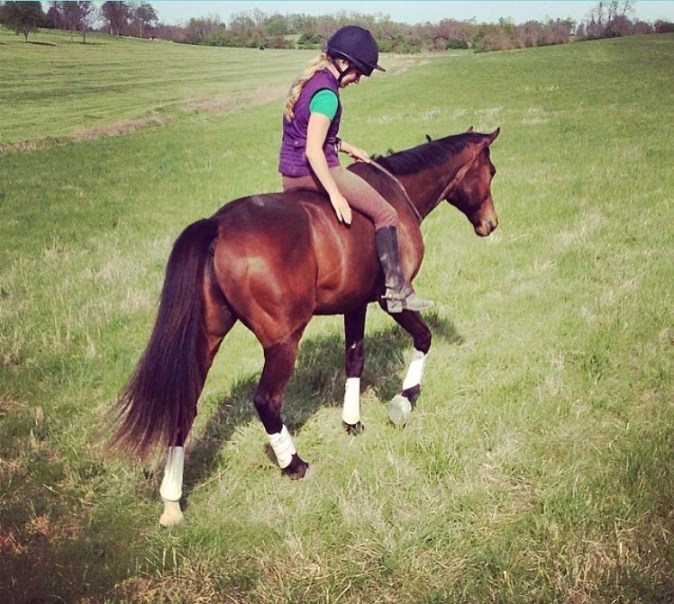
My life is a lot of this.
And then, quite often, as Denny Emerson says, I ride. I ride whatever horse is offered to me. I get on big ones, little ones, grey ones, red ones. I willingly ride whatever is handed to me – with whatever tack. Last week it was XC schooling a horse for a friend, and next week it is demonstrating western pleasure at the Kentucky 4-H Judging Competition. But the difference between me and Denny? He gets paid, and I do not.
I have turned down so many opportunities in order to maintain my amateur status. I have turned down money, sponsors, teaching clinics, and horses. After RRP last year, I was offered horses in training off of the track, and asked to help others with their difficult mounts. And if they were local – I would offer to help, FOR FREE. Because I have been there. I also rely on friends who are great riders and even better horsemen. And I feel as though this is how the industry works – cyclically, with us all helping each other.
And I told the lovely lady at USEF all of this, while also quickly telling her that this vent session was by no means targeted at her. This system is just set up so backwards, that we all spend more time defending the suck than actually proving the greatness.
Because that is all it needed. No rating, no tax statement proving income. No record statement proving an upper level career, no ribbon ceremony. Just a simple email – one consisting of 5 words – and I am officially a professional rider.
So after supplying her with all of the documents, and all of the information needed to prove that I was truly an amateur, I switched. Four hours defending the suck was followed by a one line email stating that I wanted to turn professional. Because, at the end of the day, I refuse to do this again. I refuse to take my own time, as well as the time of my previous employers, friends, and family, to defend my suck. And if it means more peace of mind, less time dealing with this crap, and an increased chance of making $20 a week off of a training ride on a 16 yo laminitic quarter horse that can afford me a single cup of Starbucks, then COUNT ME IN.
So here goes kids. As of Friday, I am a professional rider. I am now (obviously) great. I woke up on Saturday with lower heels, higher eyes, and a left arm that suddenly and miraculously listens to my brain. I am Mary King, William Fox Pitt, and Buck Davidson all rolled into one. I will obviously get sponsored by Amerigo and Vespucci, Eskedron and Eby, and tackle all of the 4*’s in the world. And maybe, just maybe, now that I am a professional rider, I will stop getting bucked off of Frank.

Frank. Photo by Melissa Bauer-Herzog
Because I am done defending the suck, and I will begin to embrace the greatness. Bring on this world, one professionally ridden cross rail at a time!
I can only write what I know. And what I know is that there are good people in this world. I know that decent human beings exist in the horse business. I have heard that there are bad guys out there, but none of them have directly interacted with me. Instead, I have been blessed to surround myself with the good guys.
Quiet, unassuming, not obsessed with the headlines or the fame, these people lie under the thousands of headlines that explode over social media about the break downs, the auctions, and the abuse. The few bad who overtake the good.
But they keep going. Put their head down and plug along, acknowledging that the change that they want the world to see in this industry must first start within their own land. In their own paddocks. In their own foaling stalls.
These small family farms, and the staff that occupy them, are the War Horses of our industry.
Like a true War Horse, these farms like Hinkle strive for the simplest of life’s goals: life, liberty, and the pursuit of happiness. They don’t complain. They don’t exert excess energy on anything but a smile. They put their head down, and go to work. Day in and day out.
Just like a horse that I know – Hazards of Love.
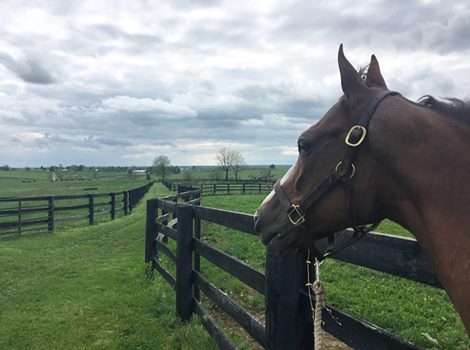
Years ago, I heard of this horse. This strapping four year old that was out there in the Universe running. We were selling his younger brother in the September sales, and a striking Malibu Moon colt himself, we were hoping that Hazards of Love would add a bump to his mom Spring Rush’s page. I added him to my Virtual Stable, praying to finally see him win a few, or enter a stakes, but he never really took off.
Because if there’s anything I’ve learned in this business of breeding, racing, and owning thoroughbreds – its that if wishes and prayers were nickles and dimes, we’d all be rich.
We sold the yearling, I left my position at Hinkle Farms to return to graduate school, and yet I could never forget about Hazards of Love. Because, although he wasn’t running in G1’s, he was running — and often. My phone would ping often with his name attached. And with each update, I would chuckle – acknowledging that he might not be running with the elite, he was certainly running fast. He almost never finished out of the top three, and just seemed to love his job. He eventually climbed up to the stakes level, and continued on his streak.
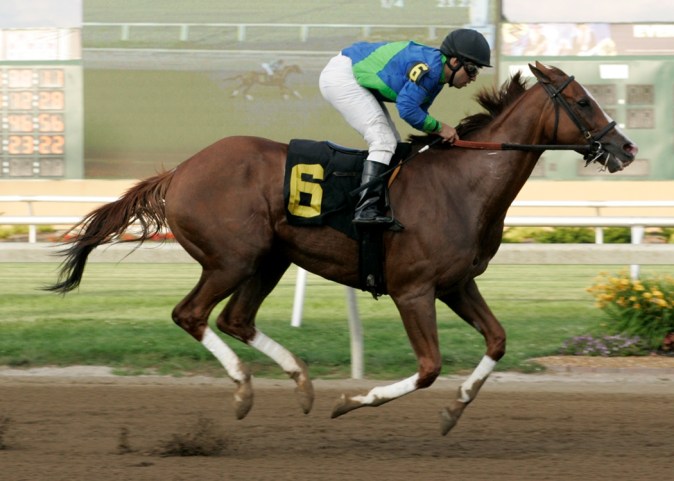
Hazards of Love winning the Don K. Memorial Starter Series. Photo by Linscott Photography
Years went by, and my interactions with the family and staff at Hinkle Farms were limited. That is, until I met Tom’s daughter, Anne Archer. We had met occasionally during my tenure on the farm, but had never become close. But one day at the sales, her father reintroduced us, and we began to talk. About life, about school, but mostly about horses. And she brought up this horse, Hazards of Love. This creature who had now run almost 50 times, and just never seemed to want to quit. She asked about the retraining that I had been doing with these ex-racehorses, and showed interest in getting her own. And I nodded my head and encouraged her, letting her know that if she ever got him, I would help. And with that, we became friends.
But we knew he was with the best. His owner, Maggi Moss had become an advocate for the sport, but more importantly an outspoken voice for the horse. And still, Anne Archer reached out to Maggi and let her know that if and when Hazards of Love decided that he was done running, he had a home at his birthplace. One where he could be ridden, used to pony yearlings, babysit weanlings, but most importantly, be treated as the royalty that we had all come to respect him as.
Race after race, year after year, it seemed like this horse would never walk off of the battlefield. A true War Horse to the bone, he continued to win, continued to run, and continued to come out of the races with a sparkle in his eye. And with each update, Anne Archer and I would share a text – acknowledging that this horse was a freak. The exact type of horse that as a breeder, you can only hope to produce.
And then Anne Archer got the call. Maggi thought that Hazards of Love was ready to retire. Within 24 hours, he was sent to Barn 4 of Hinkle Farms. Set on a hill overlooking the foaling barn where he entered this world, he was turned out where he could appraise his kingdom as was only appropriate. Sound. Happy. Still holding that sparkle in his eye.
Hazards of Love retired after 75 starts. Of those 75 starts, he won 26, and hit the board in another 30. He won over a half a million dollars, and was ranked 10th in the country by number of wins in 2013.
He did all of those things because he was surrounded by good people. A sane owner, a great trainer, good hands being ran down his legs, and soft hands on the reins. He did all of those things because of the time, effort, dedication, and knowledge that were put into his mating, his raising, his development.
But most importantly, he did all of those things because of heart. And now, that heart is returned to his kingdom.
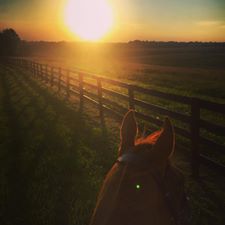
Overseeing his kingdom
Because his home of Hinkle Farm’s might now have G1 winning homebreds, and G1 winning mares. They might have sold million dollar yearlings, and produced runner that command the headlines. But now, now they have their own mascot. A being that symbolizes everything the farm stands for. Just like themselves, who are in it for the love of the sport, who puts their head down and goes to work — the War Horse. No champagne, no pewter, no chandeliers or fancy signs, just sheer heart.
The heart is here.
Welcome home, Hazards of Love.
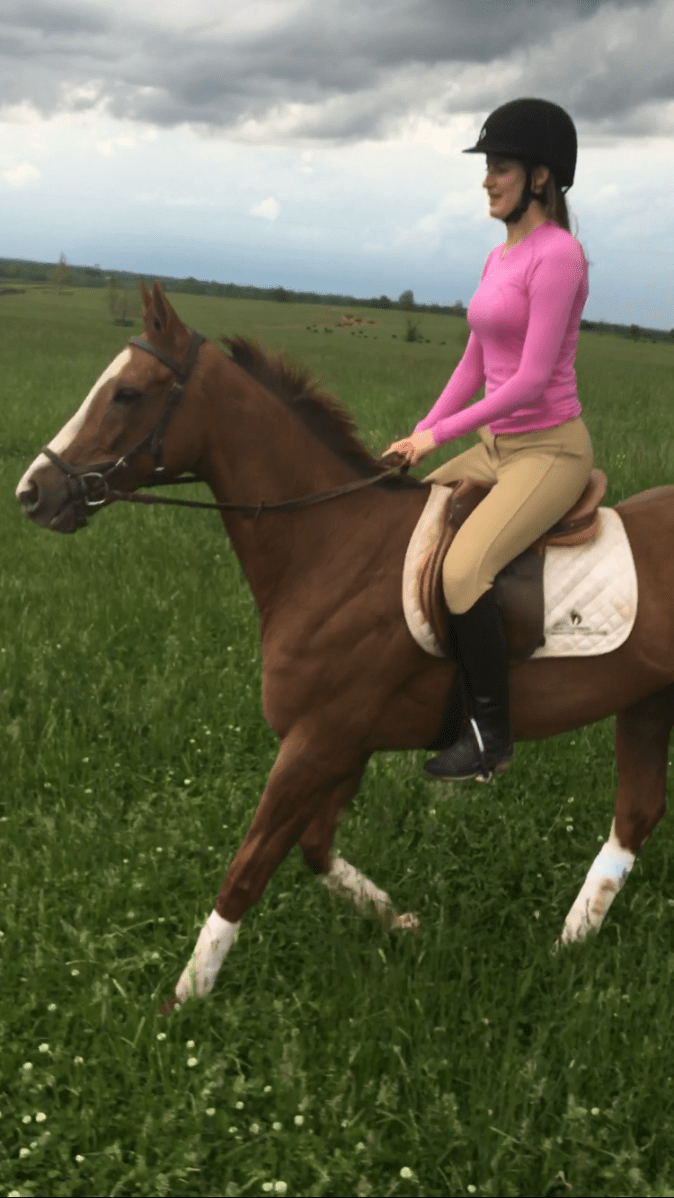
Anne Archer on Hazards of Love, now known as Ody.
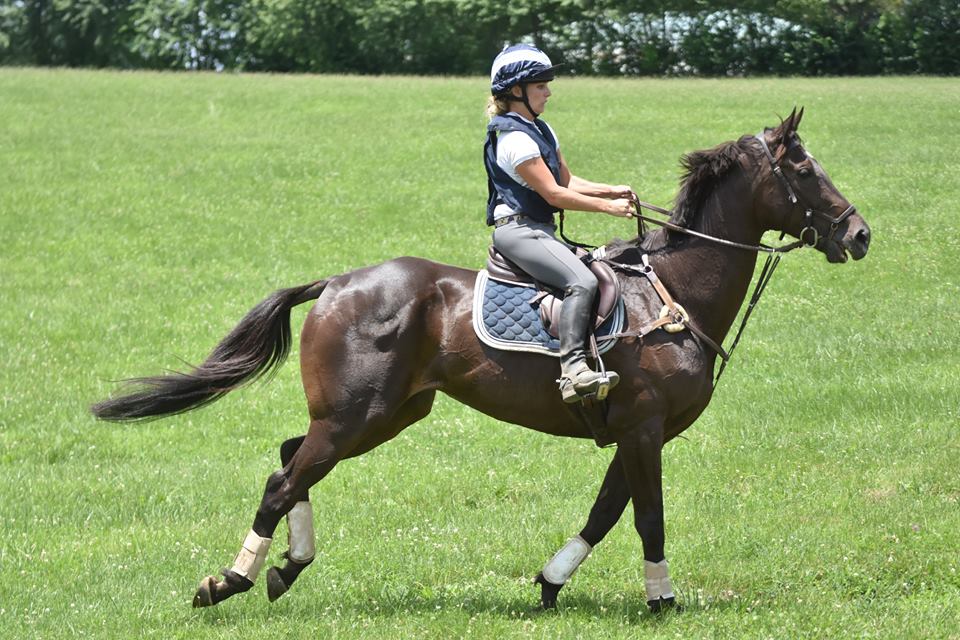
I own a (very) successful graded stakes winner. He is opinionated, tough, massive, and strong. He was taught at a young age that he is a champion. He was told that he was a great. That he was the best. And he got away with murder.
That horse is now seven years old, and it has taken almost a year of retraining for me to convince him that life is a whole lot easier once he realizes that I am his equal and not his minion. And yet each time that I vent or complain to my friends, they always respond with “well, thats a graded stakes winner for you.”
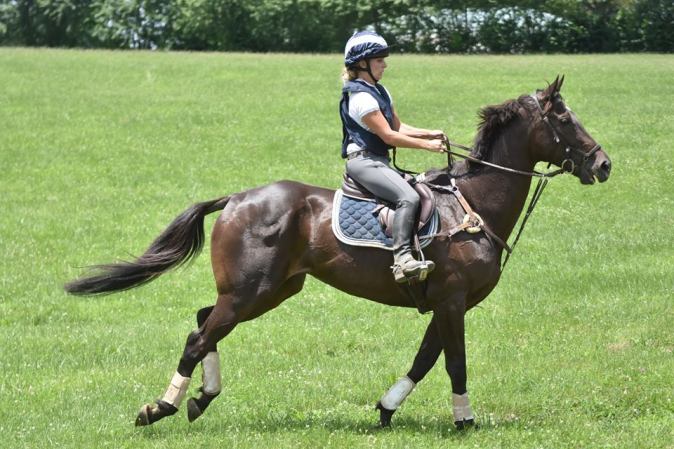
The expression on my face pretty much sums it up…
And at first I agreed. I had never experienced this level of horse before; at least not underneath me. I had handled tough yearlings, and strong mares, but I had never had to saddle them. And I thought that maybe that was exactly it. Maybe all graded stakes horses are like this. They are the best of the best, as only 2% of all thoroughbreds will ever win a race at that level. And maybe it takes that cocky swagger to make them run with that much power. Maybe they are all strong. All bullheaded. All kinda, slightly, a little bit mean.
But then I got Kennedy (formerly known as Larry) back. And on paper, he was so similar to Nixon. He was also a graded stakes winner. He was also massive. He was also strong, and also won almost $500,000. He also towers over me in the cross ties, and takes up an entire 12×12 stall. And I thought “well, here we go again.” And I prepared myself for another tough, long, and hard journey, and began the retraining with hesitancy.
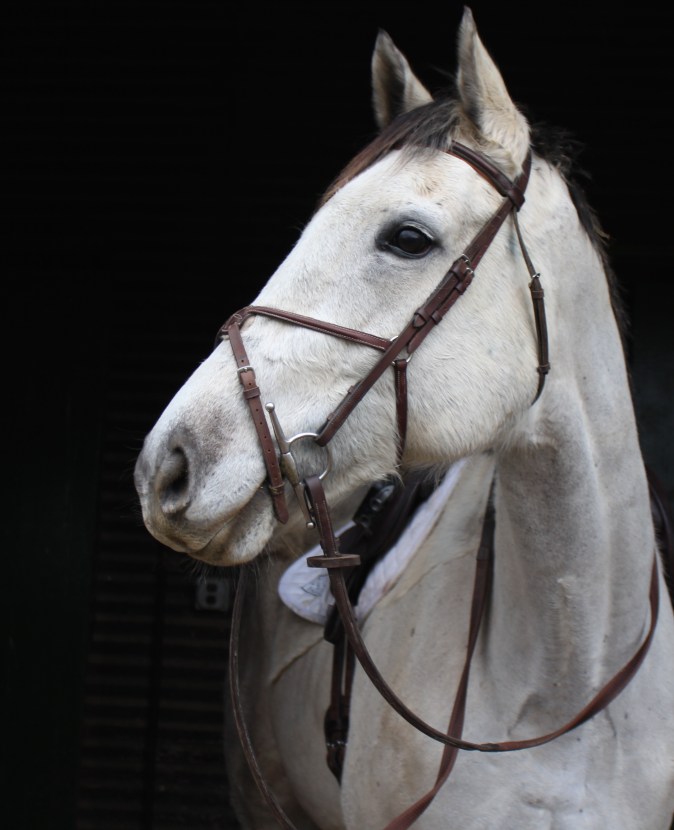
The most intelligent and kind eye
But where Nixon is a bully, Kennedy is a lover. Where Nixon attempts to threaten me at every turn, Kennedy is constantly seeking approval and rewards. And where Nixon is just, quite simply, tough, Kennedy is exactly the opposite – he is the definition of easy. And in only a few short months of retraining and riding, he is XC schooling the same fences as Nixon is after a year. He is happy to hack out on the buckle, happy to pack around a beginner, and happy to just stand still and be groomed for hours. So similar in so many traits, but so different when it comes down to whats really important.
So I went back to the drawing board. Do any of these things that we use to assess our thoroughbreds potential abilities really matter? When we look at their race records – does running 3 times really mean that the horse is lazy? And running 85 mean that they are hot? Does never breaking a maiden mean that they are less athletic? Or is a graded stakes winner more likely to get to Rolex?

Nixon did more than break a maiden
But so did Kennedy
Because if you look at the thoroughbred entries at the 4* events, there are rarely any who were a success on the track. But why? Did the successful horse just end up in the breeding shed? Or did they end up in a field? Were they too tough? Or too broken?
And then there is pedigree. What can we really elude from that? I have now heard that there is another Afleet Alex floating around the dressage universe – bred identically to Nixon. Does that Afleet Alex blood really indicate an uphill, balanced, cadenced mover? Should every dressage rider suddenly hunt down that blood? I don’t think so.
In contrast I owned an Empire Maker that wanted nothing more than to be a 3’6 hunter. I remember taking him to his first lesson with my trainer Allie and explaining his pedigree, and she laughed. Because she had an Empire Maker that could jump a 1.4m fence with ease, but whose fuse ran about as short as a firecracker. And as she stared at Mak falling asleep in the middle of the ring while fellow students jumped a grid, she shook her head.
Not exactly a short fuse in my Empire Maker
And you hear that Unbridled’s Song will always throw something that will break down, never holding up to the rigors of jumping – but Kennedy has that blood all over his dams side, and he ran over 50 times without a break.
And that got me to thinking. While it is good and all to study race records, and learn pedigrees, and observe conformation and movement, maybe the most important aspect of horse training, and horse ownership is much simpler. Maybe all we need to do is to take each animal that we encounter as an individual. As its own being.
No two horses are the same. No two beings can fit into one bubble. No two training methods will work identically. And in order to become more successful in this endeavor, in this training or retaining of the most majestic creature I have ever encountered, we need to acknowledge this. Appraise and assess each alone. And unlock that specific horses true ideals. Their true passion. Enhance their strengths and conquer their weaknesses. Don’t judge a book by it’s cover…or its record.
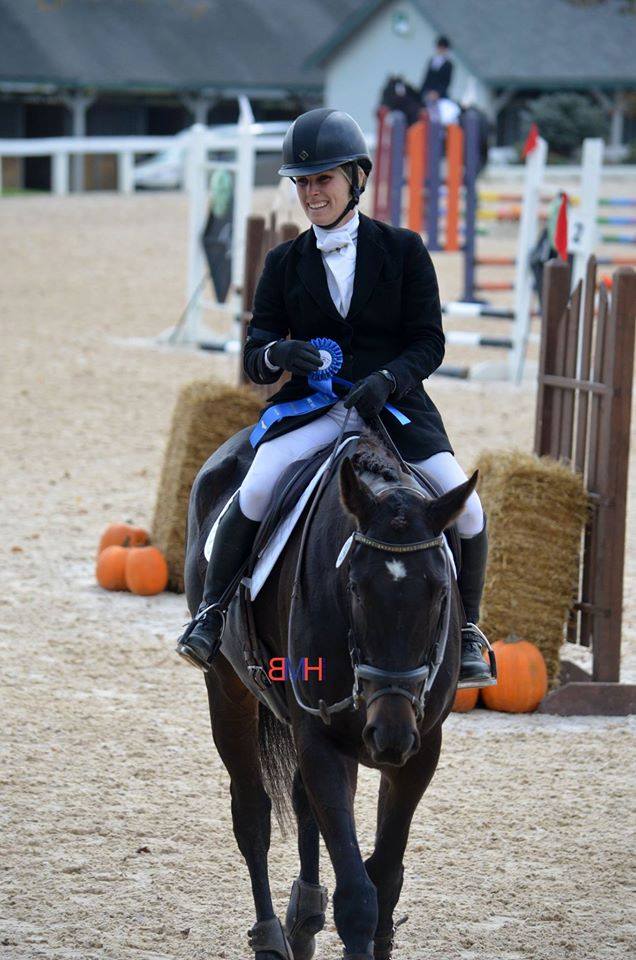
Because lord knows my sister is a marathon-running surgeon, and I can’t jog a mile. My brother is a hockey-playing lawyer, and I hate the cold. But me, well I’m a blogging scientist who enjoys nothing more than mucking a stall and galloping a thoroughbred – and no pedigree, conformation, injury, or record will ever slow me down.
I knew the news was bad about Philippa hours before it was ever released. I was doing what I always do on the weekends of the “big ones.” Scrolling through Eventing Nation, constantly refreshing, trying to see the latest update or the most recent scores. My trainer Allie was four or five riders away in the 3*, and I just wanted to know if she had gone clean; if she was safe. But then I saw that there was a fall, and a hold. Philippa Humphrey’s had come off, which made my stomach sank.
I didn’t know Philippa well. My only knowledge of her was from sharing a warm up arena a few times at the Kentucky Horse Park. When the bigger riders come to compete against you at novice or training, you know. There is an aura around them. A confidence. And yet as I passed her left to left, I didn’t see anything cocky. Instead we exchanged a smile and a head nod. She was laughing at her green horse, and exchanging conversation with the other riders.
And I remember thinking how nice of a rider she was. Soft and efficient, with a strong seat and gorgeous equitation. And when she beat me, I chalked it up to the norm. I pencilled her name into my brain, acknowledging that I needed to follow her future endeavors. But then I read last night that she had passed. And alongside my sunken stomach, my heart broke.
I wasn’t there. I don’t know how the footing to the fence was. I don’t know if it was rider error, horse error, course design error, or hell, just absolute bad luck.
But what I do know is that this was a prepared rider, a fit horse, and a galloping fence. Not a technical question, not a horse that couldn’t read the question. Not a rider who was just kicking and praying.
I am not making excuses. I truly believe that eventing needs to change. I watched Rolex this year and was so thrilled to see that it had become a test of endurance instead of a test of confusion. And as I watched the leader board get juggled around without any serious falls, I turned to my boyfriend and said “this is how it should be.” Fitness. Strength. Letting not only XC, but the stamina for stadium play a role in the placings. Frangible pins broke, and riders retired on a tired horse, not a broken horse. At the end of the day, all of the competitors – equine and human, were tucked into their stalls and hotel rooms. Ready to fight another day.
And we all need to learn from this – changes are coming. And I think Rolex was a good example of that. And changes have already come. We ARE adding frangible pins, we ARE studying heart defects and disease, and we ARE inventing safety equipment – both for ourselves and our mounts, to protect us during a fall.
But even 50 years from now, even if we jump foam fences and wear hazmat suits, we will still be strapped to a 1200 lb animal. A creature that has its own brain, its own legs, its own opinion. The risk will never 100% be removed from this sport. That needs to be acknowledged. If you are not ok with accepting at least a part of this risk, then riding horses is not for you. In fact, owning horses is probably not for you.
But it is for me.
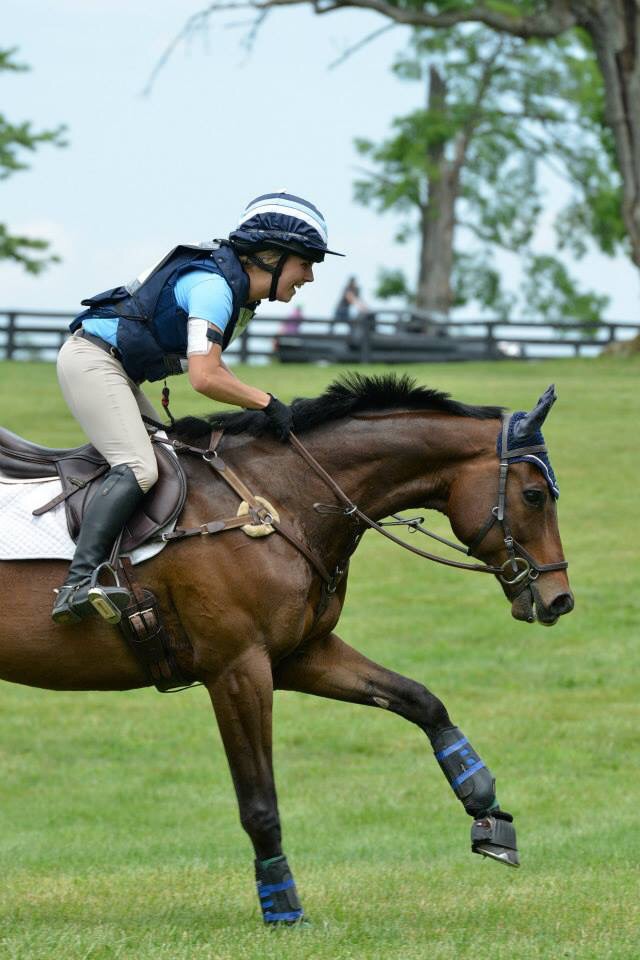
Four years ago, I watched as my Uncle Bob neared the end. His battle with prostate cancer had turned into a battle with lung cancer, and the chemo was sucking the life, the soul, the heart, and the brain out of a man that I loved dearly. It wasn’t my first time watching this grotesque end of life happen. I had seen the cancer, and the chemotherapy, do the same thing to my Uncle Doug, my grandfathers, and finally my father.
I called my friend Meghan in despair and angrily ranted about these mutant cells that were taking over my life again. I told her that I truly believed that the cancer doesn’t kill the body, the chemo does. She agreed, and we began a long discussion about our plans. What would we do if we were diagnosed with terminal cancer? If you were told you only had a 30% chance. Would I connect myself to that poison and fight? Or would I spend as many good hours of my life doing what I loved? Which risk offered the most reward? Which route would leave my heart full and a smile on my face? Is it better to live half alive and scared? Or with a full soul and galloping into the future?
I chose the latter. I told her that if I was diagnosed with cancer, I would cash in all of my stocks, sell every article of anything that I owned, and I would buy a 4* horse. If I had a year or two, I would go the legal route and try to qualify my way to Rolex. If I had a month, I would sign up as an outrider and then in a blind rage, I would suddenly kick my mount into a gallop and run screaming towards the Head of the Lake, passing Michael Jung with a pageant wave and an Indian call.
Because that is how I want to go. Happy, free, screaming, and smiling from ear to ear in joy. One stride, two strides, three strides and up. Soaring over a massive table, with one leg on either side of a creature I have always loved.
I don’t want to go out as just another victim of one of these horrible diseases that we walk 5K’s for. I want to go out with greatness. As one of the best. With the best. Or with a story. Something that will be told to every Rolex spectator for the next 50 years.
I will not make an excuse for the fence, I will not make an excuse for the fall. I will say a prayer for the family and friends that Philippa left behind, including a beautiful child. And I will give a strong nod to her from the warm up arena of life, acknowledging that we have lost a great woman, a great person, and a fabulous rider. One more warm up fence, and then off to the other side. She got there doing something she loved, and while that is not enough to bring her back, it is enough to settle just a small amount of the heart break that so many are feeling.
Left to left, this world keeps shuffling us around. Left to left, we keep going. Keep galloping. Keep jumping. But left to left, we must keep loving. Keep thinking. Keep inventing. Keep changing. Because left to left, we must keep riding.
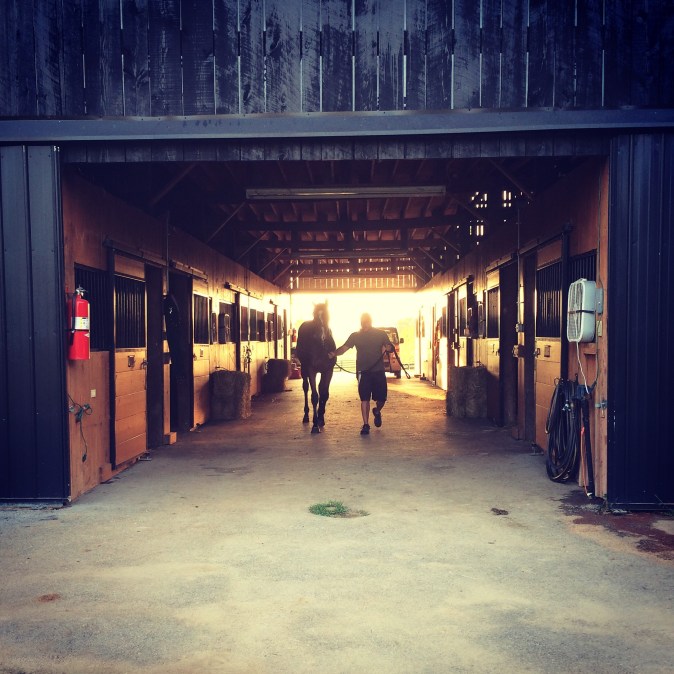

I heard the news today and the wind was sucked from my body. My mind raced through years of memories, and my heart broke into two. The world’s best/worst pony had finally left us; Chocolate had passed away.
This heathen of a pony was the original love of my life. I had inherited him as so many others do – through my trainers daughters who had outgrown him. He was a spry 6 years old, a whopping 11.2hh, and full of piss and vinegar. Rose had found him at an auction and secured his life-long future for $200. But like a true Napoleon, no one could convince him otherwise of his own badassery. Like a true pony, if anyone near him questioned even an iota of his Rico Suave stature, he would pile them into the ground faster than you could say “little.”
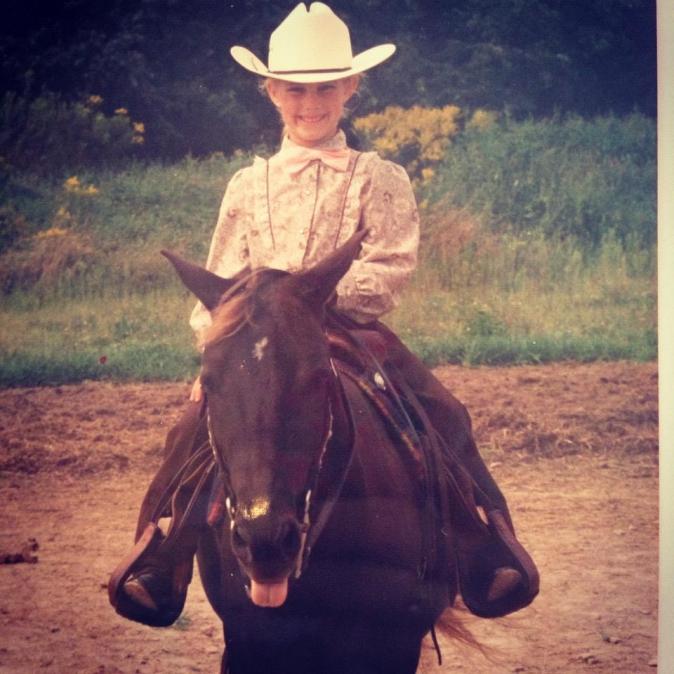
But Chocolate and I grew up together, and I loved him. I was only 5 years old when I began riding him. We travelled around county fairs and dusty show grounds, searching for any blue (or green) ribbon that we could find. My aunt and uncle would journey with us when my parents couldn’t, and it became a family affair for all of us: The Fedorka’s, the Parker’s, and even more important, the family that became known as Edgewood Stables.
I was only 5 years old, and I yet I can still remember standing on the side of the arena, absolutely perplexed as to why I had to go around the barrels in such a specific way, or why they were demanding I trot the pattern instead of gallop. My trainer Rose Watt was a saint, and although she was slightly perplexed by training a toddler who could barely dress herself, she took me into her world with open arms.
Years went by, and my aspirations became more intense. It wasn’t good enough for me to just run around a barrel – I wanted more. So we shifted gears and made 4-H our lives. We began cleaning up in western pleasure, equitation, showmanship, western riding, and trail. His tiny stature never limited him, and as an aspiring Olympian at the age of 8, I committed my entire life to being the best rider that I could be. With my relationship with Chocolate evolving, so did my barn rat status, and Edgewood Stables because my home away from home – and at many times, my escape, my therapy, my life.
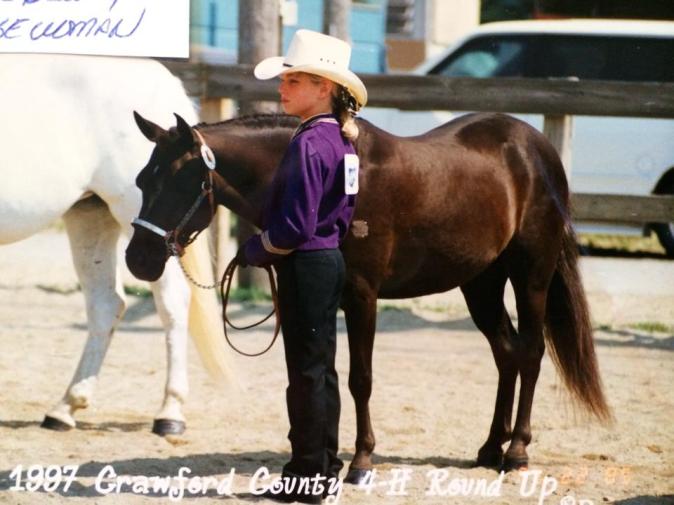
Intense face in showmanship
And yet even that wasn’t enough for my yearning heart, as I wanted more. I wanted greater. I wanted to be Beezie Madden, Mary King, and Monty Roberts all rolled into one. So I entered in Pony Club, and did eventing. We tried to climb up the ratings, and dominate at the rallies…as long as I could stay on.
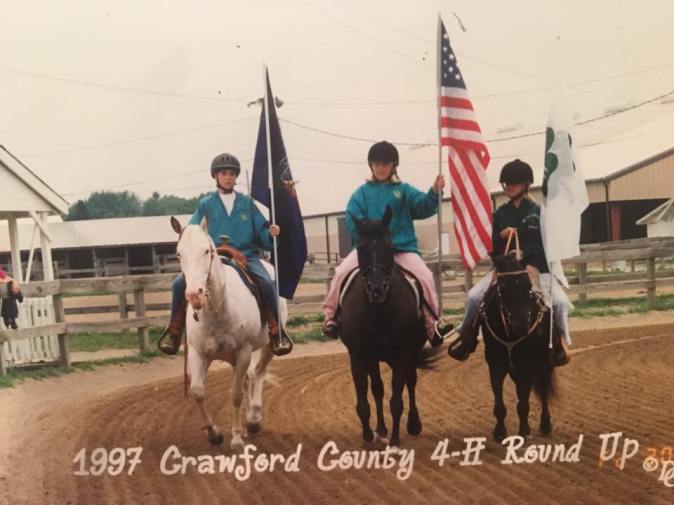
A little bit smaller than the rest
Because when Chocolate wasn’t cleaning up the horse shows, he was piling me into the dirt. If I had been older than the age of 8, I would have sounded like a drunken sailer on a daily basis.
His antic’s seemed to correlate with the biggest of the shows, and one of our last endeavors together ended up with me in tears, my Stetson buried in the dirt at Harrisburg, and a judge lunging out of the way of flying hooves. I can still hear the roar of laughter from the audience as the tears rolled down my face, humiliated by this brown mutt of a pony. But I stuck it out; there for the entire ride.
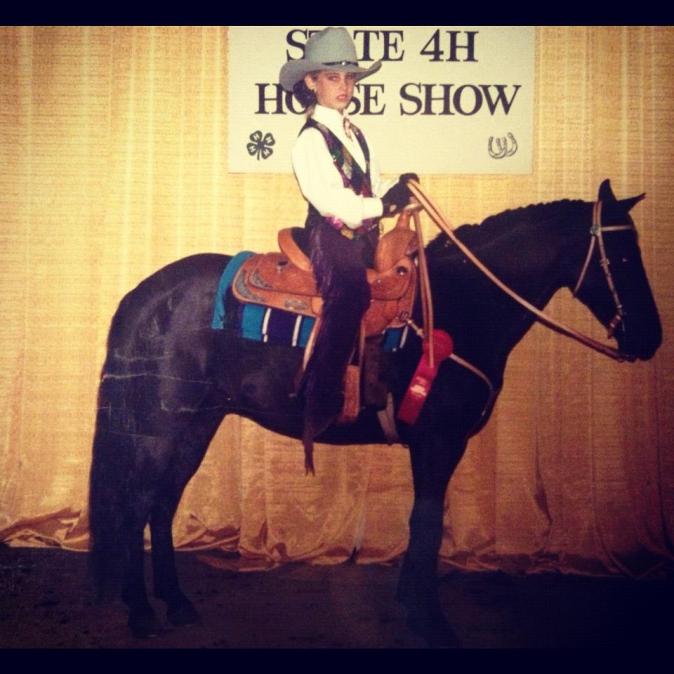
Thoroughly peeved after Chocolate tried to kill a judge in Western Pleasure
For if Chocolate taught me anything, it was that life is full of bumps, bucks, and turns, but the only way out is through.
I finally outgrew Chocolate at the age of 12, after 7 glorious years of blue ribbons and broken bones. And like any truly good pony, he was passed onto the next aspiring athlete. For years I watched as he taught a plethora of small children to sit tall, smile big, and hang on for dear life. I caught him as he barreled through gates at the end of arenas. I whispered death threats as he prepared for classes. I swung a leg over his back after he dumped yet another child. And I patted him on the neck as he wracked up more and more high point awards.
But I eventually grew up. I was the ostracized teenager in a town that just didn’t understand horses. Where riding wasn’t a sport and being a barn rat wasn’t acceptable. So as I left for college, determined to never come back to the town that never truly accepted me, I said good bye to the little guy. I knew that he was getting up there in years, now almost 20, and that he was towards the end of his athletic career, his usable life.
But Chocolate had other ideas. Other ways to find himself useful. Because for the last 10 years of his life, he went from winning ribbons to winning hearts. He stopped burying children into the ground and instead lifted their hearts, their spirits, their lives. He became the companion to a small boy who needed him more than any of us ever did. And Chocolate took these responsibilities to heart. From Champion Pony to Therapeutic Mount, he switched gears and took each step of responsibility with patience and kindness.
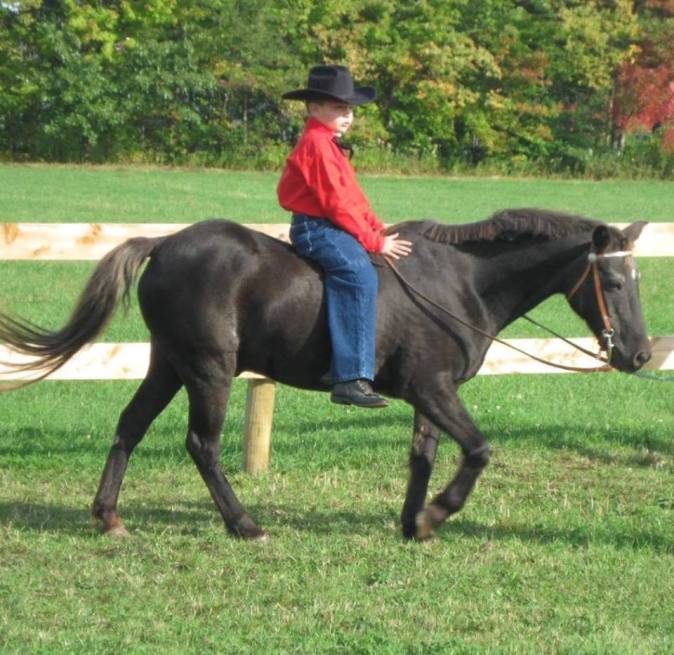
Taking his responsibilities seriously
So now we have lost one of the greatest ponies that has ever walked this earth. From barrel racing to bucking sprees, western pleasure to whiplash, jumping cross country to jostling small children, and driving a cart to driving mothers insane, he encompassed it all. He taught so many so much, but most importantly he taught us all how to ride. He taught us that there is no such thing as just sitting there, and no such thing as a packer. He taught me how to stick a buck, how to gallop free. He earned me my nickname of Ramrod, something that I took with pride all of the way to the grave of the man that awarded me that name. And then, I continued through life sitting Ramrod straight.
But more importantly, he took one of the most ragtag group of people and brought them together. If you were a part of Edgewood, you were a part of Chocolate. And if you were a part of Chocolate, you were a part of a group that no matter how far apart will always be family.
We will miss you bud, may you find numerous small children to dump into the ground in heaven.
Dear Mom,
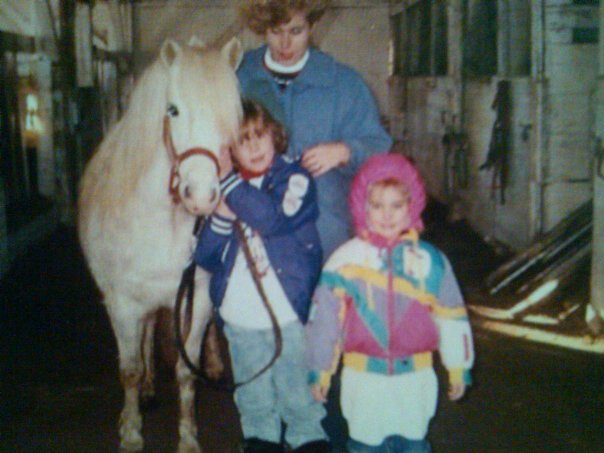
Thank you for buying me that worthless Shetland pony when I was three years old.
For driving us to our grandparents on the weekend and teaching us to tack up, sit up, and ride.
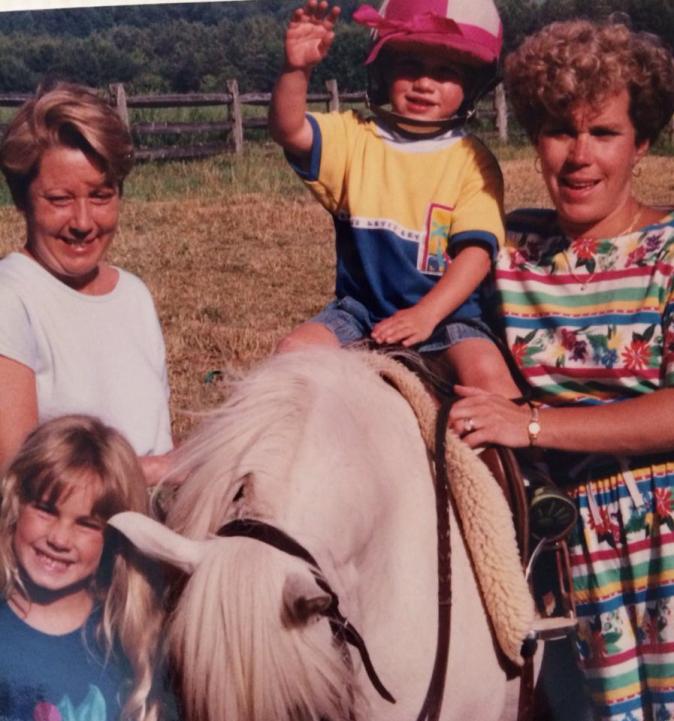
Evil
For picking me up and drying my tears when said pony decided she had had enough.
For finding a local trainer and signing me up for real lessons at the age of 5.
For selling the first, and leasing a second pony – one that I could at least make canter.
For traveling around Pennsylvania and Ohio to dusty fairgrounds with a cart attached to your car.
For spending your winter’s hunting down purple chaps and rhinestones… and your spring’s spent embroidering towels and sewing curtains for the stalls.
For holding my hand when the new pony attempted to buck me off in front of the judge in western pleasure…twice.
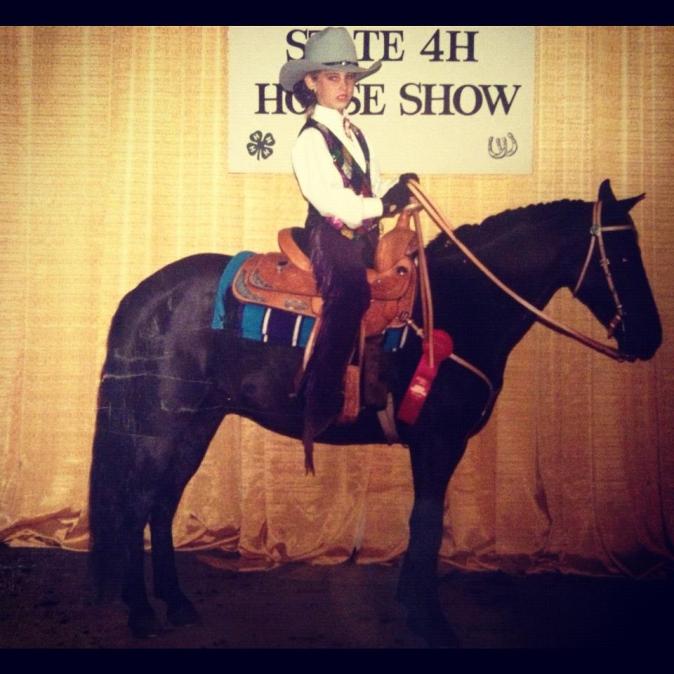
Not happy.
For horse shopping with me at the age of 12, desperate to find a new and safer mount.
For finding a green thoroughbred at an auction and being persuaded that he was exactly that – athletic and safe.
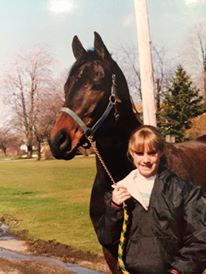
For upping the lessons to twice a week and every day in the summer when we realized he was NOT what I needed.
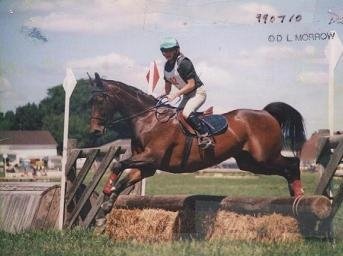
For spending your Mother’s Days on yet another dusty fairground, wiping down tack and polishing hooves.
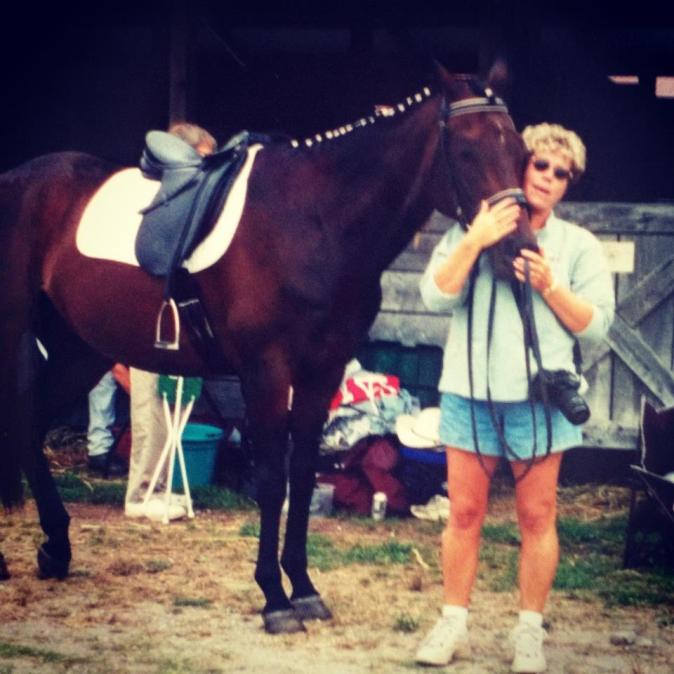
For buying me a trailer when you saw how much freedom it could give us.
For finding a place for my horse to come no matter where we travelled, even if it was for a week long vacation.
For waking up at 6am on your vacation to get me to said barn to ride before the heat and the flies.

For fighting with my dad when I said I wanted to take my horse to college.
For winning the fight with my dad by sophomore year and hauling my horse to college.
For supporting my decision when I said I needed to give my horse away when I knew that my father was losing his battle to cancer.
For holding my hand after my father passed, acknowledging that I was going through the hardest thing in my life without the therapy of my horse.
For encouraging me to move to Lexington, KY, homeless, depressed, and without a job.
For encouraging me to work for minimum wage mucking stalls on a thoroughbred breeding farm.
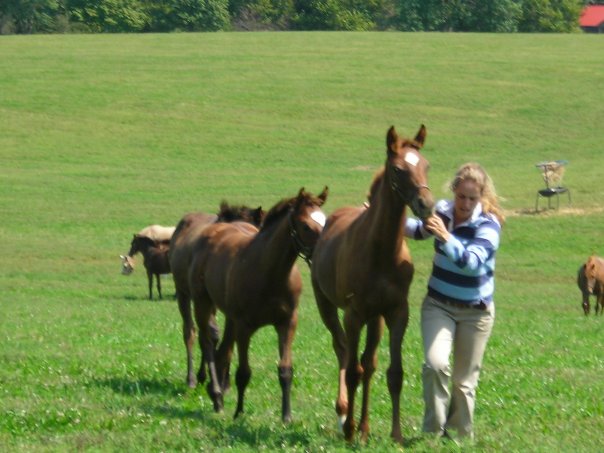
For sending money and paying for my truck insurance when mucking stalls on a thoroughbred farm didn’t always pay the bills.
For laughing at me when I said I brought a horse home.
For laughing harder when I said his name was Frank the Tank.
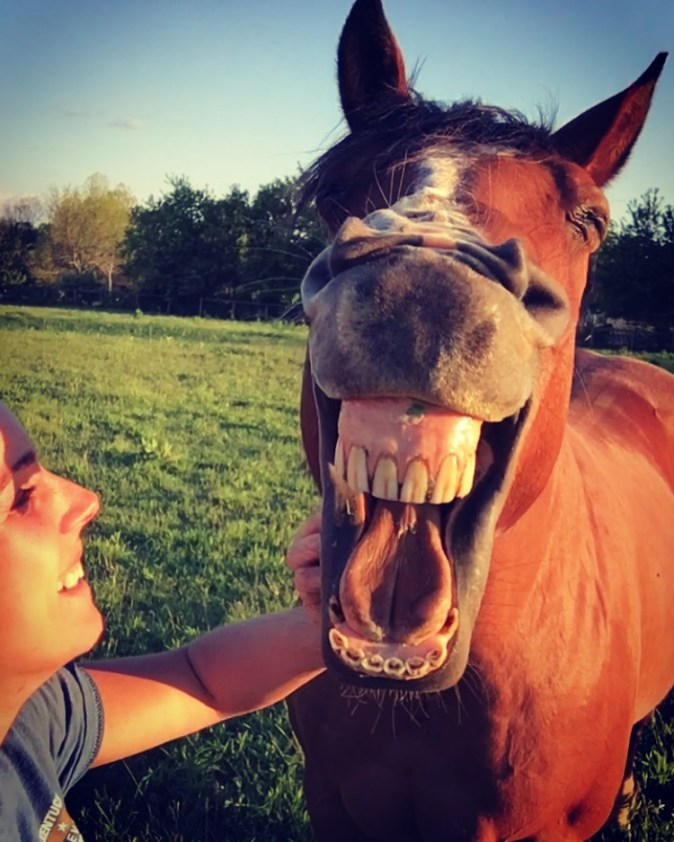
Frank the Tank
For laughing again when I said I wanted to start eventing again.
For laughing harder when I said it was on a friends pintaloosa.
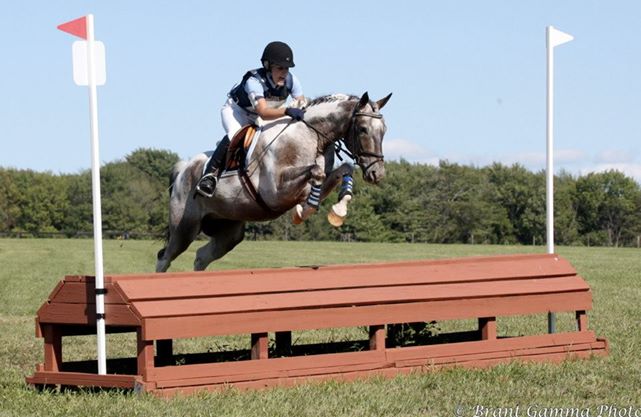
Best pintaloosa ever
For not laughing when I said I wanted to buy my own horse.

For getting serious and saying you supported me buying my own horse.
For calming me down and drying my tears two years later, when I was grad student broken and I said I couldn’t afford my own horse.
For sending more money and helping with that truck again, letting me keep my horse.
For (not really) encouraging me in all of my crazy endeavors with said horse, including skijoring, thoroughbred training competitions, ranch roping, team roping, eventing, and charity steeplechases, but giggling when I call and tell you about them.
For holding my hand from afar when I realized I needed to sell that horse.
For being my mom. The best member of the Happy Horse Holder’s Club out there. The most gorgeous rider, and the biggest supporter. The hardest kick in the ass. And the strongest hug. Waving the biggest pom pom’s, and screaming the loudest.

My mom.
I love you,
Carleigh
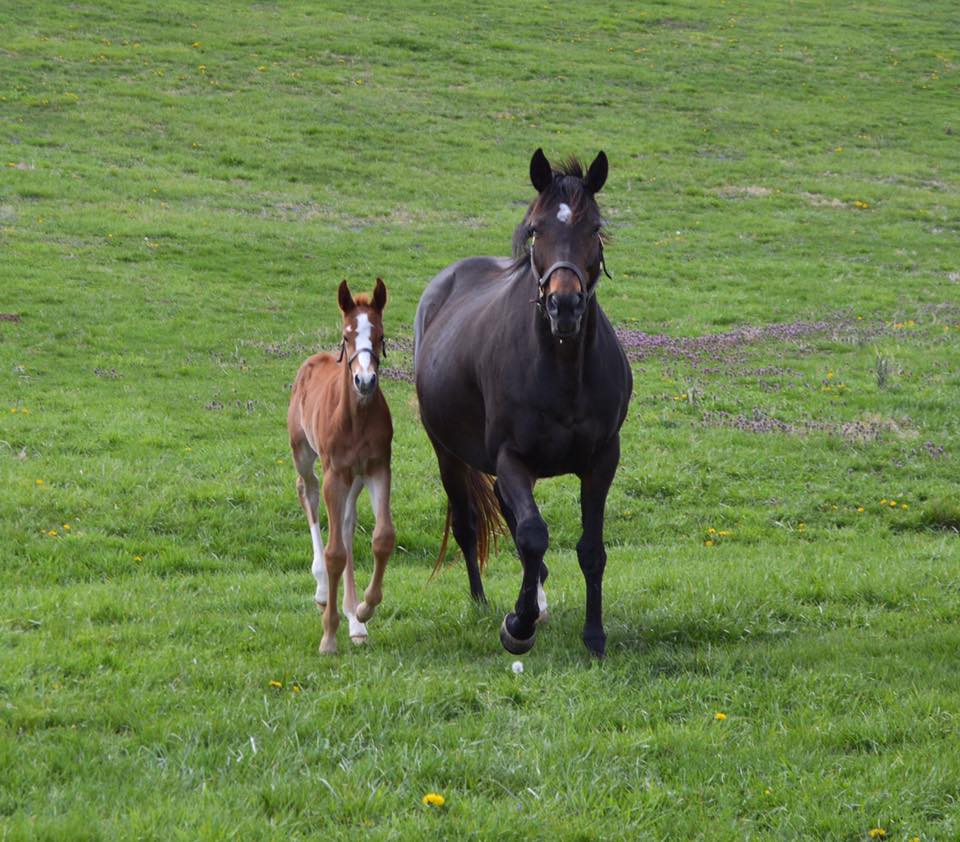
It’s like witnessing the Northern Light’s while sitting in the southern hemisphere. Or experiencing the perfect day, followed by a spectacular sunset. Like the most amazing vacation, only to find out that it’s fully paid for.
It just doesn’t happen.
But it is happening this weekend. The stars are aligning. There is a horse in not only both the Kentucky Oaks and the Kentucky Derby, but also an additional graded stakes race on the Derby Undercard. All for one farm. All connected by the kindest of human beings. That is happening. This weekend.
I was hired as the yearling manager at Hinkle Farms in June of 2010. I was wet behind the ears and fairly green to this industry that I now thrive on. I had worked a total of 1.5 yearling prep seasons for another farm before being hired, but Tom Hinkle and his sales director Ben Kessinger saw something in me. Something I didn’t even see in myself, and they took a chance on a young and hyper 24 year old and hired me. Five months and one great sales season later, and I was promoted to assistant manager of the entire farm.
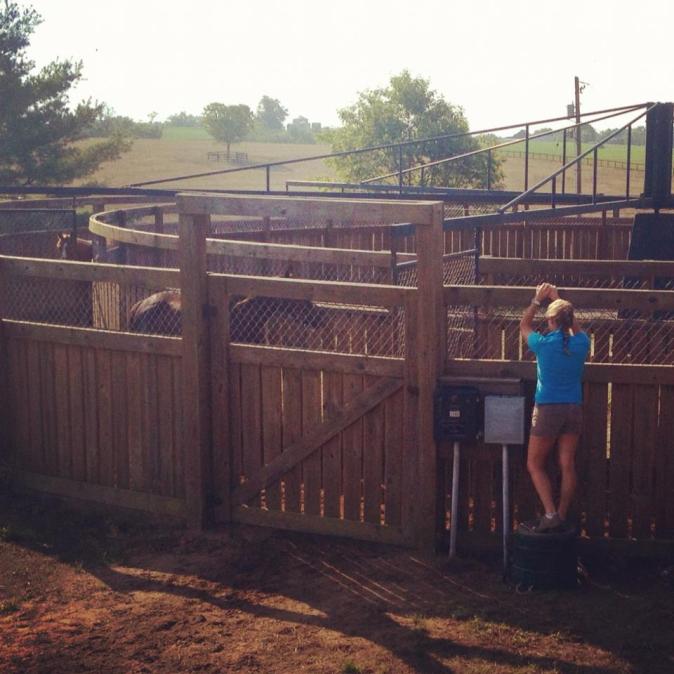
Yearling Manager Extraordinare
For the following three years, I did my damnedest to manage that farm to the best of my capabilities. Late nights foaling, early mornings mucking, and long days prepping. Afternoons fueled solely by Red Bull and mornings where I sweated out exhaustion with each shovel into the spreader. But I loved it. Every. Single. Moment. Of it.
We had some great horses during that time. Firehouse Red. Mad Flatter. Caroline Thomas. The list goes on. But we never had the trifecta that is about to happen this weekend. And after only a few years, I left the farm and went back to graduate school. I missed the greatness that they are about to experience. The triumvirate of Weep No More, Divisidero, and Nyquist. Three amazing horses, all running on the biggest weekend of the year for this business.
One of them is looking to defend his undefeated title. Another is looking to honor the legacy of her mother. And the third, is just trying to lay his own path. And only one thing ties them all together – Hinkle Farms.
First there will be Weep No More. This filly who shocked the world when she found a second, and third, and fourth gear in the G1 Ashland Stakes at Keeneland. A filly that I have never ran a hand over, or led to and from a field. But a filly that was produced by a mare that I hold dear. A mare that I watched deliver her first foal into this world. A mare that I know loves cookies more than peppermints. A mare that craves attention and adoration. A mare that I left in September of 2012 heavily in foal to Mineshaft…the Mineshaft that was soon to be known as Weep No More.
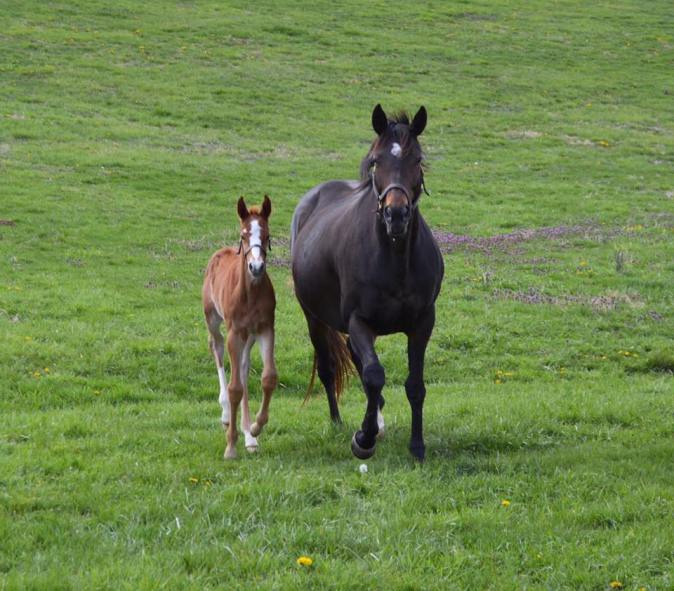
Crosswinds and her 2016 Curlin colt.
With Divisidero, the connection is greater. A stronger affinity, a tighter bond. I was there the day that Hinkle Farms secured the purchase of Madame du Lac, the dam of Divisidero. I high-fived the owner’s son immediately after landing the final bid. I watched with excitement as we loaded her up for home. And I stared on intensely as she delivered the stunning bay colt into this world. I wiped the phlegm from his nostrils and sat him sternal. I held his haunches as he drank his first sip of liquid gold. And I watched from the gate of the paddock as he ran his first gallop.
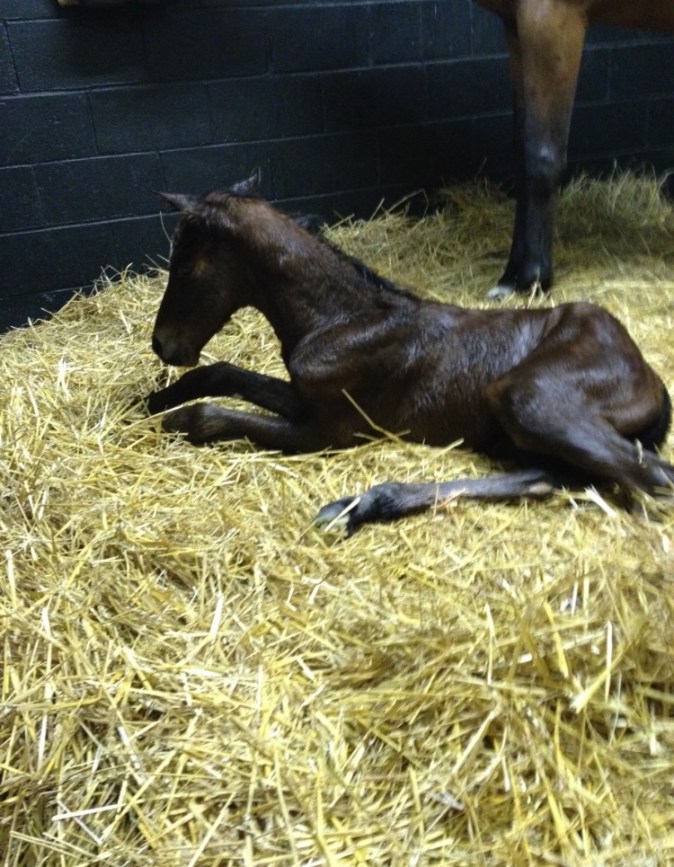
Divisidero on day 1.
And then there is Nyquist. The favorite for the Kentucky Derby. The undefeated 2 year old champion and Breeder’s Cup Juvenile winner. Hinkle might not have bred Nyquist – having secured his dam the same year that Nyquist followed her through the ring as a weanling. But they hold a special interest in this race, acknowledging that a win on Saturday will secure Seeking Gabrielle (his mom) a special spot in history. They are so invested, and yet I am not. In fact, I have never even seen Nyquist in person. I have never shaken the hand of Doug O’Neill, or led this majestic creature into a stall.
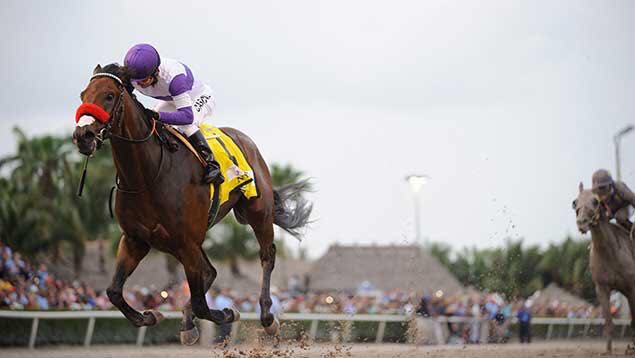
But I will scream for him for the same reason that I will scream for the rest: a love of the horse.
This love of the glistening muscles that lie over the top line of the fittest of the fit. The legs that carry them over any surface, any speed. The owner who has invested so much time, blood, sweat, and tears into the creature streaking past him. The breeder who has planned and detailed every aspect of this horses life.
And then there is me, the (retired) farm manager watching from home. Who has such an infinitesimal connection to these horses. Who has not even laid eyes on two, or rested a hand on the third, in years. Who has no financial investment in the strides that they take, or the order in which they cross the wire. But who will watch the television in my living room with tears streaming down my face as each of them gallop out with speed. Strong. Safe.
Because there is one reason, and one reason only that I have faith in this industry. And it is because of people like Tom and Henry Hinkle, and now Tom’s daughter Anne Archer. Families who have been invested in this industry for decades. For generations. Who survive the hard times, hoping and praying for a weekend like this. This magical 24 hours that so few will ever get to experience. To have it all come full circle and find your horses, and your connections, running with the best of the best. The odd’s were stacked against them, but they somehow overcame.
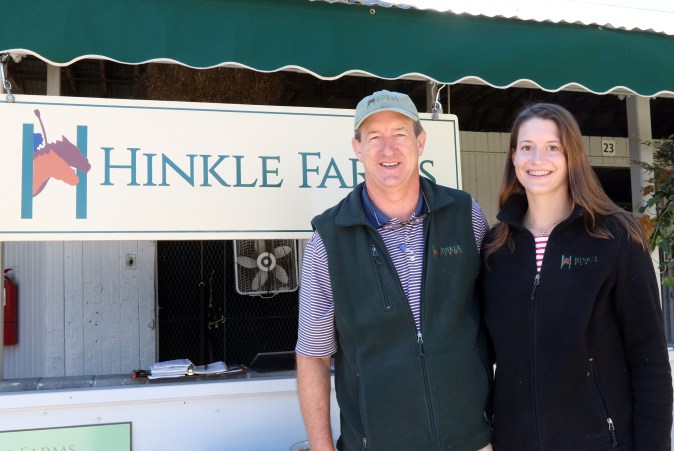
Tom and Anne Archer Hinkle
This family who open their farms, their homes, and their families to the young and struggling groom, and gives her a leg up in this tough world.
So more importantly than cheering for Weep No More, or Divisidero, or Nyquist, I am cheering for Hinkle. For the good guy. For the small breeder that deserves it. For the family run farm who does whats right for their horses. The farm that breeds a select few and puts the best care, nutrition, medicine, and love into them. Letting me experience nearness with greatness.
So run on Weep No More. Run on Divisidero. Run on Nyquist. But more importantly, run on Hinkle Farms.
Yesterday morning, I loaded up two horses. One to journey 400 miles away, as he adventured off into hunter land in Middleburg, Virgina. The other to travel only 30, to yet another clinic with the superb and amazing Doug Payne. I knew that this was the best strategy to get through the otherwise devastating day – by staying busy and distracted – two things that a ride on Nixon guaranteed.
I had run into Doug only a few days prior at Rolex and had hesitantly walked up to him, informing him that I had finally bit the bullet. I was keeping Nixon. He high-fived me and congratulated me, letting me know I had made a good choice.
When he had first seen Nixon last November, Nixon was just starting into his jump training, and yet Doug had liked him even then, saying he reminded him of Running Order. I went home that night and googled this horse, wondering exactly what he was talking about, and laughed at the comparison. Down to their markings and coloring, they resembled each other. But the video of his first novice where Doug commented that he wasn’t sure he would even get over the first fence on XC really sealed the deal. Their gallops were identical.
I went back the second day of the clinic and told him that Nixon was for sale, and he had quickly responded that you don’t sell horses like this. He adamantly told me to keep him, but I shrugged him off. And then I continued on with my journey with Nixon.
With repeated sales ad’s, trial rides, horse shows, and other clinics, it became more and more obvious the mistake that I was making. Each upper level rider who saw him in a lesson, or at a show, commented the same way – you don’t sell one like this. Thoroughbreds that have the scope for a 4* course while also possessing the sensibility and movement for dressage. That “it” factor. You work them through their issues and their stubborn behavior, you ignore some of their antics, and you rock and roll with them.
So last week, I finally listened. I sold my safe training level horse, and committed to keeping the one that had just tried to kill me on XC the previous weekend, landing both of us with a big fat E.
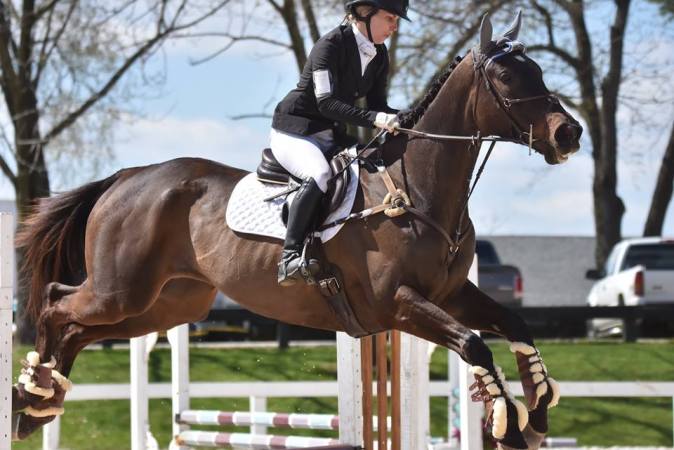
Not really participating. Photo by JJ Sillman
So immediately after hugging Mak and sending him off, I hopped in my truck and began this second endeavor. I cried the entire way to the clinic, so focused on losing Mak, that I wasn’t even thinking of the horse that I was about to mount. But as I pulled into Kathleen Sullivan and Andy Clark’s gorgeous Glenarvon Farm for another clinic, I quickly shook it off and tried to focus on the horse that I still had. The horse that I hoped to build a future with.
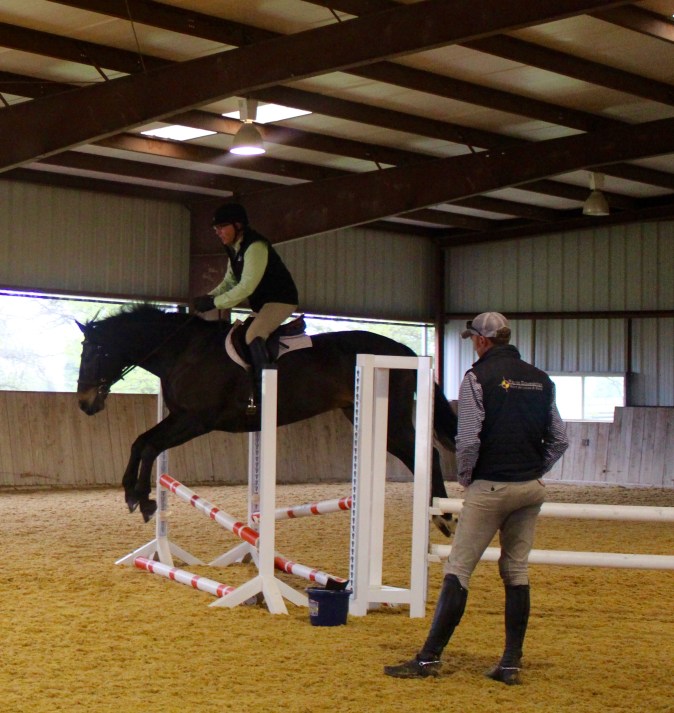
Doug Payne teaching Andy Clark, one of the owners of this beautiful farm. Photo by Bridgid Brown.
But I was nervous that Doug would change his mind, or that maybe I had messed up this horse in the past 5 months, leaving him with irreparable damage. Was he still as cool as the others said? Had we improved at all in the last 5 months? Would he be the Nixon I knew he could be? Or the Nixon that hadn’t even attempted to show up at our first event? Would Doug hate how I rode him? Did Doug think this horse was too nice for me? Again, my perfectionists brain attempted to overpower the skill that I knew I had, and I began to sweat.
But I trotted in to warm up, and was quickly reminded of the talent that I was sitting on. The softness that Nixon possesses on a good day, and today felt like one of those. And I began to relax. Like I had learned previously, these clinics are not meant to show off a perfect ride, instead they are meant to show your imperfections to improve upon them.
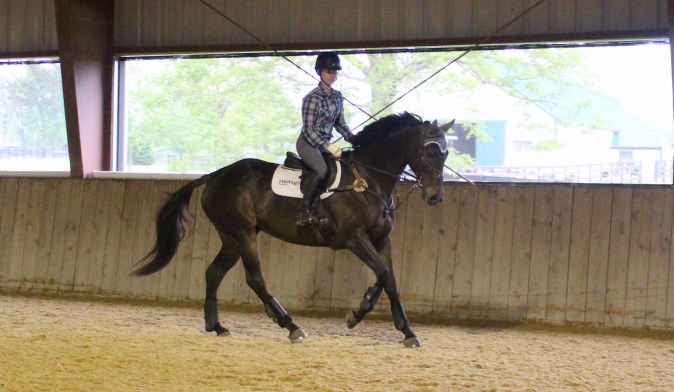
Warming up with my brilliant pony. He makes me look good. Photo by Bridgid Brown.
And Doug is by far the best clinician to teach you this. He is calm in his training, but analytical and technical in a way that my scientific brain truly appreciates. Slow and steady wins the race, with not a single horse being overfaced with a question that they weren’t ready to comprehend. And if the definition of insanity is doing the same thing over and over and expecting different results, than Doug Payne is the sanest eventer I’ve ever met.
He had us approach questions repeatedly, but with each attempt slightly different. Instead of just screaming “leg” or “kick,” he asked the riders to slightly adjust the haunches or shoulders, lengthening this hip or shortening this rein. Angle the first fence from a broader approach to make the bending line longer. And it worked.
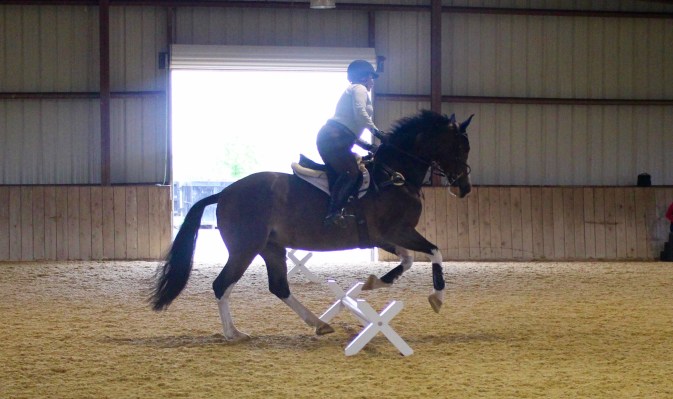
Alyssa and her mare through the canter circles. Photo by Bridgid Brown.
Eventually all of the exercises were put together into a full course, one that asked the rider to truly ride more than just to prove that their horse had scope or skill. An adjustable canter and a technical ride was rewarded, and sloppiness penalized simply by poor distances and bogey take off. It was a simple course when considering pattern, but a tricky ride when distances and stride counts were considered. It caused the canter to both constrict and lengthen, and the horse to constantly be listening, something the Nixon and I struggle with, but that we both achieved today.
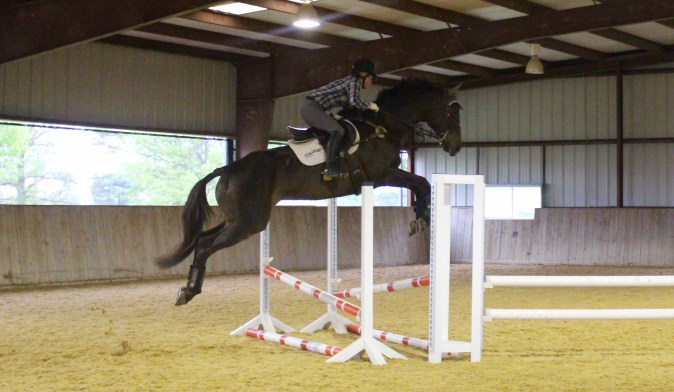
Nixon taking over the ride. He don’t need no jockey. Photo by Bridgid Brown.
And while Nixon might not have been perfect, he was exactly what I needed. He showed up this weekend and was a willing participant. He was a great distraction from the rest of the world. He showed some of his flaws, which is exactly what I needed Doug to see, but after addressing the problems and learning from our mistakes, he rejoined the good kid club and jumped the sticks.
At the end, I asked Doug if he still thought I had made the right choice, and he quickly replied “Yes.” And that one word lifted about 150 pounds of weight off of my shoulders.
I am so blessed to be one of the “Kentucky Regulars” for such a brilliant horseman as Doug, and I will continue to take advantage of this opportunity whenever it is made available. He truly gets this tricky, talented, bull headed, penis of a horse, and I need to have people like that in my corner. Because this horse might not be the safer choice, or the easier choice, or god forbid even the better choice, but he is teaching me to be a better rider every day, and that is my end goal.
And as long as I constantly surround myself with good people, great trainers, and supportive people, I think the sky is the limit. Rock on Nixon, and thank you Doug Payne.
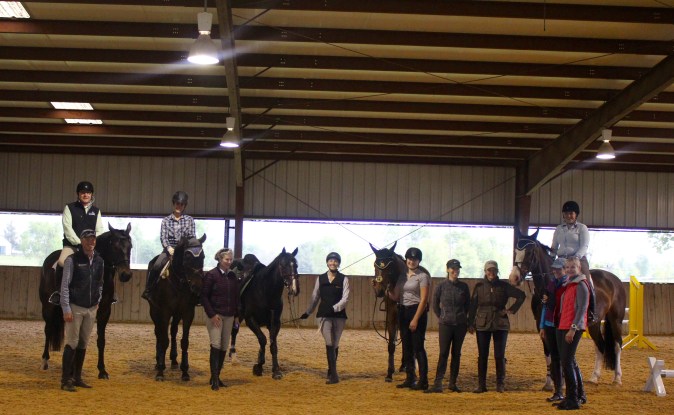
Doug and some of the Kentucky regulars. Photo by Bridgid Brown.
I made one of the hardest decisions of my life yesterday. My own personal Sophie’s Choice. Choosing between two beings that I considered sons, with no real perfect answer. I sold Mak.
I sit here with tears streaming down my face as I write this, and I know that so many who are reading will never truly understand my decision. But let me first begin by saying that although I am sad to not get to see the sweet broad cheeks of my boy every day, or feel his relaxed gallop as he lopes the final three strides to a massive corner, or watch as he playfully romps with his little brother, I know that my decision is the right one. The best one. For me, for Nixon, for Mak, and for his new mom Dani.
Months ago, I had hesitantly started to consider this idea. That maybe Nixon would need to stay with me, at least for a bit more time, if not years. Of course, if Doug Payne or Boyd Martin came up to me tomorrow and asked to try him, I would let them. I still think that he is an upper level horse, and needs an upper level rider. But for the time being, I am OK. I am the OK rider that he love’s, as Nixon has effectively chosen me as his person. He tolerates the rest, but he thinks I am his personal minion. His human. His mom.

Nixon’s person.
Mak is different. I have always said that I love Mak more than Mak loves me, and this still rings true. Mak is happy regardless of who is around him, on him, or near him. He is content in his own little stoned world, and is just about the easiest horse to be around or on. And whereas Nixon screams Upper Level Horse, Mak screams safe.
I approached a plethora of people while making this decision. Some who agreed that I should keep Nixon, some who nearly cried when I mentioned selling Mak. But my friend Hayley said something that really resonated with me. She told me that she knew she had made the right choice for her horse because of what the HORSE could do for that future RIDER. Mak had given me so much confidence, he had gotten me around my first training, my first 3’6 jumper course, so many firsts. But I now had that confidence. Let him pass it onto another young rider, one who might never get that chance at a horse as great as he.
But I never could commit. I never hit enter on any sales ads, or put my keystrokes where my mouth were. I lamented to friends, and inquired to a few select trainers who I respected and knew had a plethora of good students. And then a few weeks ago, I commented on another friends Facebook status. Watching her own personal Sophie’s Choice unravel, I mentioned that I was going through the same thing. With a tough, but ridiculous talented young horse, and a safe, but maxed out at prelim, older horse. One that most likely just wanted to be a hunter.


And then my phone dinged. Within hours of my comment, I was reached out by a fellow local eventer inquiring about him. She asked for pictures and video, adding that she was asking for a relative of hers. A teenager who was looking for an equitation horse. Who was a beautiful rider but without the six figure budget of the elite. And maybe my thoroughbred eventing wonder would fit the bill? I sent the information on Mak, letting them know that he was 8, sound, and beautiful, with tight knees and an automatic change, but I also told him that I had done a whopping TWO hunter shows in our 3 year courtship, and mostly just to be an ass. And instead of scaring her, she simply asked when they could come try him.
I went home that night and told Luke that someone was coming to try Mak. He just stared at me with wide eyes and hesitantly asked if I was OK with that. And I told him that I didn’t care if they tried him. Mak was safe, he was a packer. He at least wouldn’t hurt anyone. And worst comes to worse, if I got a bad gut feeling or saw red flags, I could just refuse to sell. No one ever said you had to sell your horse just because someone offers the money.
But then I met Dani and her mom Cindy. I immediately felt at peace, and opened up a bit more in my sales pitch, having previously just grumbled his age and height, hesitant to even let this happen. Dani was quiet and calm, exactly what Mak needs around him, as that is also his spirit. And Cindy reminded me so much of my own mom, Carole. She had put her own riding on hold to raise a family, and was now watching (behind newspapers) as her daughter did exactly that. And with each fence, each stride down to a big oxer, I watched as Dani’s smile grew, Cindy’s eyes widen, and Mak’s ears come forward.

Dani and Mak during the trial ride
They left to try a variety of other horses. Mostly warmbloods. All actual hunters. And I drove back to the barn thinking that there was no way that they would choose my little eventing pony. But they did.
I got the text two days ago, asking if they could vet him. They said that with every horse that Dani dismounted, she just kept repeating that they weren’t “as cool as Mak.” She acknowledged that the process wouldn’t be easy. Her parents sat her down and reminded her that this journey might not be what she had had in mind. He might not end up a AA equitation horse, or a national derby horse. But Dani said she didn’t care. He was FUN. He was safe. She felt OK cantering down to a 3’6 oxer on him. And that meant more than any fancy pedigree.
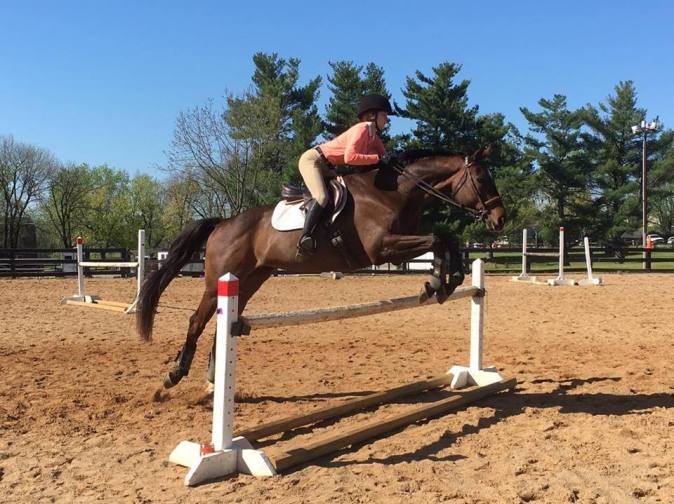
Mak passed his vetting with flying colors, and I got the excited text message a few hours later. And I called my mom and dissolved into tears. I told her that I knew I was doing the right thing, and that I knew this was the perfect home, but that it didn’t make it any easier. But then I started reasoning my way through my own thoughts. And I vocalized these to her.
I am at the same place I was when I was 17. When I quit competing. Because my horse hated eventing, and I was, deep in my heart, an eventer. Levi could have gone on to be a great little hunter, or a fantastic dressage horse, but instead I forced him into eventing. And he burned out, dissolving me to rubble with him.

Levi
I won’t do that to Mak. I won’t do that to myself. I want to be an eventer. I don’t know if that means a 1* or a 4*, but I know that it means higher than training level. And Mak would have gotten me a ton of confidence at training, and maybe prelim, and then have been maxed out. And then I would have pushed him for more, and in a best case scenario, he would have just told me he was done. In the worst case scenario, he would have lost his amazing confidence. And I refuse to do that to a horse I love so much.
So it comes with a variety of emotions that I tell all of you that Mak will continue on this journey as a hunter.
The motions are so mixed for me. He will always be the horse that got me through my first training level event, my transition to graduate school, my Uncle’s death. Held my hand and dried my tears through hacks at the end of a bad day. He got my confidence back in eventing, and even more importantly, my confidence back in the thoroughbred. He was my exploring partner. My safe zone. The cause of so many smiles, and so many tears. But at the end of the day, he was my best friend.

All smiles for MakAttack
And now he will be the same for Dani. As the shoulder to cry on to an amazing young rider. As the escape from fights with parents, first heart breaks, and winding changes in lifes path. As the reassuring figure, safe equine, and solid citizen for Cindy and her husband, letting the newspapers fall below eye level. And that is what is reassuring my broken heart as I load him onto the trailer to head to Middleburg, VA – caressing his wide cheeks as I say good bye.
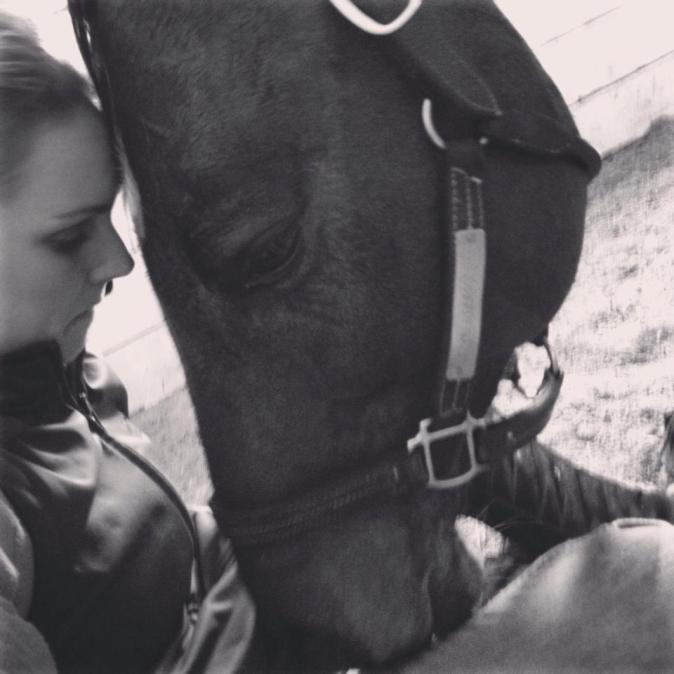
But I know that it’s not really good bye. It’s just “I’ll see you later.” I will always be a part of this magnificent creatures life – that I can guarantee you. And as he carries Dani around each course, over each fence, or on each hack, I will be right there alongside him. With the 3 years of rides that I have put on him. The massive fences I have schooled him over. The first creek crossing and the first bridge. Dani might be sitting on him, but I will forever be in him, and that makes me so happy. So proud.
I love you Mak, be good.
I lost a horse once. It was both heartbreaking, devastating, and alarming – but more importantly, I had absolutely no idea how to solve the problem. He was gone from the equine stratosphere, and no amount of internet or Facebook searches led me to his re-discovery. To compound my grief and disparity, I was tightly linked to his breeder, his race owner, and his trainer. I knew his every connection, and had great respect for each. And yet I knew that if he did resurface, and resurfaced in a less than ideal location, it would be each of them that would catch the heat – not me. More importantly, not the people that put him directly there.
Natty came into my life as I was managing Hinkle Farms. He had been bred by the farm, and they had kept him after he was scratched from the sales at Keeneland due an injury. He was placed in training with someone who I respected immensely – Wayne Mackey, at the Thoroughbred Training Center in Lexington, KY. It was only a 15 minute drive from my house to the track, and I would occasionally go to watch him work – hoping for the best, but witnessing the worst. While Natty was stunning – standing at 16.2, with a strong shoulder and great mind, but he was neither fierce nor fast – and Wayne quickly alerted the farm to this fact. Being the amazing horsemen that he is, he acknowledged that maybe Natty would be best suited for another discipline. One that possibly required the speed of a mini van, instead of the Porsche that we had hoped for.
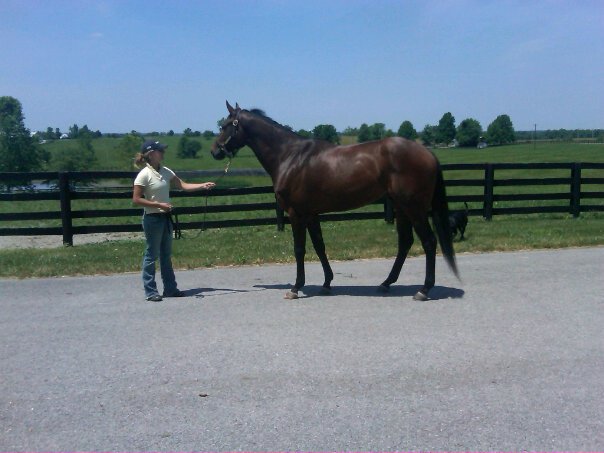
Natty’s first day post-racing
He came home to the farm, his racing plates were pulled, and I convinced the owners of the farm to let me attempt to retrain him for a second career. I had never retrained a thoroughbred up to this point, and had little to no clue of what I was doing. I hadn’t ridden or competed a horse consistently in years, and yet I dusted off my saddle, my helmet, and my half chaps and swung on.

How could you not fall in love with this?
But surprisingly, Natty was a willing pupil, and I quickly fell back into the routine of riding. At the end of a rough day, I would throw my Crosby onto this leggy 3 year old, strap on my spurs, and hack throughout the 1200 acre farm that he was foaled out on. We would amble up and down hills, walking at times and galloping at others, and just take in the scenery. And it became evident just how nice of a horse he truly was. He was green but willing, contemplative but considerate, and athletic yet solid.

I would come home at the end of my ride and collapse into my couch. My boyfriend would stare at me – startled by this new transition in my life. He had thought when he started dating me that he had won the jackpot. A horse girl with no horse. A girlfriend who could help him turn out yearlings or foal a mare, but who’s weekends could be spent not at the dusty fairgrounds of a horse show. A woman who could diagnose an illness or assess a lameness, but who smelled of roses instead of MTG. And yet I was not. What he thought of as the perfect girl was actually the most imperfect of them all. I would never again be that arm candy, or that trophy wife. How could I be? I was, yet again, horse obsessed.
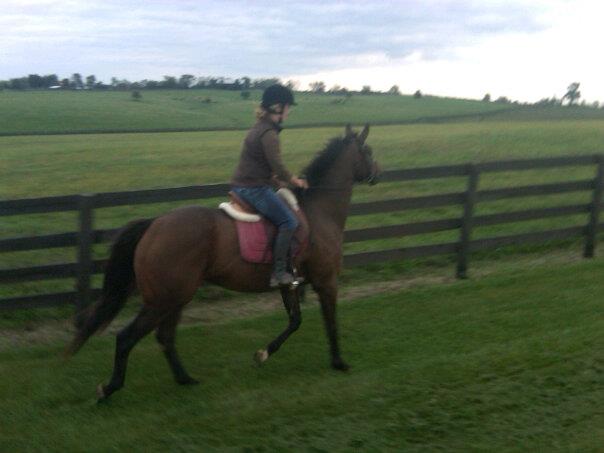
Hacking through the farm.
I found my heart and soul in that horse. Like a secret that had been kept locked up for many years, my true self was finally released. I had given my event horse away as a last attempt to resurrect a relationship with my father, only to have my father succumb to his battle with cancer, leaving me both horseless and without the strength or happiness that had previously consumed my life.
And yet, with each gallop, each fence, and each stride on Natty, my soul rebalanced. I got to jump my first XC fence in nearly 8 years. I went to my first horse show in as many. And more importantly – I remembered that these creatures and this sport were here for one reason and one reason only – FUN. To bring joy. To force smiles. To laugh.
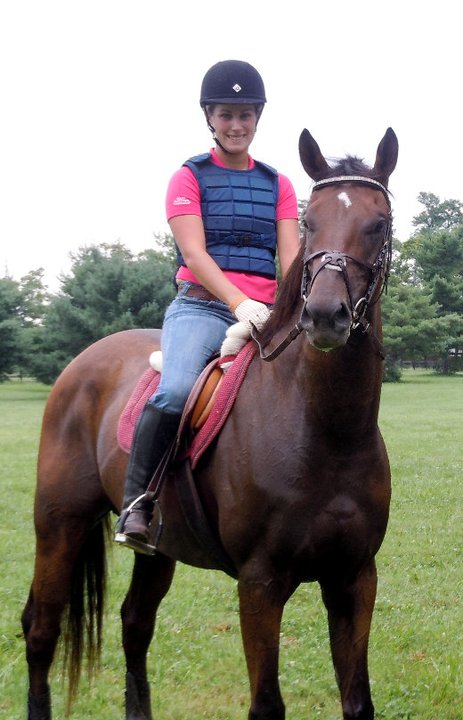
Smiles
But I hesitated. For some reason, one that I still don’t fully understand, I placed Natty for sale. I hadn’t owned a horse for almost a decade, and was unsure of how to provide one an adequate home. I didn’t think that the Hinkle family would allow me to keep him on the farm for the rest of his life. I knew that with my job as a farm manager, showing and riding consistently would be nearly impossible to do. I was scared of the funds that it would take to properly care for this horse. I was petrified of the way my lifestyle would change. And I thought he deserved more…so I sacrificed my heart, and went with my brain – and I sold him.
I thought I had found Natty a permanent home. The young woman seemed like a great match, he would stay local where I could keep an eye on him, and I made sure to dictate that I would be offered first right of refusal if it were to ever not work out. I loaded him up onto their trailer, gave him one final hug, walked back to my truck and dissolved into tears.
Years went by where I searched daily for Facebook updates and new statuses posted. I was excited to see them run their first mini event, or to drive past the farm where he was boarded and find him grazing in the field. We shared a farrier, and I desperately asked for any update that he could offer when he came to shoe my horses. And I shared their photos and bragged of his endeavors whenever I could.
But as is life, she decided to move away from riding, and he was turned out. He was placed for sale, but at a price that I was assured would land him into good hands. But no one bit the bait, and on abated breath, I watched as his price dropped lower and lower and lower. I begged friends to go see him, and advertised him to anyone who was willing to listen. The last time I reached out to the owners, they refused my participation, and I hung up the phone and hung my head, allowing this horse to dissolve me into tears for the second time.
And then he disappeared. His ad was marked as sold, and I never saw a photo of him again.
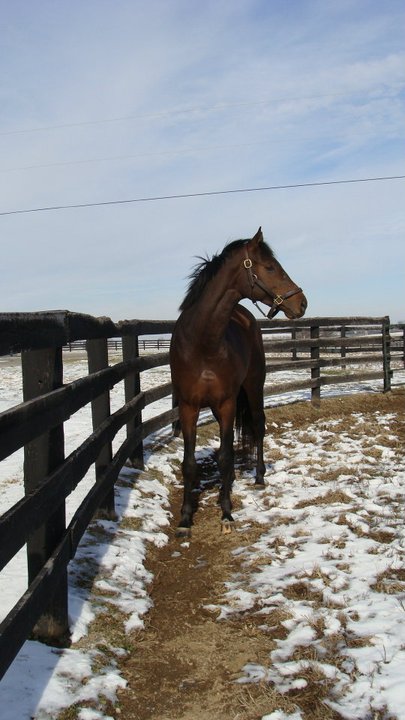
For a few years now, I have attempted to find Natty. I searched the local auctions at first, desperate to see if he had landed there. And then I attempted to locate him through internet horse sales sites – like EquineNow and DreamHorse. I searched for him in the TIP database. I re-entered him in my VirtualStable, fearing that he might even end up back on the track – being young and by War Front. And I never found him.
That is, until a few weeks ago. I was at a local jumper show and ran into the trainer that his previous owner had ridden with. I hesitantly inquired into whether she knew of his whereabouts, and she smiled and said that a young girl in Michigan had bought him. That he had passed the vetting with flying colors, and was now more of a pasture ornament than show horse, but that he was thriving. And I exhaled. I thanked her for the information, walked back to my truck, and cried a new set of tears – these now of joy and relief rather than sadness.
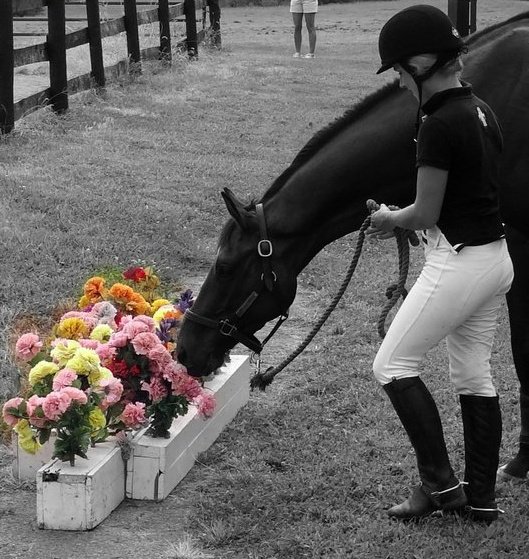
I am one of the lucky ones. I found mine, and more importantly, he was safe. Had I learned the opposite – I would have been devastated. Of course for myself, but more importantly, for the damage that his second, and third, and fourth owner would have done on the reputation of his first. Had he ended up at an auction, it would have not been Hinkle Farms, or Wayne Mackey’s, fault, for they had done right by the horse. They had retired him as a sane and sound individual, placed him into my hands to secure a second career, and wished him well.
But that is exactly who would have gotten the blame. Just this week, a horse named Financial Mogul was found at New Holland. Through a series of unfortunate events, he ultimately was euthanized by the caregiver whom had bought him from the supposed kill buyers. He hasn’t raced in almost a year, and was no longer in the care of his breeder, trainer, or race owner, and yet due to dollar signs – these are the very people who are being attacked.
No one looks for answers from the most recent owner – the person who actively dropped the horse off at the auction grounds. No one asks the liaison to the kill buyers why they spent $500-1,000 more dollars on these “well bred” thoroughbreds than they would on the others. No one asks the supposed “rescues” where the funds truly go to secure these horses. But everyone asks the breeders, the trainers, and the race owners for these very facts.
Why was the horse bred? Why did he sell for $200,000? Why was he placed in the hands of that trainer? Why wasn’t he retired until he was 6? Who thought it would be a good idea to support racing? Why are you involved? Where is the money that this horse “won” you over 12 months ago? Who are you?
If I replace Financial Mogul’s name with Natural Bridge, I could answer all of those questions for you. And that is something that I feared having to do every day for years. This is the risk that I take by being the liaison between the good guys of the thoroughbred industry and the sport horse world. Every time I retrain and sell a horse, I am risking their reputation moreso than my own. I am just a little fish in a big pond. No one is coming after me. But they are coming after my friends. My employers. My industry.
And here are the answers. These horses are bred with a purpose. Their genetics are selected specifically to create stamina, strength, and stability. They sell for the high amounts of money that are directly proportionate to these decisions, as well as the amazing care that they receive for those first 18 months of their lives. They are placed into the most capable hands available to secure the highest success rate – which is based on both ability and well as soundness. They are retired at a specific age based on that ability. Their soundness. Their desire. And this money that they secure then gets handed to the farriers, veterinarians, farm managers, stallion owners, as well as the track employees who serve the food, cater the weddings, and mow the lawns. It is cyclical, and it is great.
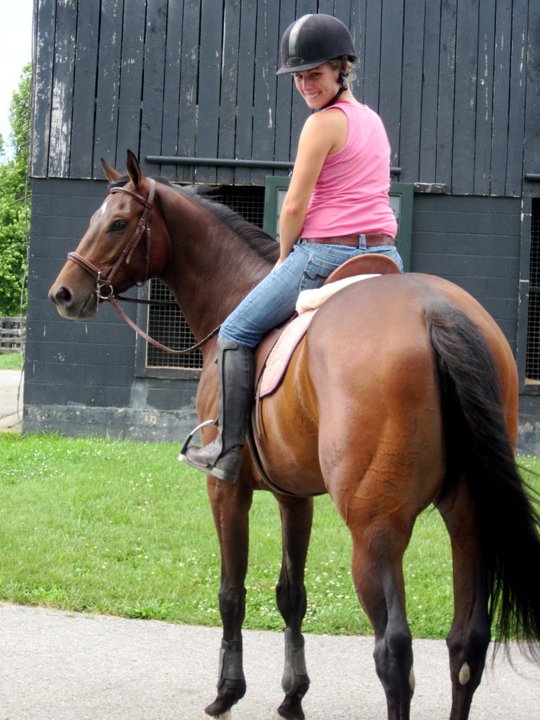
And who am I?
I am just a girl trying to build a bridge between these amazing people and the rest of the world. One horse at a time, one day at a time.
I am so happy that I found Natty, or at least that I know that he is safe. Not just for myself, but for the amazing people who trusted me to act on their behalf. This horse who has caused me so many tears of joy, of fear, of relief, and of sadness. But I fully acknowledge that this happiness is based entirely on luck. I could be that person. Natty could be Financial Mogul. I could be defending my industry, my actions, and my horse from an entirely differently angle.
So here are the questions I want answered. Who are these rescues that berate horse racing every day? Why do they search for these horses? Why do they spend more money on a thoroughbred at an auction than they would another breed? Why do they need GoFundMe’s to secure funds? Where does the money raised go? How do they choose which horses need saved and which don’t? Is it based on potential ability and soundness, or potential connections to drain funds from?
And more importantly, how did this once great racehorse end up at an auction house filled with kill-buyers? Who put him there?
I am so saddened by the loss of Financial Mogul. My heart breaks, acknowledging that we could just as easily replace his name with Natural Bridge. A good horse that was raised by great people is gone, and this is devastating to all of us that love horses. That love the thoroughbred. Even those of us that just love racing.
But what is more devastating – both to the industry, as well as the legacy of this great horse – is by penalizing and punishing the wrong hands. Letting the truly corrupt people walk, and targeting the innocent. Demonizing the very industry which allowed this horse to thrive, that retired him and placed him into a second career, and yet defending the other industry – the one that hasn’t answered any of these important questions.
So I ask you – can you answer these questions? Can you point the fingers in the truly guilty direction?
And I plead with you – the next time one of these horses ends up in this same predicament – don’t throw rocks at glass houses. Don’t penalize the people who did right by the horse. Don’t target the me’s of this world. The good guy. The one’s who are just trying to do whats right for these horses – one thoroughbred at a time.

I can still feel the dew from the grass as it seeps into my crepe sole Ariat’s and the jingling of my rowels as I made my way to the corral’s. The fog lifting from the stream and stocked ponds, and the sound of the mule’s gently munching their hay from the pack shed. Picking up a quick cup of coffee from the kitchen and making my way to the horses. No cell phone, no checking of email, no make up, huddled over in my Carhartt and pulling my hat down low to bring warmth to my ears. It would be July in Wyoming, but without the sun, the temperatures dipping into the low 30’s.
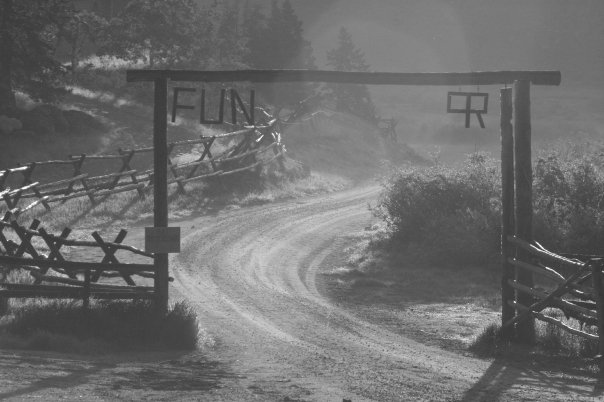
Paradise Ranch. Photo by Ramona Swift.
I would grab one of my string out from the corral, run a quick brush over where the saddle would sit, and throw up my Billy Cook. One-armed, with the other hand firmly grasping the warmth of my coffee mug, I would throw a head stall on, attach my rope, swing up, and head off at a slow jog up to the North Pasture. And as I crossed the same creek, with the fog swirling like ghosts leading me forth, I would stare ahead and take in the beauty of Fan Rock before me, and Seven Brothers behind. Not a word was spoken, except for the silent exchange of conversation between the horse underneath me and I.
As we climbed up the gentle incline from the ranch, various horses would lift their heads and inspect the movement with hesitancy. Some had stayed close to home, finding security in that comfort – while others had ventured up into the 600 acres in which we turned out on. Acknowledging that I had to get to the top fence in order to obtain them all, I would kick into a gallop, and head off.
The bitter cold air would hit me in the face, and yet heat came up through my muscles as they straddled the saddle and urged the horse on. It was usually my favorite – Headley, or my tried and true Azule. On off days, when these two were ridden hard and put away wet, it would be one of the young ones – Clover or 711. If I really was forced – it was Idaho or Casper, the only two on my string that I despised. The horses underneath me were interchangeable. All needed worked, and all earned their keep. Over rocky terrain, ditches and holes, drop off’s, ravines, flat ground, and rolling roller coasters. My 50 ft poly would softly smack their shoulder as they surged ahead, never stumbling, their feet carrying us safely and surely through the Big Horn’s.
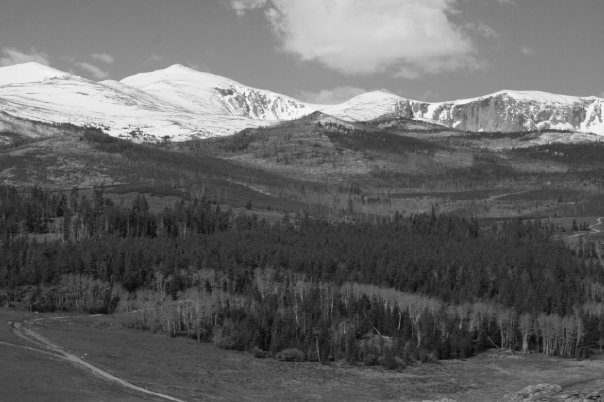
Big Horns. Photo by Ramona Swift.
And I would seek out the rest. Hiding in tree lines filled with the cream white of the aspen. Ambling behind rock ledges, standing in groups of two or three. There was no screaming, growling, or guttural noises made. Just an occasional cluck or smack on my thigh. Using the horse underneath me as horses were meant to be used – for work. For dominating other animals – cows, sheep, other horses.
A hundred horses would be gathered at this time, and begin their gradual descent to the corrals. Often, a herd of antelope would integrate in with the herd. Occasionally, an elk would be spotted on the higher spots. Staring you down, more inquisitive than scared. Acknowledge the silent confidence that was a horsemen on his mount. Assess you as you assessed him before swiftly and brilliantly spinning and galloping off. By the time the horses were moved back to the corrals, it would be around 6am – and the sun would be peaking behind the mesa.
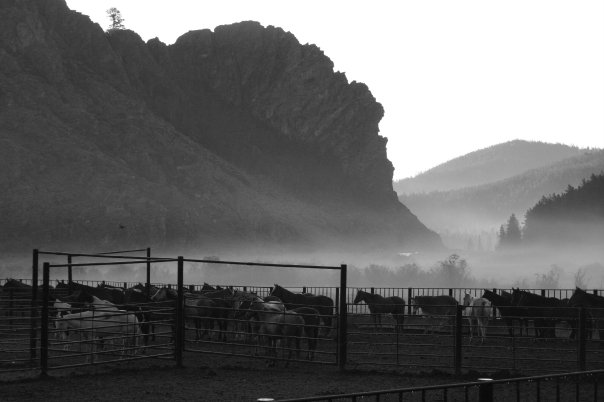
The corral. Photo by Ramona Swift.
Moving them into the corral, you would hear one person softly counting heads, assuring that all were accounted for. And I would step back off of my horse, lowering one foot gently down before the next. A rein looped around a post, and refill another cup of coffee. Still, not a word would have been said, nor a quick movement made. Slow and steady, calculated and accurate. No crinkling of peppermints, or rattling of grain inside of a bucket. The day brought in with the simple sounds of bales being cut open, hay being gently chewed, and the occasional squeal from an interrupted breakfast.
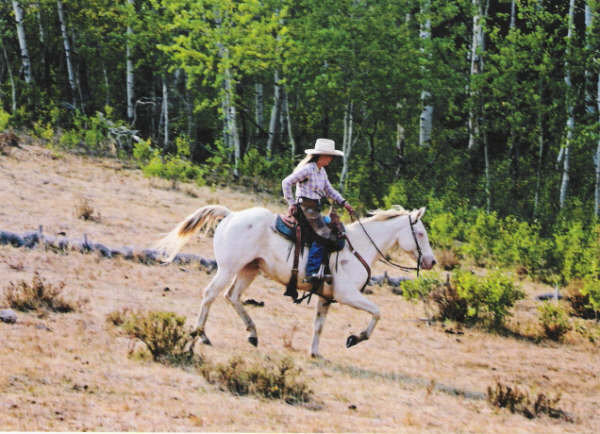
Casper
The job wasn’t all perfect, as the jingling ended, and quickly the day began. Horses were vetted and tacked up, guests were taken out on rides, and duties were assigned. Fences were fixed, logs were chopped, and hay was cut and baled.
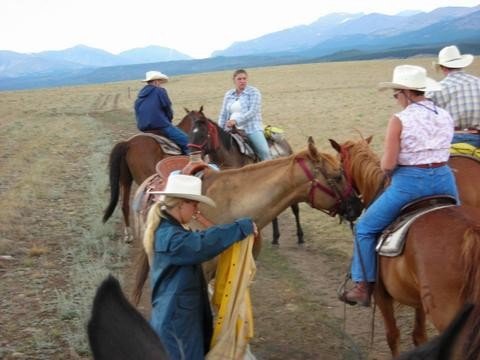
Taking out rides
Being a wrangler had its quirks and issues, but for those brief hours spent in the saddle alone in the Big Horns, as the sun creeped along the horizon – it was worth it.
Every year around this time, my heart begins to feel restless and my soul becomes discontent. It is like having your body pulled in two directions. East and West. Bluegrass and Big Horns. Chinks and riatas. Riding for competition or riding for purpose.
And yet seemingly, I have chosen. I sit here in Lexington, Kentucky – typing this on a computer. I stare out of my window and see a parking lot full of cars. Construction fills the air. I quickly spell out the methods used for my last research project, done on horses cared for just as I would in Wyoming, but without the access to just swing on and lope away. My days filled with science, school, deadlines and presentations. My brain dictating the journey that has lead me here.
But my heart is still there. My heart is searching for wide open spaces. My hands craving the calluses that only a rope can give. My arms weakened and unable to easily toss a 40 pound saddle up onto a back. My feet begging for the soft jingle of spurs instead of the embrace of custom tall boots. My core craving a ride longer than an hour and outside of the confines of an arena.
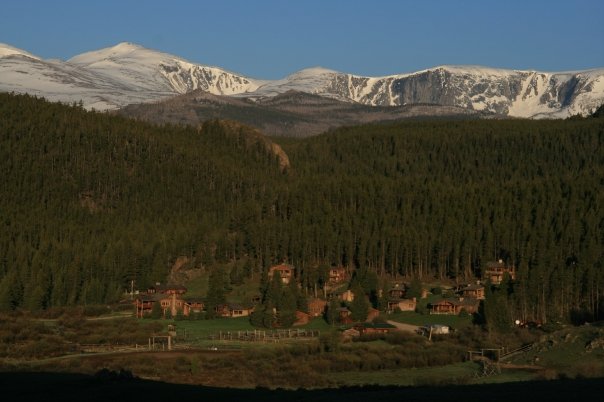
Paradise Ranch. Photo by Ramona Swift.
East and West. Yin and Yang. English and Western. Heart and Brain.
And me. One half always in the mountains, one in the arena. Never truly at peace, always wanting the other. One day, I’ll get back there. I promise you this.
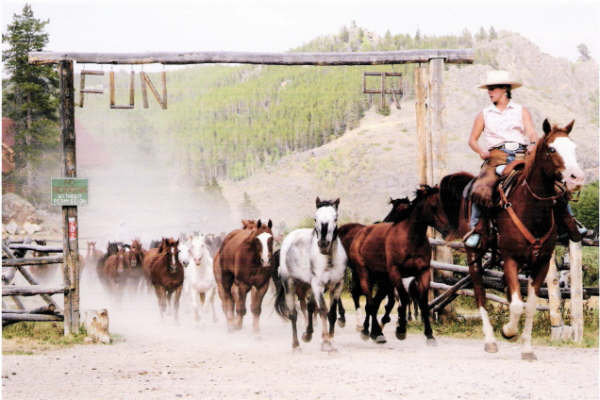
 A Yankee in Paris
Recent Comments